As nation’s supply chain struggles, a new rail hub opens in Eastern North Carolina
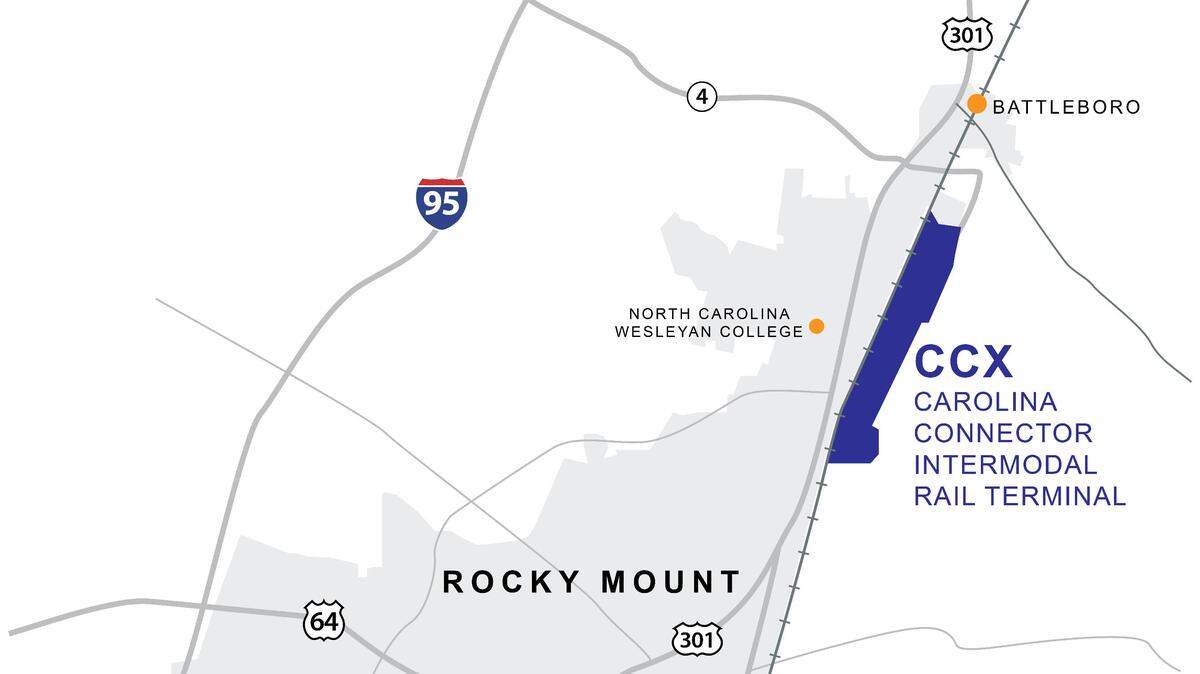
A new link in North Carolina’s supply chain quietly opened near Rocky Mount last month and was celebrated Thursday with speeches and a ribbon cutting that included the governor.
The Carolina Connector, a 330-acre terminal where shipping containers are transferred between trucks and trains, was conceived long before the current snarls at the nation’s ports and warehouses. But it comes online when additional help moving goods from manufacturers to consumers is particularly welcome.
“The supply chain issue is not going to be solved by the Carolina Connector,” said Norris Tolson, who heads the Carolinas Gateway Partnership, an economic development group based in Rocky Mount. “But it’s going to be a great asset to help businesses in Eastern North Carolina, and all over North Carolina, overcome some of the issues around the supply chain.”
The partnership put together 710 acres along the mainline of CSX, the Florida-based railroad company, then sold it to the company. CSX built and operates the Carolina Connector, also known as CCX, with a big assist from taxpayers. The N.C. Department of Transportation kicked in $118 million for roads, buildings, rail sidings, parking and storage areas and the three massive cranes needed to move the containers from trucks to trains and vice versa.
Though it will be owned and operated by a private company, state officials consider CCX as much public infrastructure as a rail station or highway interchange.
“We know that a good transportation system is a backbone of a good economy,” Transportation Secretary Eric Boyette said at Thursday’s ceremony. “Projects like this Carolina Connector are part of that logistical network that we will need to keep our economy competitive not only now but in the future.”
CSX operates an intermodal truck-rail terminal in Charlotte, and Norfolk-Southern railroad has terminals there and in Greensboro. But the Carolina Connector is the first intermodal hub in the eastern half of North Carolina, which is why state officials were so eager to see it built.
CCX started up Oct. 7. For now, it is primarily moving containers that originate at the Port of Wilmington or businesses in the region onto trains bound for Chicago, for distribution in the Midwest. The daily trains are called the Wilmington Midwest Express.
Last week, the Biden administration named CCX one of five inland yards that could help alleviate the jam of containers at the Port of Savannah in Georgia. Because CCX just opened, it could easily handle more, said CSX spokesman Bryan Tucker, though nothing has been agreed to yet.
“As you can see, we’ve got a lot of room to grow,” Tucker said, pointing to open storage spaces and a line of empty truck chassis. “When you see what’s happening at the ports and you look at a place like this, there’s a lot of potential.”
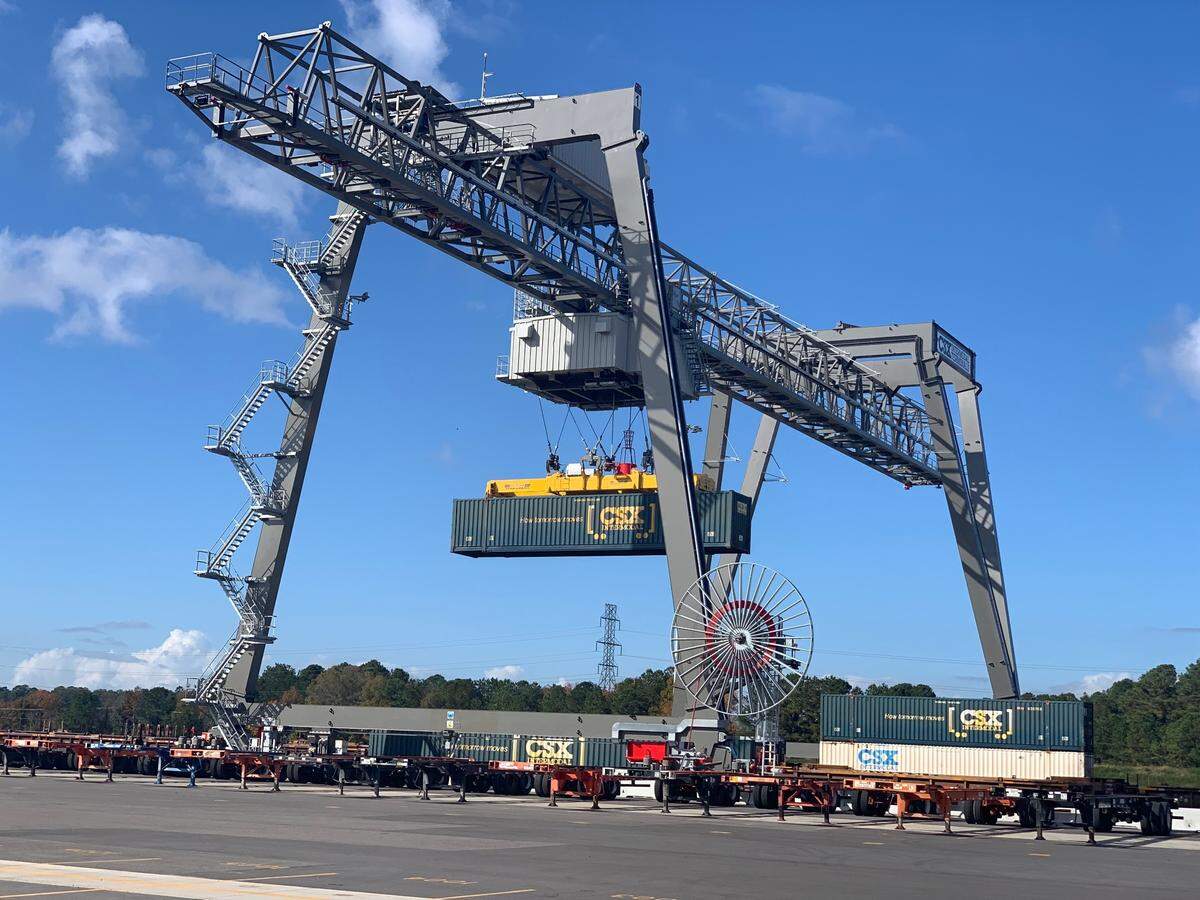
CCX was built to move about 110,000 containers a year. The 83-foot-tall cranes that lift and lower the containers are electric and operated remotely by workers inside a nearby building. The entire site employs only 14 people.
But the hope is that the yard will help create and retain jobs elsewhere in the region. The Carolina Gateways Partnership is helping CSX market the 380 unused acres at CCX to businesses that want to be nearby, Tolson said.
“We are seeing a ton of folks that are asking us, ‘Where can we build warehousing? Where can we build a fulfillment center? Where can we build logistics operations?’” he said.
Earlier proposal in Johnston County scrapped
CSX had originally planned to locate a container hub along its mainline through Johnston County, between Selma and Micro. It ran into opposition from landowners, and then a change in leadership at the company made it seem that a new intermodal center might not happen at all in the region.
But state and local officials didn’t give up, said Nathan Goldman, CSX executive vice president.
“The governor and DOT and economic supporters never stopped talking to us,” Goldman said. “The approach was .... ‘How can we get this place built? What will it take to work?’”
In the end, CSX invested $40 million in the project, compared to the $118 million from the state. At the groundbreaking in 2019, CSX president and CEO James Foote said intermodal terminals like CCX are now built only with help from local, state or federal governments and the company would not have done the project on its own.
This story was originally published November 18, 2021 at 5:27 PM.