Are college degrees keeping Black talent on the sidelines? A new nonprofit says yes.
Corporate leaders, local officials and entertainment figures will converge Wednesday for a radio round-table on employment inequity in the Triangle and “removing the four-year degree barrier.”
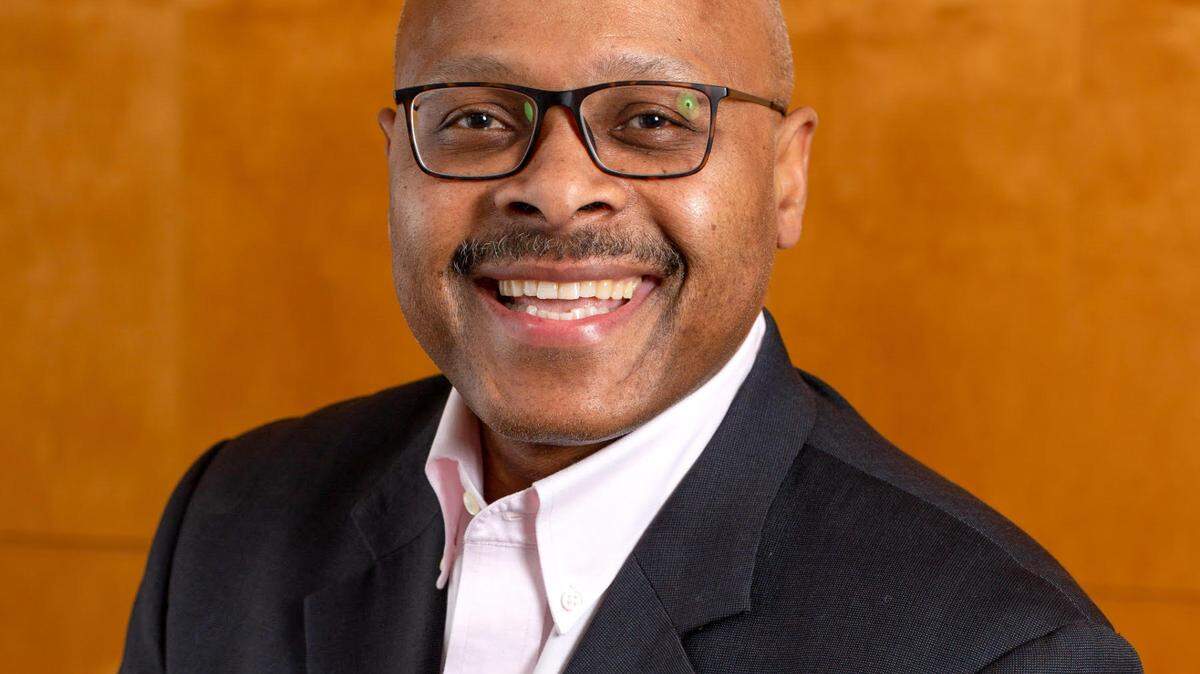
Panelists at the #LetsTalkJobs Virtual Town Hall will discuss systemic challenges for minority populations in the jobs market, including what some industry leaders are calling an “overemphasis on four-year college degrees,” according to Maurice Jones, CEO of OneTen, a nonprofit dedicated to overcoming job inequity for Black Americans.
In the wake of 2020’s Black Lives Matter movement, several corporate CEOs “came together to do something really significant around jobs, which is the main currency in order to get at these disparities that are tearing our country apart,” Jones said. “And when they did their homework, they discovered some data points that really crystallized the mission for them.”
The companies — which included IBM, Merck, Oracle and others — discovered 79% of jobs paying $60,000 or more required a four-year degree, according to Jones. “And then when they looked at the workforce, they discovered 76% of all Black talent ages 25 and above in the workforce do not yet have a four-year degree.”
Upon evaluating their job postings, the companies uncovered an incongruity between default degree requirements and job duties.
“They started looking through the lens of a skills-first perspective,” Jones said. “And as they credentialed jobs, they could literally remove the four-year degree requirement from jobs where it didn’t make sense as a threshold barrier of entry.”
IBM, a prominent institution at Research Triangle Park since the 1960s, was among the earliest companies to overhaul its talent acquisition protocol. About eight years ago, according to Jones, 80% of IBM’s job postings called for college degrees.
“Now it’s 50%,” Jones said. “What we’re seeing is there are jobs in technology, jobs in finance, jobs in business operations like human resources, manufacturing jobs — what we’re seeing is there are actually jobs across the board that required at one point a four-year degree. But when you do the hard work and start identifying the skills, you realize that there are actually multiple pathways to come about those skills.”
Merck, Cisco and others with major Triangle operations made similar commitments to reconsidering college degree requirements, joining OneTen’s coalition of companies dedicated to improving job prospects for minority populations.
The nonprofit’s name is an abridged version of its mission: Over the next 10 years, create 1 million, high-paying jobs for Black Americans without four-year degrees.
“You can’t do that in 10 months or two years,” Jones said. “This is about changing the country.”
So far, 68 companies have partnered with OneTen. The nonprofit, which launched in 2021, has helped create 25,000 jobs in its first 10 months of operation.
“It’s a good start, and the feedback has been excellent,” Jones said. “We’re hearing that some people are better prepared for the roles they take on and there’s a lower attrition rate than historically.”
Jones and others will discuss OneTen’s strategy at the #LetsTalkJobs town hall at noon Wednesday. The discussion will stream on Foxy 107.1. Besides Jones, panelists will include Durham Mayor Elaine M. O’Neal; Dr. Anitra M. Manning, a diversity and inclusion strategy and programs leader at IBM; 9th Wonder, a Grammy Award-winning Hip Hip producer; and Deborah Holt Noel, host of PBS’ North Carolina Weekend.
This story was originally published April 19, 2022 at 2:46 PM.