How an NC company is punching back against alleged Triangle-area ‘patent troll’
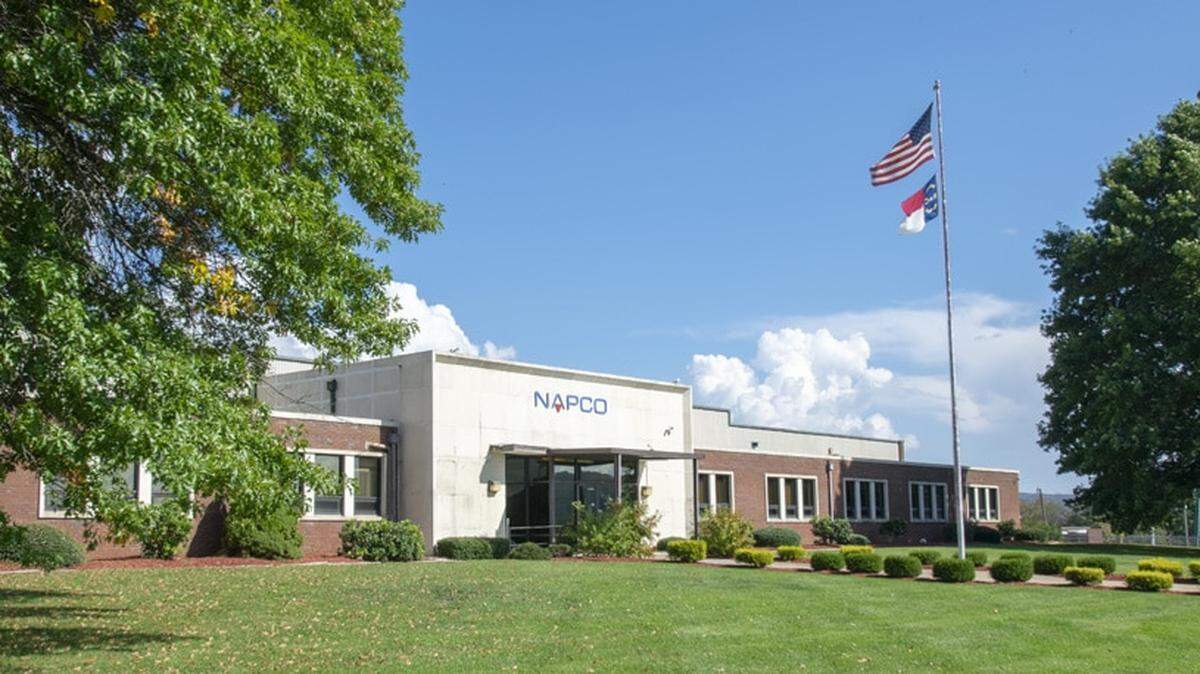
In October 2020, Rocky Proffit received a threat cloaked as an offer.
It came in a letter, which said for the “discount” price of $65,000, Proffit’s company NAPCO Inc. — which makes custom packaging in the small town of Sparta, could secure the non-exclusive rights to Patent No. 7,010,508. However, the letter intimated if Proffit didn’t pay, NAPCO could be sued for patent infringement.
The message was sent by a lawyer for another North Carolina company, Landmark Technology A, which lists its main address as an office suite near Research Triangle Park. And while Proffit had never heard of Landmark Technology or Patent No. 7,010,508, many other business owners had.
Landmark is considered by many to be a patent troll, having accused hundreds of companies over the years of violating its patent, which covers an “automated multimedia data processing network.” Landmark has asserted this applies to a wide range of e-commerce platforms, like NAPCO’s website binders.com.
Patent trolls make money by threatening to sue, and sometimes actually suing, businesses for infringing on their patents. Critics argue these patents are often vague in language, dubious in validity, and wielded indiscriminately to make companies pay rather than endure a much costlier, lengthier legal process.
“It’s easier to settle than to fight,” said James Passé, a patent lawyer in Raleigh. “Small companies look at the patents and say, ‘This doesn’t cover jack, but I’ll pay the money, you bastards.’”
In addition to NAPCO, Landmark has sent similar demand letters to more than 1,000 companies nationwide since 2019, requesting $65,000 for use of its “automated multimedia” patent. Last year, the State of Washington sued Landmark for abusive patent practices, with state Attorney General Bob Ferguson alleging the company “broadly and aggressively misuses the patent claims, targeting virtually any small business with a website, seemingly at random.”
According to North Carolina business records, Landmark is a “patent licensing” company with one managing member, a Cary resident named Raymond Mercado. The company also lists Patrick Ames, who could not be reached by phone, as an assistant secretary.
Mercado earned a Ph.D in political science from Duke University and has written against patent law reforms in a number of op-eds and law review articles over the past 15 years. He did not respond to requests for comment by phone call, text or email.
Landmark is a virtual client at Regus, an office space rental company near RTP. Regus’ website explains virtual clients don’t have a full-time physical office but do benefit “from having a prestigious address in a leading location.”
Patent trolls are technically known as non-practicing entities (NPEs) or patent assertion entities (PAEs), and they’ve been on the rise. The NPE Litigation Database at Stanford University, which tracks every patent lawsuit filed in district court, has found an increase in NPE cases since 2000, with 55% of patent lawsuits now being filed by patent-assertion entities. According to the Harvard Business Review, businesses spend $29 billion each year defending against NPE lawsuits.
From 2008 to 2018, a previous iteration of Landmark Technology sued more than 130 businesses for patent infringement, the State of Washington found, with others likely negotiating payoffs before reaching litigation.
But after receiving a demand letter from Landmark, Profitt didn’t negotiate or wait to be sued. Instead, he did something few North Carolina business owners, if any, had done before: He sued first.
First test of NC anti-troll law
In March 2021, NAPCO accused Landmark in North Carolina District Court of trying “to extract and extort a baseless and unreasonable” license fee from the packaging company.
NAPCO is asking the court to invalidate Landmark’s patent and force the NPE to cover the company’s legal fees, which Proffit said have already exceeded $100,000. He figures the cost is at least twice the amount he could have originally paid Landmark in a negotiated payout. But Proffit didn’t want to yield to a business practice he says has hurt many North Carolina business.
“It’s been very costly and very painful for small- and medium-sized businesses to try and protect themselves,” he said. “Not only from a financial standpoint, but it takes a lot of time.”
Landmark is being defended in this case by the Charlotte law firm Shumaker, Loop & Kendrick. In a statement to The News & Observer, Landmark’s lawyer Tom BenGera argued courts have routinely upheld patent holders’ right to protect their inventions, regardless of whether they are actively using the patent.
“NAPCO has resorted to name-calling and refused to take a license when one was offered,” he said.
The lawsuit is being closely watched in North Carolina. Attorney General Josh Stein and local technology companies like SAS Institute and Red Hat filed amicus briefs in support of NAPCO, arguing frivolous patent lawsuits hinder the state’s growing tech sector.
Most patent lawsuits, both real and frivolous, are filed against technology firms.
NAPCO v. Landmark is also the first test of the North Carolina’s 2014 Abusive Patent Assertion Act, which made it unlawful to make a “bad-faith assertion of patent infringement.” Last year, Landmark tried to get the lawsuit dismissed on grounds that the law violated the company’s First Amendment right to free speech, the 14th Amendment, and the Constitution’s federal Commerce Clause. The court denied Landmark’s motion last August.
In this way, NAPCO’s challenge has already solidified frivolous lawsuit protections in North Carolina, and many — including Proffit himself — are curious to see how far the case will go toward deterring trolls.
Landmark’s litigious past
Each year, the United States Patent Trademark Office (USPTO) receives more than 600,000 patent applications, continuing a steady rise in applications since at least the 1960s. USPTO examiners review each application, and their workload can be overwhelming said Keith Robinson, a patent law professor at the Wake Forest University School of Law.
“Patent examiners only get a limited amount of time to review patents,” he said. “They are doing the best they can with the time they’re given.”
To gain approval, a patent needs to be new, useful and non-obvious. Yet with an average of 19 hours to research each application, Robinson said, examiners make mistakes. He reviewed Landmark’s patent for The News & Observer and called it a “classic patent troll patent” because it took “something that’s already been done and put it on the internet.”
The government had been “generous in assigning Internet-related patents,” The Los Angeles Times reported in a 2003 article profiling Lawrence Lockwood, the man who would go on to file Patent No. 7,010,508 and own Landmark Technology.
Lockwood was a former San Diego travel agent who, after obtaining an initial patent in the early 2000s, began suing companies for infringement. Asked why he went the litigious route, Lockwood responded “American businesses do not respond when you ask them nicely.”
The USPTO approved Lockwood’s patent in 2006 for an “automated multimedia data processing network,” which Landmark cited in lawsuits over the next dozen years. Landmark often filed cases in the Texas Eastern District Court which had a reputation for plaintiff-friendly juries in patent disputes.
In 2014, eBay petitioned the federal Patent Trial and Appeal Board, which can review and invalidate low-quality patents, to examine Landmark’s patent. Landmark sued the e-commerce giant in response, and the two sides reached a settlement that ended the review petition. In its lawsuit against Landmark, NAPCO alleges that after the NPE tangled with eBay, it focused its patent-assertion efforts “exclusively on smaller companies who may not have the financial resources to file invalidation actions.”
In late 2018, a new company called Landmark Technology A registered in North Carolina. It was similar in both name and business model to the previous Landmark.
BenGera would not explain why this new Landmark registered in North Carolina. He did write in an email that his client’s patent “represents countless hours of research and development, and (among other things) fundamentally changed e-commerce, a contribution to society for which its inventor was awarded a U.S. patent.” He added that there is “no question” NAPCO uses the patent and benefits “from the inventor’s hard work.”
A few ‘red flags’
On Oct. 16, 2020, Landmark Technology A sent its patent assertion letter to NAPCO, which employs 95 people at its Sparta facility and operates a second facility in Alabama. The demand letter contained a few “red flags” that it was written by a patent troll, said Passé, who reviewed the letter for The N&O but who is not involved in the company’s ongoing lawsuit against Landmark.
Passé said it was unusual for a patent-asserting entity to list a specific amount for payment, in this case $65,000. Second, he said Landmark’s letter didn’t show the company had done “any kind of analysis” into what NAPCO does or how its website binders.com violated the patent. Third, Passé doubted any NPE could credibly find more than 1,000 companies that were infringing its patent.
Some disagree to what extent patent trolls hurt businesses. In a 2018 speech to the Eastern District of Texas Bar Association, Andrei Iancu, who was then serving as USPTO director under President Donald Trump, compared patent troll narratives to “scary monster stories” that decrease patent protections and actually inhibit innovation.
But others believe non-practicing entities are worthy of vilification. When he filed his amicus brief in support of NAPCO, Attorney General Stein said patent trolls were “a drain on North Carolina businesses’ resources” adding, “We need to foster conditions to allow these businesses to spend their time in the lab, not in court.”
In the past year, North Carolina Sen. Thom Tillis has partnered with Vermont Sen. Patrick Leahy to propose legislation to increase patent ownership transparency and reform the USPTO’s Patent Trial and Appeal Board.
In April, the Republican and Democratic senators penned a joint op-ed in The Hill, writing: “We feel it is important that those facing lawsuits from patent owners should have the opportunity to raise at least one legitimate, good-faith, and meritorious challenge against patents being asserted against them, without allowing the process to overwhelm patent owners with gamesmanship and strategic litigation, particularly for small businesses and individual inventors.”
This week, Tillis and Leahy introduced the Patent Examination and Quality Improvement Act of 2022, which would require the Comptroller General of the United States to submit a report on how to reform the USPTO to ensure stronger patent approvals.
‘Maybe it’ll help other small businesses’
More than 95% of patent lawsuits end in settlements, and NAPCO’s attorneys don’t believe their case against Landmark will be an exception. Kelly Cameron, who is representing NAPCO for the firm Waldrep Wall Babcock & Bailey in Greensboro, anticipates Landmark will “cry uncle” before any part of their patent could be invalidated by a judge.
A settlement would end the first legal test of the state’s Abusive Patent Assertions Act, erasing an opportunity for a court to define how language in the 2014 law — like “bad-faith assertion of patent infringement” — would apply in real disputes.
A settlement could also mean Landmark would exit the lawsuit with its prized, notorious patent intact. But this time, Landmark would be settling as a defendant, not a plaintiff, and potentially paying out money rather than bringing it in.
This could make the company reconsider it business practices, said the man who sued them.
“It’ll be on record that it is illegal what they’re doing,” Proffit said. “And maybe it’ll help other small businesses not have to go through what we’ve had to go through.”
This story was produced with financial support from a coalition of partners led by Innovate Raleigh as part of an independent journalism fellowship program. The N&O maintains full editorial control of the work.
This story was originally published August 5, 2022 at 5:45 AM.