Triangle CEOs detail chaotic days after Silicon Valley Bank collapse

By Monday, Alex Lassiter was ready to reflect. “It was quite a time to be alive in tech,” he said of the preceding four days. “This was not on my 2023 bingo card for the typical challenges of building and growing a business.”
Lassiter, 35, is the founder and CEO of Green Places, a Raleigh startup that provides software to track businesses’ environmental sustainability. His company employs 25 people and has raised $5 million since forming in 2021.
And until late last week, Green Places had its primary banking with Silicon Valley Bank, a California-based financial institution that catered to venture-backed startup firms. Now known to much of the country as SVB, the bank did a good job of understanding startups like Green Places, Lassiter said.
“When you start a business, the vast majority of your assets are illiquid, and that’s hard for some banks to wrap their heads around,” he said. “But SVB would understand that, so it makes it easy to set up bank accounts.”
SVB was the 16th largest bank in the United States and had an office in downtown Raleigh. On Friday, it became the second-largest bank in U.S. history to fail.
For those connected to the North Carolina Triangle startup scene — as founders, venture funders or bankers — the days since SVB’s collapse have been filled with swelling anxieties, ultimate relief and lingering questions about how startups will bank going forward.
“It’s almost like the entire industry had one single point of failure, and it just completely halted everything,” Lassiter said. “It was pretty scary.”
Thursday: Concerns mount
By Thursday morning, alarming news about Silicon Valley Bank was circulating among Triangle-area entrepreneurs.
“I was inundated with messages from people saying, ‘Are you watching SVB?’” said Scot Wingo, founder of the Triangle Tweener Fund, which counts 50 area startups in its portfolio. “So, then I got up to speed on it very quickly.”
What ultimately doomed SVB is complex, but the basics are that in 2021, the bank used its large influx of deposits to purchase a significant number of long-term, low-interest bonds. This may have seemed prudent at the time, but as interest rates subsequently rose, the value of SVB’s holdings tumbled.
According to Wingo, 10 Tweener Fund members had their money with SVB, including Green Places. Wingo’s own startup, the mobile car company Get Spiffy, had ended its relationship with the bank 18 months prior.
“We sent a note out immediately to folks saying this looks bad,” Wingo said. “Our recommendation is you should move at least down to the FDIC amount of $250,000.”
The Federal Deposit Insurance Corporation (FDIC) protects up to a quarter million dollars in account deposits at insured banks like SVB. “($250,000) is like nothing for a business to operate,” Lassiter said. “In some cases, that’s like one month payroll.”
With concerns about his primary banker mounting, Lassiter made arrangements late Thursday to open an account with the Wilmington-based Live Oak Bank.
“They were absolutely phenomenal,” he said. “Our rep there was on the phone with me until midnight, getting our account set up. We were able to trigger off transfers that gave us a lot of short-term flexibility that we wouldn’t have had otherwise.”
Friday: Money trapped
But Lassiter, like other Triangle-area founders, still had money stuck with SVB on Friday. That morning, a nationwide bank run forced the federal government to step in and assume control of the bank’s assets.
Of the 10 Triangle Tweener companies with SVB exposure, half didn’t get their money out before the bank was shuttered, Wingo said.
The home-building startup Atmos, which is based in San Francisco but focuses on North Carolina markets, had “millions” left with SVB said CEO Nick Donahue, who graduated from Durham’s Riverside High School and dropped out of N.C. State in 2017.
“(On Friday,) we tried to wire funds out and found that we weren’t able to wire any funds from our SVB account,” he said. “It brought a lot of worry around when our employees were going to get paid.”
When an FDIC-insured bank fails, the federal government creates a separate company to distribute insured balances, up to $250,000. But recent filings showed more than 85% of SVB deposits were uninsured. Because bank failures are rare — the last major one occurred during the 2008 financial crisis — there wasn’t a clear roadmap for how, or if, SVB customers would get their money back.
When the government takes over a bank, it will sell its assets and pass on the revenue to customers — though how long this process takes and what percentage of original deposits customers receive — is not clear.
“There were a lot of rumors circulating,” Lassiter said. “Like, you might get the money, but it’s going to be delayed for nine months, which would have been problematic. (Pundits) were basically horse trading your bank account on live TV.”
For startups that needed to make payroll in the short-term and needed to grow in the long-term, being able to access funds was crucial.
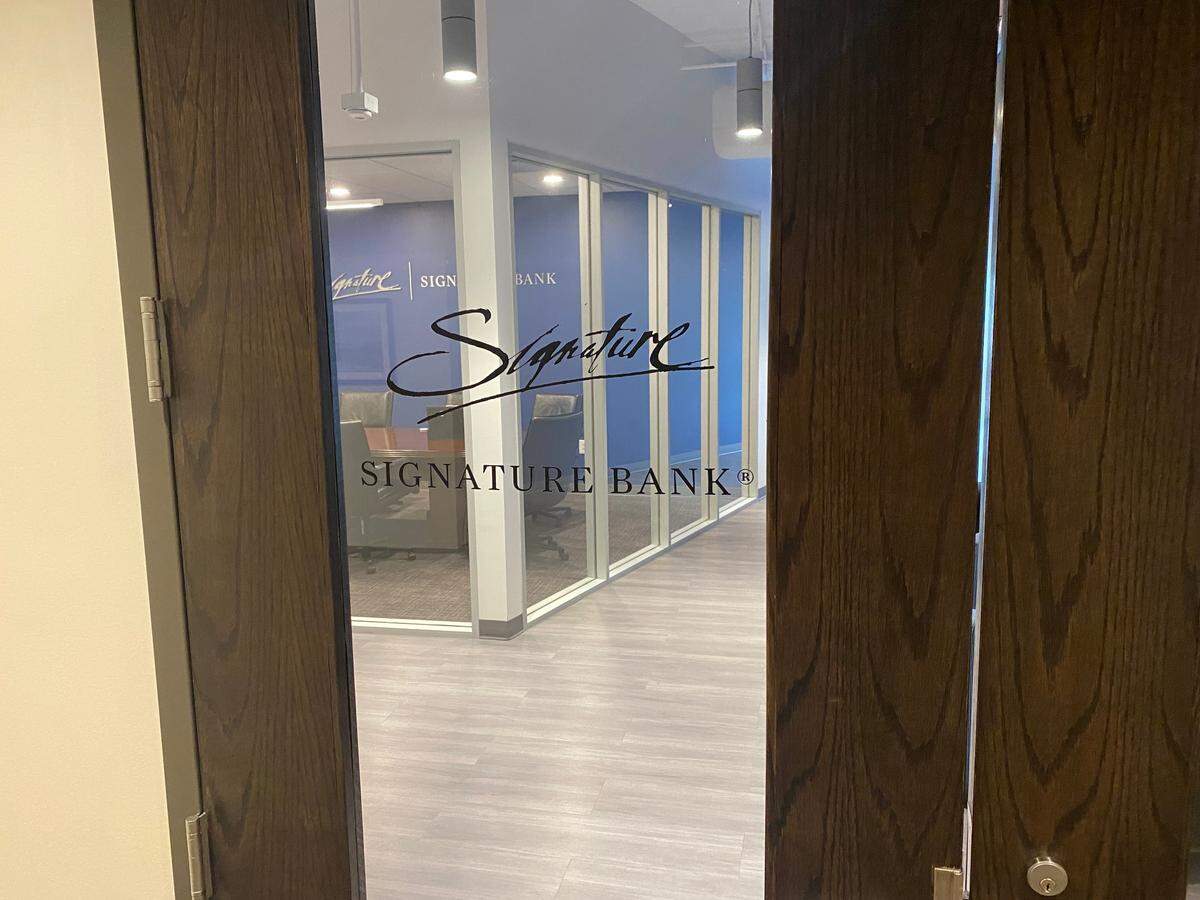
There was also concern that SVB’s ruin would spark bank runs on other financial institutions where venture-backed companies had accounts. The worrying was justified: Signature Bank, which was based in New York and has an office in downtown Durham, was seized by the federal government on Sunday after customers rushed to remove deposits. According to Wingo, three Triangle Tweener Fund members had accounts at Signature.
On Friday at Atmos, Donahue faced the immediate threat of missed paychecks because the payroll management platform his company used, called Rippling, itself had money stuck in Silicon Valley Bank.
“Just thinking about all the employees that we have, that I care a lot about, and what this meant for them,” he said. Donahue’s confidence was eventually bolstered when Atmos investors, including Sam Altman of OpenAI (the company behind ChatGPT), pledged to cover payroll periods if the company wasn’t able to access its money.
“Going into Saturday, we finally had a clarity of how we were going to pay people,” he said. “That definitely relieves a lot of the initial stress.”
The weekend: ‘A gigantic sigh of relief’
For six hours Saturday, Lassiter was on hold with the FDIC, trying to file for his insured $250,000. Green Places had “well over” that amount with SVB, he said, but with much of his company’s funds locked down, the money was vital.
However, by then, Lassiter knew Green Places would have options even if it couldn’t access its funds.
“I mean people were coming out of the woodwork (to help),” he said.
Green Places investors offered support, and local banks like Bridge Bank in Durham cobbled together emergency loan programs to help tide over startups.
“One positive is, we came together as a community,” Wingo said. “Phase one was who’s impacted. Phase two was about, when Monday comes around, if there’s not a solution, how can we get behind folks?”
Then on Sunday, a broader solution arrived. U.S. Treasury Secretary Janet Yellen announced SVB customers would have “access to all of their money” on Monday.
“No losses associated with the resolution of Silicon Valley Bank will be borne by the taxpayer,” the government declared in a statement.
“It was a giant sigh of relief,” Lassiter said. “It gives us a whole lot of comfort that the money’s there, it’s going to be available, and we can kind of resume business.”
Donahue said the Treasury action soothed anxieties about additional bank runs.
For Wingo, the worst appears over, even if the future of banking has become less clear.
“It’s hard to tell, but right now, the clouds have parted,” he said. “I don’t know if there’s a thunderstorm behind what just happened or it’s going to be sunny, but it definitely was really good that the government stepped in to help these companies that are kind of next-generation engines of innovation.”
Monday moving forward
On Monday, Donahue was eager to transfer all Atmos funds from the former SVB to his account at Bank of America.
“I think there’s just so many people trying to use the system right now,” he said Monday. “It takes like 15 tries to log in, and takes like 10 tries to try to accept a wire that I haven’t even able to access yet.”
Until that money reached his Bank of America account, Donahue said he wouldn’t feel like the turmoil of the last few days was over. By late Monday, he said the wire had finally been initiated and that the money should be in transit.
That Donahue moved his company funds to one of the nation’s largest banks could reflect a shift in how startups bank in the future.
Joe Colopy, partner at the software-focused fund Jurassic Capital in Durham, said companies may “start leaning toward larger, more diversified banks,” in the wake of the SVB tumult.
Despite the Treasury’s action, unease still swirls around smaller regional banks. Shares of Western Alliance Bancorporation, which owns Durham’s Bridge Bank, have fallen 45% in the past five days.
Green Places will now utilize two banks accounts, Lassiter said, one at a major bank that he perceives “too big to fail,” and another at a more regional bank like Live Oak, which orients to small businesses.
“I do think that a lot more businesses will diversify (where they deposit their money),” he said.
With the chaos from the past few days, seemingly settled, Lassiter can now return his focus to normal startup operations. As carbon footprint reporting becomes more prevalent, he believes Green Places has a busy year ahead.
This story was produced with financial support from a coalition of partners led by Innovate Raleigh as part of an independent journalism fellowship program. The N&O maintains full editorial control of the work.
This story was originally published March 14, 2023 at 10:50 AM.