Open Source: What Amazon is telling Garner warehouse workers to ward off a union
I’m Brian Gordon, tech reporter for The News & Observer, and this is Open Source, a weekly newsletter on business, labor and technology in North Carolina.
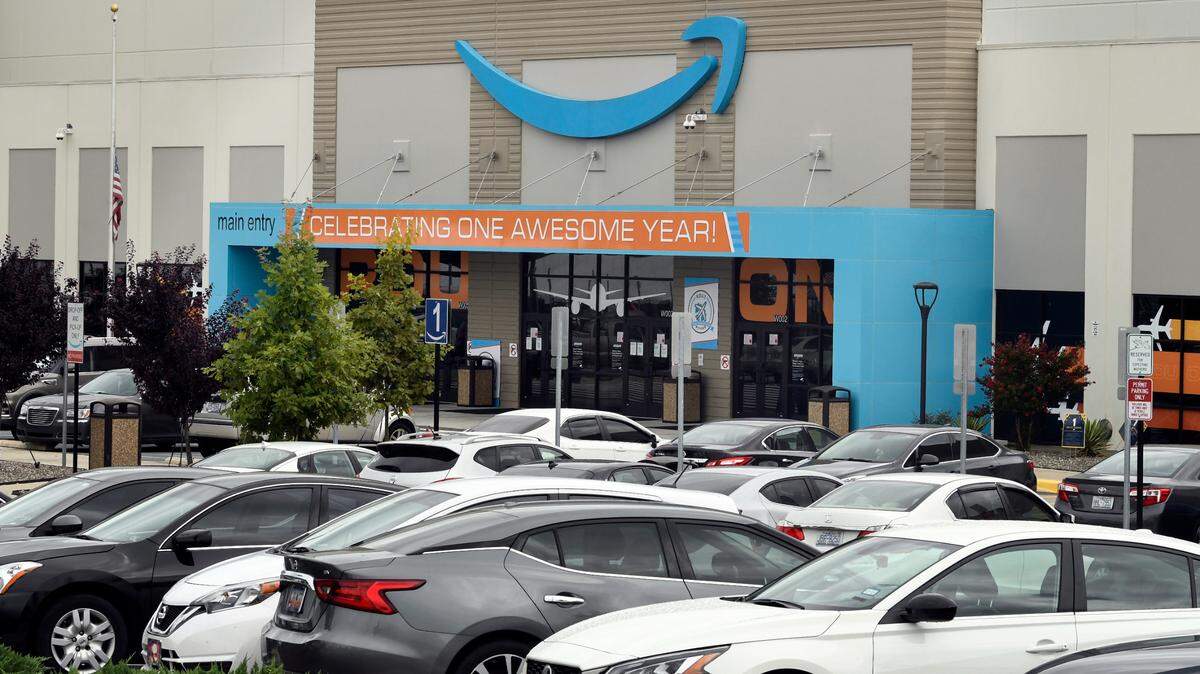
Will a mammoth fulfillment center in Garner, North Carolina, be the second Amazon facility in the country to unionize? We’re one step closer to finding out as the independent organizing group Carolina Amazonians United for Solidarity and Empowerment, or C.A.U.S.E., has begun collecting union authorization cards from workers at the warehouse named RDU1.
At least 30% of employees must sign these cards before the National Labor Relations Board will schedule an election, though logically, unions generally want more than half of employees to sign before moving forward. Cards are valid for one year, so the clock at RDU1 has started.
It’ll be a big operation. RDU1 is massive, with employee estimates between 3,500 and 6,000. And staff turnover is high, complicating outreach efforts. Throw in the track record of other Amazon unionization efforts, and it’s definitively an uphill battle.
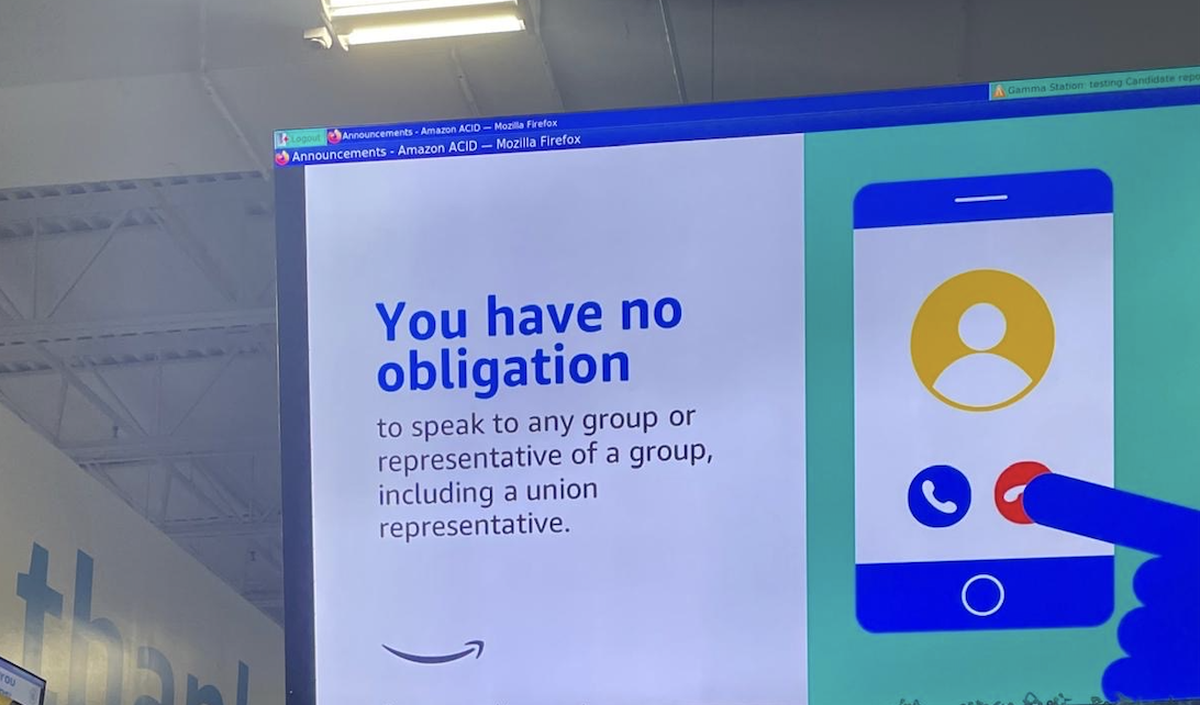
Amazon has also fought against the Garner campaign, holding anti-union informational meetings and posting a message on its facility video board that tells workers, “You have no obligation to speak to any group or representative of a group, including a union representative.” An adjacent image shows a finger declining a call on a phone screen.
In a recording of an Amazon informational union meeting at RDU1, posted on X and shared with The News & Observer, a man in a yellow safety vest tells a small room of employees that “an authorization card is a legally enforceable document that will be provided to the government.”
“Union authorization cards ask for personal information from you which can then be used by a union in lots of different ways to contact you,” he says. “The group may even share your information with other outside groups.”
The screen behind the speaker lists additional “consequences” of signing cards.
Amazon spokesperson Eileen Hards said employee attendance at these meetings is optional (though employers can legally mandate attendance as well). In a separate email, she shared the company’s overall stance toward its workers unionizing, writing, “The fact is, Amazon already offers what many unions are requesting: competitive pay, health benefits on day one, and opportunities for career growth.”
Anti-union sessions tend to have their intended effect, according to Jeff Hirsch, a professor of labor law at UNC-Chapel Hill. “Usually there’s a payoff for employers,” he said. As a result, Hirsch notes unions typically want well above 50% of workers to sign authorization cards before requesting an election. Signing cards doesn’t obligate employees to support the union, and some enthusiasm may erode as Amazon (or any employer) pushes against it.
Informational meetings aren’t the only step Amazon has taken (or been accused of taking) to reduce union support. Union advocates have branded the company a major union buster, as the nation’s second-largest private employer faced 240 open or settled unfair labor practice charges at the end of 2023, according to the National Labor Relations Board, including accusations of illegal behavior around union elections. In February, Amazon argued the NLRB is unconstitutional.
On Wednesday, C.A.U.S.E held a press conference across the street from the immense 2 million-square-foot Garner warehouse. As organizers passed out leaflets to passing drivers, union leaders expounded on their demands for $30-an-hour minimum starting wages and a full hour of paid break during 10-plus-hour shifts. “How can we work 10 hours a day and still not make enough money to get by?” said Mary Hill, one of the two RDU1 employees who formed C.A.U.S.E. in January 2022.
At this point next year, we should have a clearer sense of the RDU1 union campaign’s viability. The union has collected authorization cards since Labor Day. But Amazon has been warding off unions for longer.
Clearing my cache
- Bless you! In a few years, the cold and flu medication Mucinex will be manufactured about an hour’s drive east of Raleigh. That’s if all goes according to the plans announced this week for a new 290-worker pharmaceutical facility in the city of Wilson.
- The German tech conglomerate Siemens cut the ribbon this week on a $36 million addition to its facility in Wendell. The campus serves as the headquarters for Siemen’s U.S. electrification and automation operations and currently employs just shy of 800 workers.
- American Underground, downtown Durham’s first coworking space, has partnered with Fidelity to launch a new accelerator program. Fifteen tech-centered startups were selected for the fellowship, which will include 10 weeks of workshops and mentorship sessions — culminating in an opportunity to present their companies to investors.
The inaugural fellowship class includes:
- BabyBumps — An application intended to autonomously connect parents and surrogates.
- Unplex — This payment system enables Venmo-like transactions over WhatsApp (Venmo currently only functions in the United States.)
- Gridspot — With its digital platform, the startup aims to increase access to electric vehicle chargers.
National Tech Happenings
- At the White House a few weeks back, the ChatGPT creator OpenAI lobbied the Biden administration for the U.S. to build enormous new data centers. Bloomberg reported the centers OpenAI seeks would be 5-gigawatts, which is sufficient to power close to 3 million homes. The company reasoned such massive facilities are needed to advance artificial intelligence models and keep pace with China.
Significantly smaller data centers are already proliferating across the country, with North Carolina no exception. According to Data Center Map, there are 63 centers in the state. While this isn’t an official count, the same database showed North Carolina only having 29 data centers in October 2014.
There’s much to discuss about data centers, especially in the age of AI. I hope to dive into it soon.
- Did Google just pay $2.7 billion to bring back a top AI visionary? In a sense, yes. The search giant spent this hefty sum to license the chatbot service Character AI, and in doing so, Google is able to rehire Character AI’s CEO Noam Shazeer, a Duke University graduate who some consider an “AI genius.”
Meta introduced its new Orion smart glasses, which can impose augmented reality onto what users naturally see.
- The world’s first 3D-printed hotel is being erected in the small artsy hub of Marfa, Texas.
Thanks for reading!
This story was originally published September 27, 2024 at 8:34 AM.