NC court case on health care law may turbocharge Atrium and Novant competition
An eye doctor’s lawsuit against North Carolina’s Health Department may change how the two largest hospital systems in Charlotte compete to provide patient services.
The case centers around the constitutionality of the state’s Certificate of Need law, which regulates equipment purchases, beds and new hospital construction for medical providers based on regional need. The goal of the law is to keep health care costs down by ensuring there are not duplicate services in a given area, or that services are added for a demonstrated need.
An October N.C. Supreme Court ruling in the case could turn the state’s health care industry upside down by ordering a trial court to determine if the Certificate of Need law is constitutional.
“The complaint contains allegations that, if proven, could render the Certificate of Need law unconstitutional in all its applications,” the high court said.
Dr. Jay Singleton, owner of Singleton Vision Center in New Bern, filed a lawsuit in April 2020 to challenge the law. The facility wanted to perform eye surgeries for patients, but Singleton could not run a formal surgical facility because state planners projected no need for the service in the area, according to the suit.
“In truth, banning Dr. Singleton from offering surgeries to all patients at his clinic serves one purpose only: protecting established providers from competition,” the suit claimed. “That is unconstitutional.”
For instance, Singleton has the capability to perform cataract surgery for under $1,800 at his center but is legally required to perform the vast majority of eye surgeries, including for cataracts, at CarolinaEast Health System because of the CON law. And CarolinaEast charges $6,000 for its facility fee alone, according to the suit.
That’s is an expensive hassle for his patients and their insurance providers, he claimed in the suit.
Battle between Atrium and Novant continues
If two or more hospitals want to add the same type of equipment or make the same kind of expansion, state regulators will review each application to see if it meets CON requirements, before officials select one for approval.
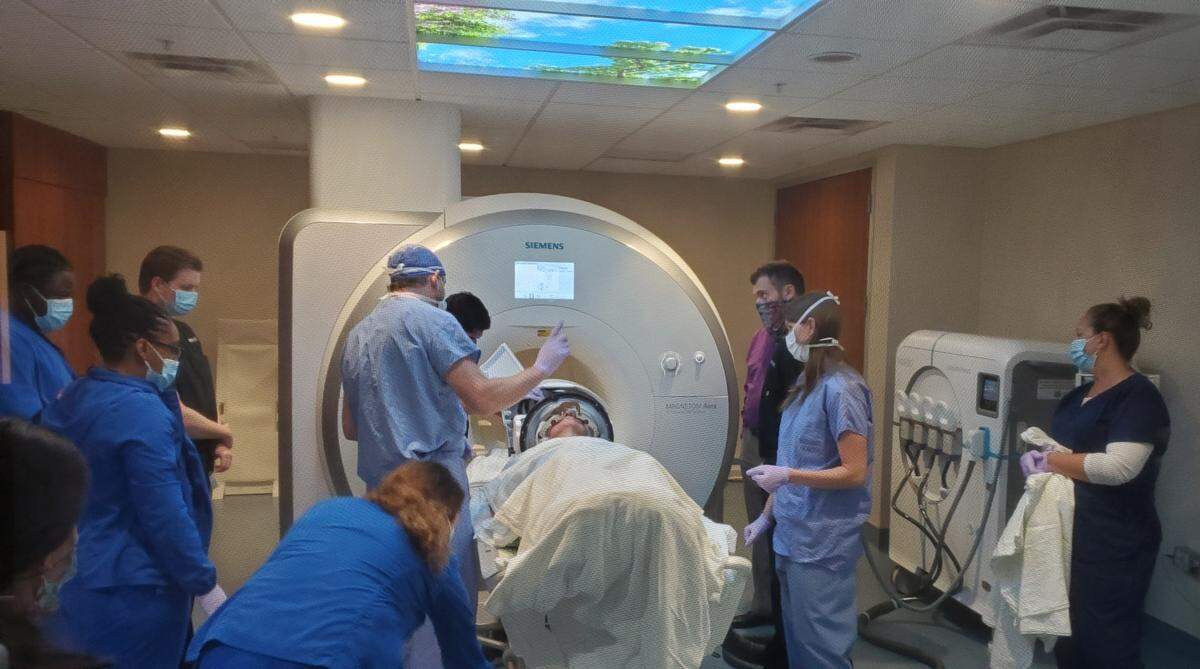
For instance, the latest competition between Charlotte’s main health care providers and rivals, Atrium Health and Novant Health, is for a 3D body scanner in Mecklenburg County to find diseases such as cancer. Both recently sought approval for the equipment.
The fixed Positron Emission Tomography scanner produces images of organs and tissues with a radioactive chemical. It’s listed as a need under the 2024 State Medical Facilities Plan.
Novant and Atrium declined to comment to The Charlotte Observer about the lawsuit.
A future medical ‘arms race’ ?
Richard Saver, UNC School of Law professor, believes the case could spark a significant change when it goes back to the trial court. He thinks the case will work its way back up to the N.C. Supreme Court if appeals are made.
The Singleton case has been making its way through the court system since 2020.
Saver is not picking a side, but said the law restricts health care providers from expanding without demonstrating need. This leads to costly regulatory battles and delays for medical providers.
“If you take the law off the table, you’re taking away significant upfront costs that any provider is now facing and having to clear in regulatory hurdles,” Saver said. “Even if they’re successful in getting a certificate, they often have to face significant time delays, regulatory review battles with some of their competitors who also want to fill the same spot.”
And if the law is overturned, it could increase competition and lead to a more robust market, Saver said.
But supporters of the law said health care operates differently than other markets when it comes to services and facilities because of insurance and financial reasons.

“We have a system of third-party payment where often patients themselves are not paying the full cost of their care,” Saver said. “And the hospitals and surgery centers they go to may be the result of their doctor’s recommendations and their own shopping around.”
Duplication of services is also a concern for CON advocates, Saver said.
“(You’ll) have a medical arms race where health systems are building up shiny new hospitals and new surgery centers and adding all these new bells and whistles to attract doctors to make referrals to them, even if it’s not leading to necessarily cost effective care,” Saver said.
For Charlotte, it may lead to more competition for certain specialized services such as high complex surgeries, where one provider was able to corner the market with the CON.
Atrium and Novant are going to battle regardless, Saver added. But if the CON system goes away, it could advance the rivalry between the giants in Mecklenburg County.
Rural hospitals rely on the law to make sure they are the only provider in a certain area, which is crucial for their operations.
”They may not be able to generate the revenue they need to keep the lights on to attract new physicians to join the medical staff,” Saver said. “And when we’re in a state with a lot of rural health care facility closures happening.”
N.C. lawmakers have made efforts to narrow the law amid the ongoing legal challenge. And with more than 30 states with different versions of such laws, Saver said the new legal challenge may lead to the death of the system in other parts of the U.S.
“We’re already seeing the legislature slowly walking back and narrowing the CON law,” he said.
For instance, certain psychiatric and chemical dependency facilities are now exempt from having to apply for CONs. Another example Saver cited is ambulatory surgery centers in urban areas being exempt from the CON process.
“The legislature has been chipping away at the CON law for the last few years,” he said, “although keeping much of its core intact.”
This story was originally published November 4, 2024 at 10:09 AM with the headline "NC court case on health care law may turbocharge Atrium and Novant competition."