Open Source: What Trump’s return could mean for NC’s battery, lithium and EV projects
I’m Brian Gordon, tech reporter for The News & Observer, and this is Open Source, a weekly newsletter on business, labor and technology in North Carolina.
Goldman Sachs analyst Brian Lee cut to the chase. With the first question of Wednesday’s earnings call, Lee asked executives of the Durham chipmaker Wolfspeed if the incoming Trump administration and “potential red sweep” in the U.S. House and Senate could affect the $750 million CHIPS Act grant Wolfspeed received last month to support a massive new materials plant in Chatham County.
Since Donald Trump won reelection, many have wondered whether President Joe Biden’s major policy programs — the CHIPS and Science Act, the Bipartisan Infrastructure Bill, the Inflation Reduction Act — will survive over the next four years.
Some have concerns. “Trump’s win sets off race to complete Chips Act subsidy deals,” Bloomberg reported. And on Wednesday, Wolfspeed CEO Gregg Lowe said his company spoke with the CHIPS office the day after the election.
North Carolina in particular should pay attention to these policies. Wolfspeed got a CHIPS grant, yes, but even more companies have cited aspects of 2021’s Bipartisan Infrastructure Law and 2022’s Inflation Reduction Act when committing to the state.
This week, I asked a few of these manufacturers how the above laws influenced their choices.
“The National Electric Vehicle Infrastructure (NEVI) Formula Program funding was an important part of Kempower’s decision to expand to the U.S,” said Jed Routh, vice president of North American markets and products for the Finnish electric vehicle charging system producer Kempower, which late last year opened its first American facility in Durham.
Part of the Bipartisan Infrastructure Law, NEVI provides money to place EV chargers in areas the private sector hasn’t yet. Trump ally and Tesla founder Elon Musk has criticized the program though NEVI funds have gone to his EV company.
Routh noted less than 15% of Kempower’s business is NEVI-funded and that the company is “committed to our growth in the North American market.”
Earlier this year, another EV charging company called IONNA promised to open its headquarters (and create 203 jobs) in Durham.
Then there’s the Inflation Reduction Act and the many alternative battery makers that have pledged to open factories in North Carolina: Toyota, Epsilon Advanced Materials, Dai Nippon Printing, Natron Energy, Green New Energy Materials. Analysis shows no state has received more investments linked to the IRA, which created a $7,500 EV tax credit for vehicles so long as most (and eventually all) of their car batteries are made in the U.S.
“We remain optimistic that Epsilon’s North Carolina operations may be eligible for future incentives under the IRA as policies evolve to support the transition to sustainable energy solutions,” Epsilon Advanced Materials CEO Sunit Kapur said in an email.
Based in India, Epsilon plans to build a new lithium-ion battery plant outside Wilmington.
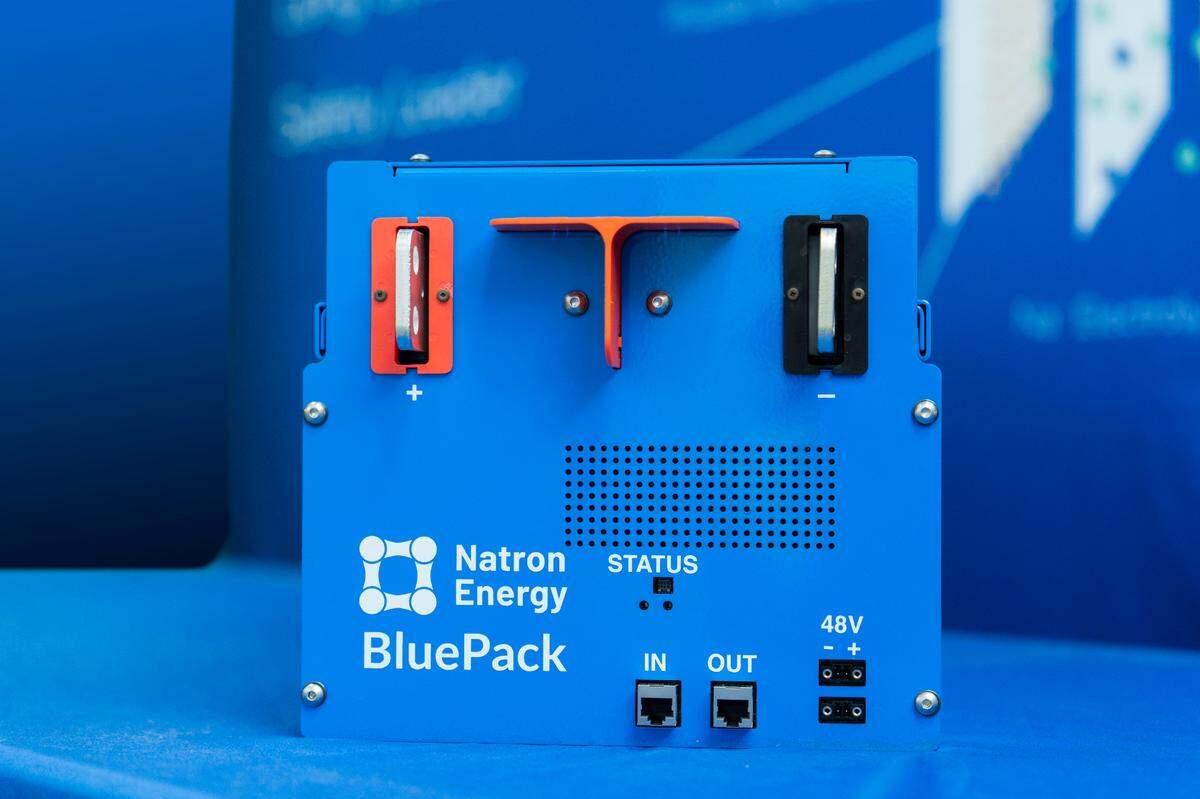
This summer, the sodium-ion battery producer Natron Energy announced it would open a gigafactory in Edgecombe County. Like the other battery projects, Natron received a state incentive package, separate from federal policy, to support its development.
“Natron Energy is fortunate to have a strong partnership with the state of North Carolina as it continues to progress through the planning and development stages of the Edgecombe County facility,” company spokesperson Thomas Parks said in an email. “We note the results of the 2024 election and anticipate working with the new administration to further development of this important project.”
The Inflation Reduction Act also created a 10% production cost credit for mining critical battery materials like lithium, a material two resource companies — Albemarle and Piedmont Lithium — hope to soon mine near Charlotte.
During his campaign, Trump promised to eliminate any unspent dollars from the Inflation Reduction Act. But doing so would require congressional cooperation. It isn’t clear if politicians who represent states from the “Battery Belt” emerging in the South and Midwest will want to scuttle the IRA funding.
“People talk about cutting spending programs,” said Gerald Cohen, chief economist at UNC’s Kenan Institute of Private Enterprise. “But then when it comes to it, it’s really hard to cut these things. I think there’s that political question. There are a lot of red states that are beneficiaries of this.”
The IRA’s electric vehicle tax credit has contributed to a 3% increase in domestic EV market share according to an October 2024 research paper coauthored by Felix Tintelnot, an associate professor of economics at Duke University. Whether such an increase was worth the cost is one thing, but any EV market share rise should benefit the lithium mining and battery projects poised for North Carolina (not to mention VinFast’s delayed EV assembly plant).
And what about Wolfspeed and its CHIPS grant? During the company’s earnings call Wednesday, Lowe said he believed funding for domestic semiconductor production will continue.
“I think the election results doesn’t change any of that,” he said. “There’s very strong bipartisan support for this activity.”
Wolfspeed cuts hundreds
Sticking with Wolfspeed: In June, the North Carolina semiconductor company employed 5,013 workers worldwide. Since then, and more specifically since its earnings call in August, Wolfspeed has lowered its global headcount by 20% through voluntary buyouts, attrition and, this week, layoffs.
That’s around 1,000 jobs gone — most of which were based at Wolfspeed’s main campus near Research Triangle Park. The company’s headquarters will remain in Durham, as will two of its three local factories. Wolfspeed also pledges to continue ramping up its massive semiconductor materials plant in Chatham County.
But in the short term, the prominent Triangle chipmaker needed to cut costs to ease investor concerns and position itself for growing its 200-millimeter substrate operations (in contrast to its 150-millimeter wafers).
Wolfspeed scored a victory last month when it received a $750 million CHIPS Act grant (along with a $750 million private loan). This money was needed and expected. Mass layoffs this week were arguably needed and expected, too, given that some harbored legitimate concerns over the company’s long-term liquidity.
If Wolfspeed leads the pack on producing 200-millimeter silicon carbide wafers, and market demand for these wafers is strong, the company should find success. But for now, it is an operation in transition.
The chipmaker’s stock price plunged 33% on Thursday after the company announced lower-than-expected revenue estimates for the coming quarter. It is back below $10 a share. Two years ago this month, Wolfspeed was selling for above $75.
Clearing my cache
- Microsoft purchased a 1,350-acre megasite in Person County last week but isn’t saying why. Given what Microsoft is developing elsewhere, the answer might be data centers.
- Charlotte-based resource company Albemarle lost $1 billion last quarter as the world’s largest producer of lithium sees the price of lithium falling.
- Wilmington’s bank software company nCino bought the England-based software platform FullCircl for $135 million.
- The Welsh semiconductor manufacturer IQE pledges to more than double its existing workforce in Greensboro — from 72 to more than 180 workers.
- Fujifilm Diosynth Biotechnologies plans to fully open its Holly Springs facility next year. And this week, the contract pharmaceutical manufacturer announced it will produce a multiple sclerosis treatment at the expanding Wake County site.
Greenville’s MrBeast partnered with two other mega popular YouTube stars to make a prepackaged kids’ lunch called Lunchly. The product is getting iffy reviews for its health content and reports of moldy cheese.
National Tech Happenings
- Trump’s election win propelled Bitcoin to a record-high.
- Russia has sued Google an impossible $20 decillion — more than the world’s entire GDP — alleging Google-owned YouTube blocked Russian media channels. This symbolic fine amount has 37 digits.
Back to post-election market movements, the largest U.S. tech stocks have soared since Tuesday night.
- Nvidia is up 10% on the week. Google up 5.5%. Amazon 5.84%. Microsoft close to 4%. Meta 4%. Apple 2.8%.
- Banks like JPMorgan (6.5%) and Capital One (15%) surged as investors expect deregulation and lower corporate tax rates under Trump.
- Tesla, owned by close Trump ally Elon Musk, rose 18%.
Thanks for reading!
This story was originally published November 8, 2024 at 9:27 AM.