Donald Bitzer, NC State professor who brought plasma screens to the world, dies at 90
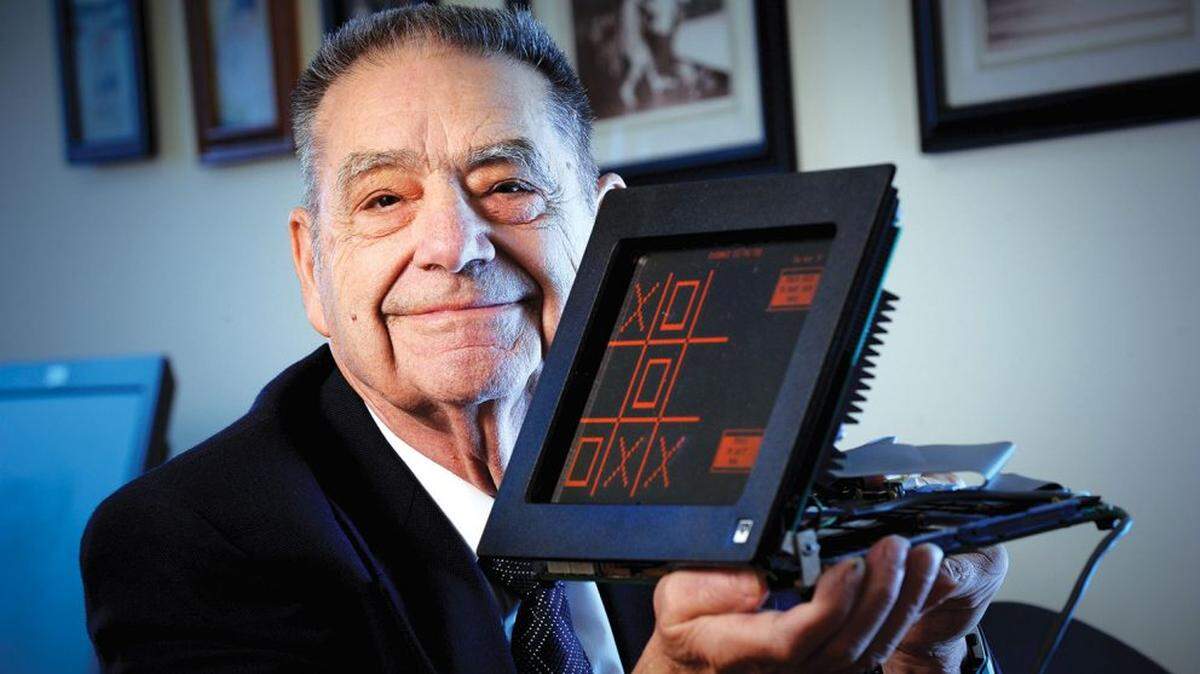
Donald Bitzer, whose invention of the plasma screen in the 1960s made possible the ultra-thin TVs used today, died at his home in Cary on Tuesday at the age of 90.
Bitzer’s career contributions earned him a litany of honors, including an Emmy Award in 2002 for the groundbreaking screen he helped develop decades earlier.
“Right up until the very end, he was working on problems,” his son, David, said. “He never retired.”
An Illinois native, Bitzer led the Computer Based Education Research Laboratory at his alma mater, the University of Illinois Urbana-Champaign, until 1989, when he accepted a distinguished computer science research position at N.C. State. Landing an academic of Bitzer’s stature was a notable hire for the Raleigh university; his role was established with special funding from the North Carolina General Assembly.
“He brings us national exposure,” the head of N.C. State’s computer systems lab said at the time. “Almost everyone has heard of his work in computer-aided instruction and instructional programs.”
In 1960, Bitzer introduced the world’s first electronic learning system, called PLATO (short for Program Logic for Automatic Teaching Operations). This interactive terminal accelerated student learning through its touchscreen technology and graphics. It later became popular with early video game players.
To make PLATO more visually appealing, Bitzer in 1964 co-created a small-panel display with fellow University of Illinois professor Gene Slottow and graduate student Robert Willson containing sheet glass, gold electrodes, and neon gas. They energized the gas to put it in a plasma state. Ultraviolet light from the plasma then activated phosphors on the monitor, resulting in a more vibrant presentation than the then-standard cathode ray tube displays provided.
Their screen technology was eventually applied in a range of industries, including the military and entertainment. With the advent of high-definition television and DVD players in the 1990s, plasma screens became household staples.
Within a few years, Bitzer and his co-inventors received a Scientific and Technological Emmy Award for their contribution to television. Bitzer was also an inductee to the National Inventors Hall of Fame and Consumer Electronics Hall of Fame. In 1974, he was elected to the National Academy of Engineering.
Colleagues described Bitzer as markedly intelligent and cooperative.
“Well, I’d call him brilliant,” N.C. State computer science professor David McAllister said in 2002. “He’s been very good for the department because he likes to work in teams. He likes to help students and faculty, and he’s always ready to tell you funny stories.”
Bitzer was one of the top paid N.C. State faculty members, earning $173,000 in the mid-2000s. He continued to teach courses into the 21st century, even though his position didn’t require him too. As a studied magician, he would incorporate tricks into lectures.
Born in East St. Louis, Illinois, Bitzer married his high school sweetheart, Maryann. They traveled the world together, bringing along their only child, David, as Bitzer gave talks in places like India and the Soviet Union. The couple had three grandchildren and two great grandchildren.
Maryann died in 2022. That year, Bitzer gave an extensive oral history interview to the Computer History Museum, during which he described his travels, inventions and passions.
“He would always have a story,” David said.
One other thing Bitzer still had by the end of his life, his son noted, was a flat-screen TV.
News & Observer reporter Dan Kane contributed reporting.
This story was originally published December 12, 2024 at 4:30 PM.