Google Fiber’s 10 years in NC: T-shirts, cut gas lines, and the hope of better internet
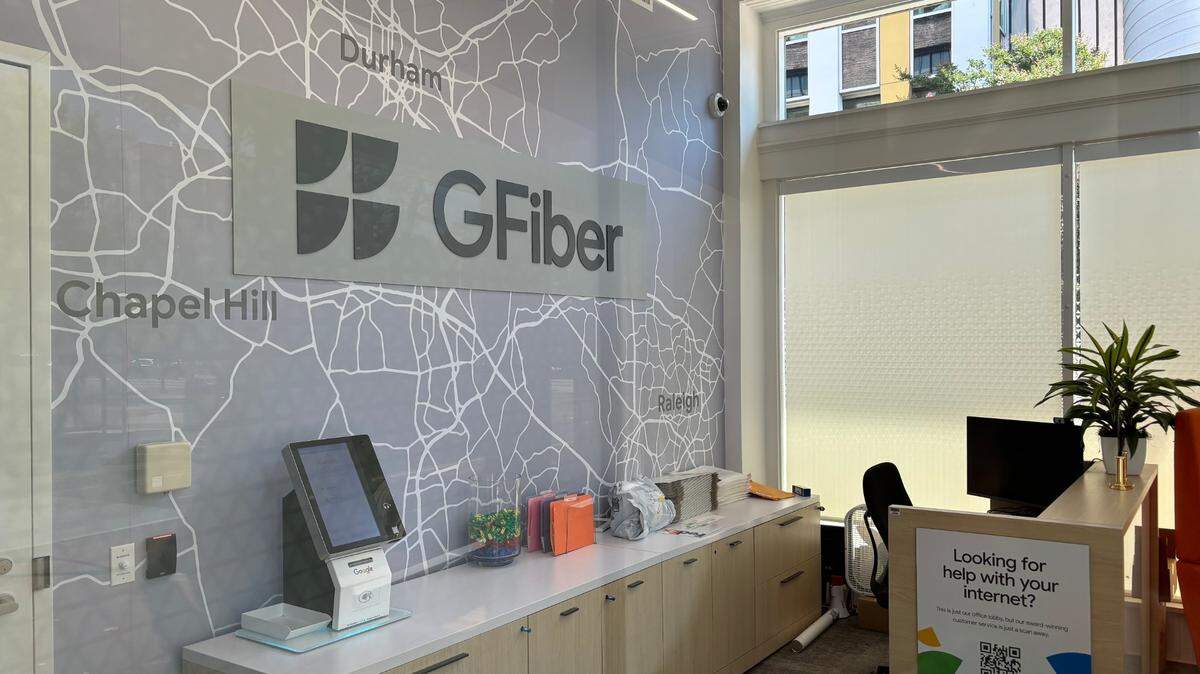
Ten years ago today, North Carolina residents learned fiber was coming.
On Jan. 27, 2015, Google announced Charlotte and the Triangle as the next two markets to access its new fiber optic connection, called Google Fiber, which promised speeds 100 times faster than basic broadband. Only three other cities at the time had the service.
Google Fiber entered North Carolina with a promotional blitz, distributing T-shirts showing a state map and the hashtag #FiberIsComing. In celebratory remarks, then-Gov. Pat McCrory said having Google’s residential fiber internet would put Charlotte, Raleigh and Durham “in line” with the biggest U.S. tech hubs of Austin, Boston and the Bay Area.
A decade later, Google Fiber’s arrival in North Carolina is ongoing. Coverage is nearly complete in the Triangle towns of Cary, Chapel Hill, Morrisville, and Carborro, the company says. According to BroadbandNow, a research group that compiles internet service provider data, Google Fiber is only available to 44% of Raleigh residents and 30% of Durham residents.
Both these percentages, which Google would not confirm, have more than doubled in recent years. And since 2022, GFiber (the company’s official name) has begun installations in Garner, Apex and Hillsborough.
This expansion has meant more internet options but also more construction headaches — especially as other providers have embraced fiber.
“Google’s investment in the Raleigh-Durham area kind of forced AT&T and Spectrum’s hand to make their own investments in their own infrastructure,” said Tommy Jacobson, chief operations officer at the Research Triangle Park-based broadband service nonprofit MCNC.
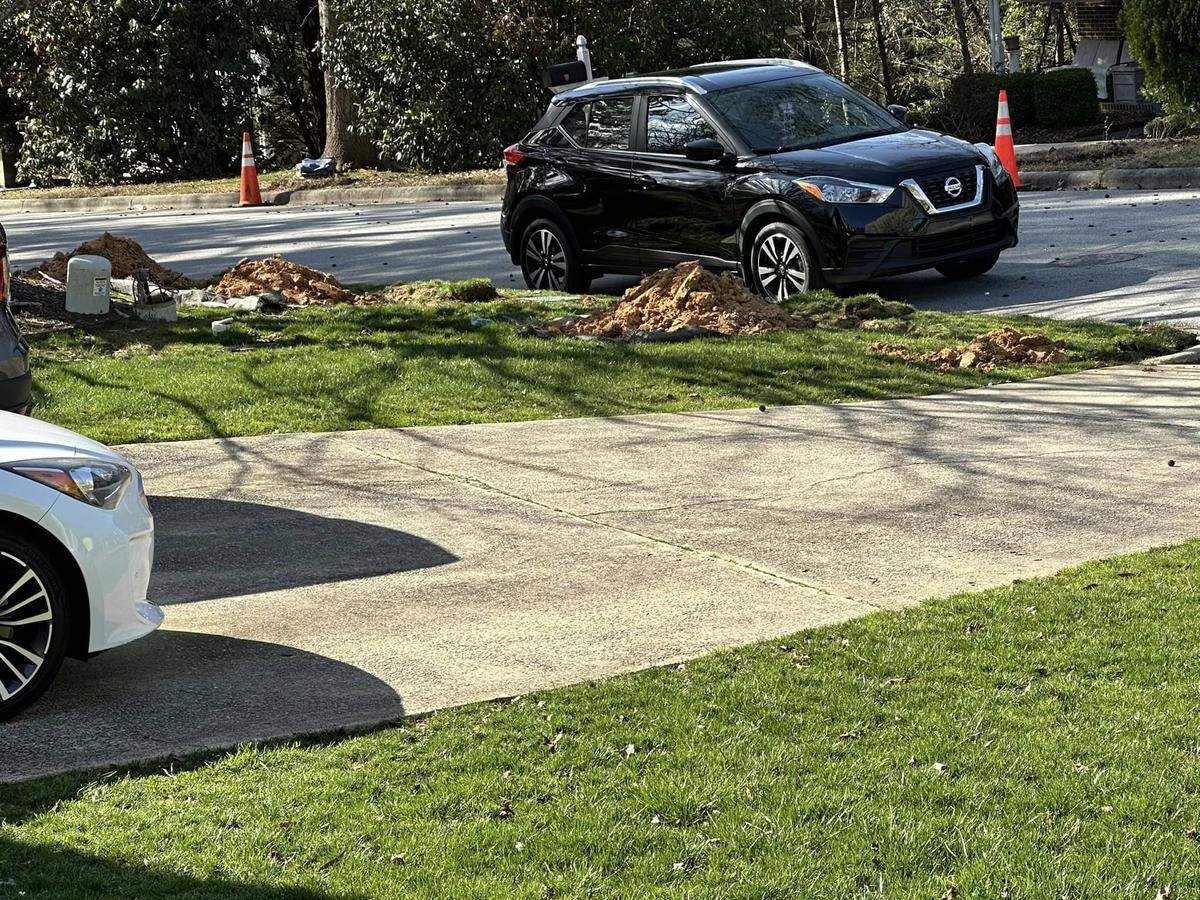
Laying fiber internet is an intensive process that requires unearthing enough ground to pull fiber-optic cable through empty pipes. While DSL and cable companies have existing lines into most neighborhoods, fiber providers construct networks from scratch.
Perhaps nowhere in the Triangle are fiber internet disruptions more concentrated than the Orange County town of Hillsborough.
“Clearly if you have three fiber companies digging up almost every single piece of property in town multiple times, water lines get hit regularly,” said Eric Peterson, the town’s manager. The three providers adding service in the town (population 9,800) are Google Fiber, Lumos and Brightspeed.
Severing utility lines, Peterson explained, isn’t always the fault of fiber installers. Underground infrastructure can be unmarked or mismarked in public databases. Regardless of blame, he said these disruptions have “definitely put a major strain on our services.”
If a provider is found to be at fault for damaging a public utility line, the town sends them a bill to cover repair costs. If a line was hit due to mismarking, the town pays. Installation crews can also dig on private property easements known as right-of-way, and the providers are responsible for restoring the area afterwards.
“Of course, a lot of people don’t realize how far up in their yard the right away may go,” Peterson said. He went on to call this construction “the price of progress.”
The Google Fiber effect
Hillsborough’s headaches aren’t singular. When Google and AT&T began setting lines in the mid-2010s, neighbors from Charlotte to Cary complained of contract workers nicking gas, water and sewage lines. In late 2019, Google Fiber temporarily halted construction in Carborro to “re-evaluate construction plans” shortly after its contract crew struck a gas line.
“As we started to build in other parts of the country, there were lessons learned,” said Darrell Hegar, GFiber’s head of market operations. “We weren’t living up to our build standards, not for ourselves, or, quite honestly, for our communities.”
Hegar, who works at GFiber’s office in downtown Durham, said the company is now better at avoiding utility lines through a process called “microtrenching,” which involves shallower digging done closer to (or even right underneath) the street.
Google Fiber today offers three plans: it’s original 1-gigabit service ($70 a month), a 3-gigabit service ($100 a month), and an 8-gigabit service ($150 a month. It even launched an experimental 20-gigabit connection in the Triangle last year.
“Not only do we bring gigabit speeds and multi-gigabit speeds, but we see our competitors step up their game, and they actually provide higher speeds,” Hegar said.
Last week, the internet connectivity analysis firm Ookla published a report showing Raleigh had the fastest median fixed download speed out of the 100 largest U.S. cities. Durham finished No. 7. Hegar believes GFiber contributed to these high rankings.
And though it isn’t hard to find Triangle residents annoyed at fiber internet construction, it also isn’t difficult to find happy customers 10 years later.
“We’ve basically been 100% satisfied with Google Fiber since we switched,” said Larry Rosen, an Apex resident. “I can’t imagine ever not using them.”
Rosen, who works from home, said the extra bandwidth helps him upload large files during the day and stream shows with his family at night. The only issue, he said, is visual: When the installation crew dug up parts of his neighborhood, they replanted a different, faster-growing type of grass.
This story was originally published January 27, 2025 at 5:30 AM.