Open Source: RTI International CEO makes seven figures. Does that justify USAID cuts?
I’m Brian Gordon, tech reporter for The News & Observer, and this is Open Source, a weekly newsletter on business, labor and technology in North Carolina.
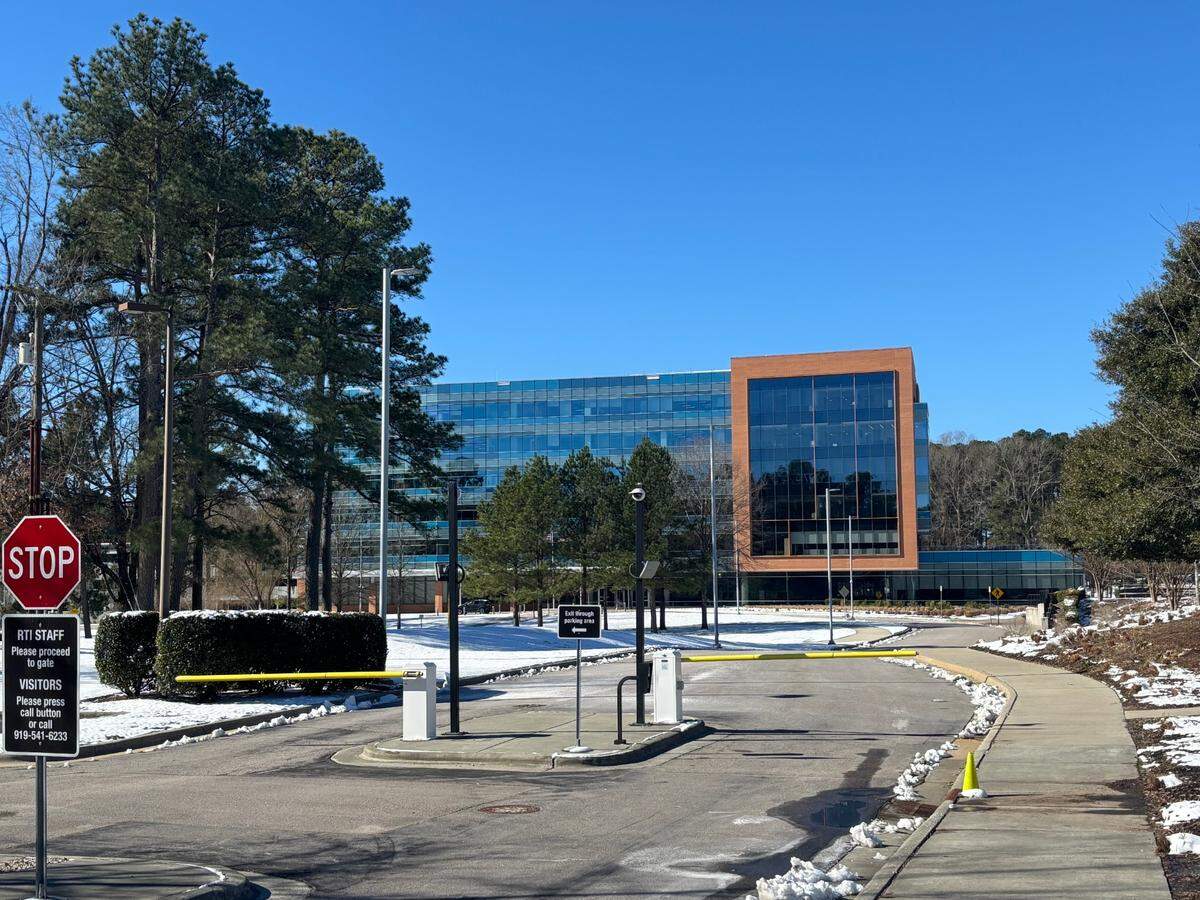
RTI International, an original Research Triangle Park tenant and one of Durham’s biggest employers, received $168 million in U.S. Agency for International Development contracts during fiscal year 2023, an independent financial audit shows. This means more than 10% of its revenue came through a federal agency currently being dismantled by the new Trump administration.
USAID’s website is completely blank and the agency’s funding frozen despite a court order. Last week, RTI International announced “temporary layoffs” due to an absence of U.S. foreign assistance. A nonprofit research organization, RTI stands to lose millions more if a significant cut to National Institutes of Health grants withstands court challenges.
The federal government is RTI’s main client overall, accounting for 84% of its total revenue in 2022 and 2023.
Two readers emailed last week after the layoffs. They weren’t upset about the cuts; each commended the work of the Elon Musk-led Department of Government Efficiency. What they wished to highlight instead was how much RTI executives make.
RTI International CEO Tim Gabel earned more than $1.2 million in 2023, tax forms show. Four other executives at the nonprofit earned more than $800,000, while five had $500,000-plus salaries.
“This level of compensation in my opinion is egregious for an organization that takes federal funding and whose stated mission is to help create a more safe, secure and resilient world especially for those less fortunate,” emailed Chris Dovel of Apex.
RTI’s official mission is “to improve the human condition by turning knowledge into practice,” but the argument remains. $1.2 million is a lot of money. And 84% of its revenue comes from the federal government. Gabel’s salary was recently cited in an article from the conservative-leaning Washington Examiner headlined “First-class flights, seven-figure salaries: How NGO bosses are living good on the taxpayer dime.”
The article echoed the overall “waste” charges Musk and President Donald Trump have levied against USAID. Of the federal agency, Trump has also said, without evidence, that “billions of dollars have been stolen. The whole thing is a fraud.”
My job isn’t to argue whether Gabel’s salary is too high but to offer some context:
First, RTI International (also known as Research Triangle Institute) said in a statement that its board “oversees and approves executive compensation following a robust process, which includes engaging a nationally recognized independent consultant to conduct market benchmarking analyses from similar organizations to ensure RTI’s executive compensation is fair and reasonable and in line with industry peers.”
Within the broad category of nonprofits, RTI International is huge. Last year, it employed nearly 6,000 workers representing 107 nationalities, worked 3,800 projects, and recorded revenue north of a $1 billion. Right or wrong, the CEO of a private company managing that size operation will earn more than $1.2 million per year.
Examples of USAID-funded RTI projects include a 2023 grant to enhance nutrition in Bangladesh and Kenya and a 2024 grant to expand inclusive access to basic education in Latin America and the Caribbean. “RTI remains dedicated to implementing efficient and effective foreign assistance programs that support the goals and priorities of all our clients, including the U.S. federal government,” Paul Weisenfeld, RTI executive vice president for international development, said in a statement after the layoffs.
In 2023, another Durham-based global research nonprofit, FHI 360, paid its CEO Tessie San Martin around $500,000. FHI 360 is roughly two-thirds the size of RTI and has lower annual revenue. It is also more reliant on USAID funding; over 60% of its revenue comes from the embattled agency, and the organization recently furloughed more than 200 North Carolina employees.
Seven-figure salaries in the nonprofit sector is a debated topic. And when taxpayer dollars support organizations with substantial executive pay, anger might feel more acute. That’s fair.
But here’s some good old fashioned whataboutism: Plenty of for-profit companies also rely on government contracts. Take RTX Corp., formerly Raytheon Technologies. North Carolina last month awarded the defense and aerospace conglomerate another economic incentive to expand in Asheville.
In its latest annual report, RTX listed among its clients the Federal Aviation Administration, U.S. Army, and U.S. Department of Defense. Around half of the company’s revenue comes from U.S. government defense contracts.
RTX Corp. CEO Christopher Calio made more than $12 million last year. Are taxpayers funding that?
Clearing my cache
- Environmental Protection Agency layoffs last Friday impacted an undisclosed number of early-career employees at the agency’s Research Triangle Park campus.
- Huge court hearing today for the Research Triangle as a federal judge will listen to challenges over Trump administration cuts to NIH indirect grant funding.
- NCInnovation has received $500 million in state funding over the past two years. A new bill seeks to claw back that money from the nonprofit focused on commercializing university research.
- The union lost its bid to organize RDU1, a 4,300-worker Amazon fulfillment center in Garner.
- Gov. Josh Stein with the business scoop: On Thursday, the governor announced the fencing manufacturer Barrier Fencing Supply Company has committed to create 151 jobs in Columbus County.
- Boom Supersonic, the supersonic passenger jet startup promising to manufacture in Greensboro, received support this week from President Trump, who posed for a picture holding a model aircraft. “This administration is supersonic,” Boom CEO Blake Scholl wrote as a caption.

National Tech Happenings
- Microsoft says it’s achieved a quantum computing breakthrough with a new chip, called Majorana 1, that manipulates a topological superconductor material — a state of matter that isn’t a solid, liquid or gas.
- The Internal Revenue Service is expected to have laid off around 6,000 workers by the end of the week.
- Firefly, a Texas-based private aerospace firm, has sent a lunar lander to the moon. Named Blue Ghost, it’s expected to arrive in nine days.
This story was originally published February 21, 2025 at 9:31 AM.