NC chipmaker Wolfspeed awaits critical CHIPS funding as Trump slams semiconductor program
.JPG "Former President Joe Biden stands with then-Wolfspeed CEO Gregg Lowe while touring a power applications lab at Wolfspeed on Tuesday, March 28, 2023, in Durham, N.C.")
During his address to a joint session of Congress Tuesday night, President Donald Trump called on House Speaker Mike Johnson to end the CHIPS and Science Act and repurpose any leftover program funds “to reduce debt or any other reason you want to.”
“Your CHIPS Act is a horrible, horrible thing,” Trump said. “We give hundreds of billions of dollars and it doesn’t mean a thing.”
Signed in August 2022, the bipartisan CHIPS Act was a cornerstone of the Biden administration’s economic mission. It aims to promote domestic production of semiconductors, critical materials that, when diced and fabricated into chips, power an array of modern appliances.
In January, Biden’s Department of Commerce linked the CHIPS program to more than 125,000 new job commitments across 22 states. The policy included three key aspects: $39 billion to incentivize new or expanded U.S. manufacturing sites, $11 billion for semiconductor research, and a lucrative 25% tax credit for eligible manufacturers to subsidize building costs.
Each part has influenced a handful of current North Carolina projects.
In late November, the U.S. Department of Commerce announced a $285 million research award to support a new Durham facility from the nonprofit Semiconductor Research Corp., a consortium that coordinates university research on behalf of member companies like IBM, Intel and Taiwan Semiconductor Manufacturing Company.
Then in January, with days left in office, the Biden administration awarded the Massachusetts semiconductor company MACOM a $70 million grant to grow its manufacturing site near Research Triangle Park.
The outgoing administration had raced to finalize CHIPS awards after Trump’s election victory, doling out more than $26 billion between Nov. 15 and Jan. 13 according to department announcements. No grants have been given since Trump took office.
North Carolina’s biggest CHIPS award came before the election. Following months of negotiations, the Durham semiconductor manufacturer Wolfspeed in October received a $750 million award to fund its incoming $5 billion materials factory in western Chatham County, as well as its existing fabrication site in New York State’s Mohawk Valley.
Wolfspeed is an industry leader of a unique type of semiconductor called silicon carbide, which the company cuts into larger 200-millimeter wafers (the industry standard has been 150-millimeter). In September 2022, Wolfspeed announced it would build a new silicon carbide materials facility near Siler City, about a 50-minute drive west from its Durham headquarters. The company pledged to employ at least 1,800 workers at the site.
In an email Wednesday, company spokesperson Bridgett Johnson said plant construction is “nearly complete.” But the CHIPS funding has not yet arrived.
“We are continuing a constructive dialogue with the new administration and the Commerce Department, narrowing the remaining milestones to reach a final definitive agreement,” Johnson said.
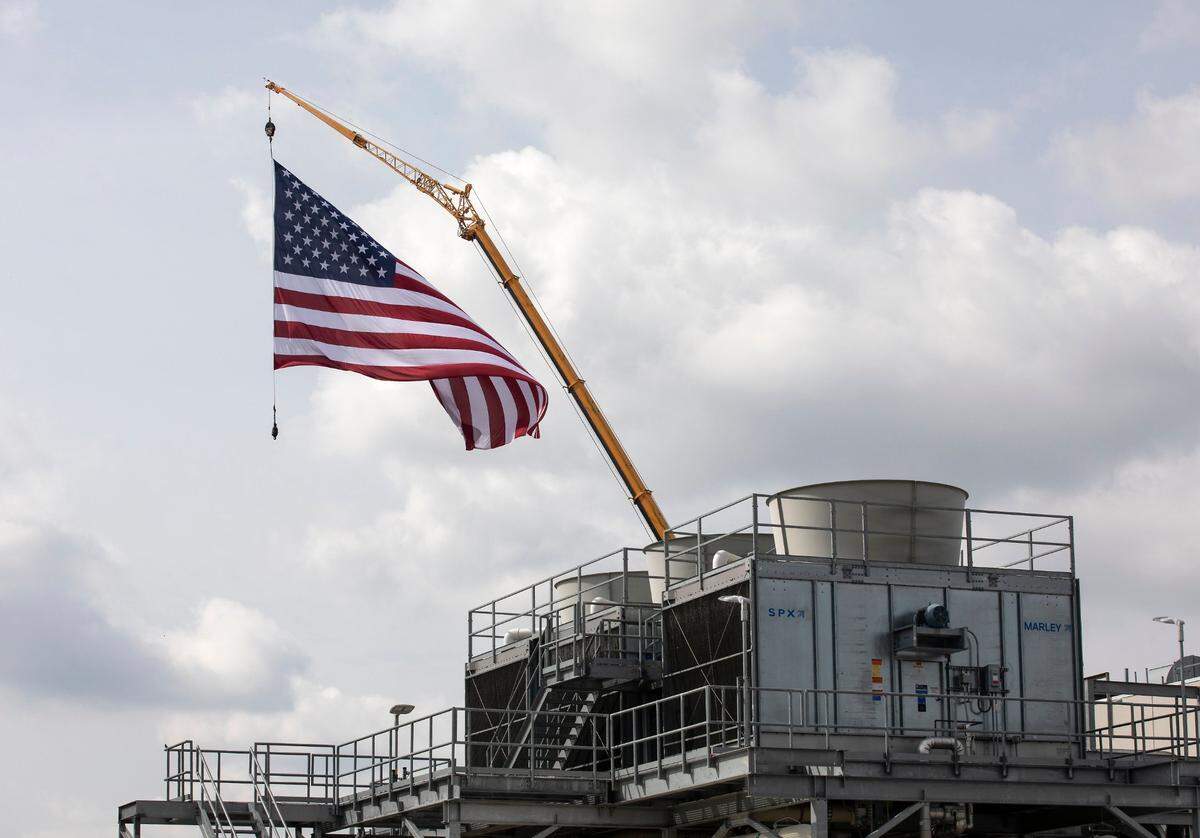
Like all CHIPS Act grants, Wolfspeed’s award depends on the recipient reaching certain milestones. For Wolfspeed, which has battled balance sheets concerns, goals include securing a $750 million private loan and raising $200 million through what’s known as an at-the-market, or ATM, offering (both of which the chipmaker has completed).
Another milestone is for Wolfspeed to obtain a certificate of occupancy for its Siler City plant. Johnson told The News & Observer the company received its conditional certificate of occupancy last Friday and expects its final certificate by June. Before receiving funds, Wolfspeed must also start producing materials at the new North Carolina factory and address its convertible debt obligation that is due in 2026.
While the Biden administration finalized more than a dozen preliminary CHIPS agreements before leaving office, Wolfspeed’s government deal remained incomplete heading into the Trump administration.
Few moves until CHIPS money
Getting CHIPS dollars is crucial for Wolfspeed as the manufacturer cuts costs to strengthen its balance sheet and rebound from the production delays and liquidity concerns that hounded its operations last year.
To save money, Wolfspeed reduced its workforce 20% in the second half of 2024 through layoffs, buyouts and staff attrition. In August, the company announced it would close a devices facility on its main Durham campus. Then in November, Wolfspeed fired CEO Gregg Lowe, who had guided the business (formerly named Cree) through a business evolution away from LED lightning and exclusively toward semiconductors.
Having sold at $70 a share in March 2023, Wolfspeed stock finished Wednesday at $5.12.
In January, interim CEO Tom Werner told investors the company would plan “close to zero capital commitments” until a direct funding agreement is signed with the CHIPS office.
The Durham semiconductor maker says its mission aligns with Trump’s “America First” agenda. “Uniquely positioned, Wolfspeed exemplifies the type of domestic manufacturer that the president has repeatedly suggested he wants to help succeed,” Bridgett Johnson said.
Wolfspeed hopes North Carolina’s congressional delegation will advocate for the project in Washington, D.C. Sen. Thom Tillis, a Republican, visited its Siler City site last year to remark on its construction progress.
But Trump this week made his feelings toward the future of the CHIPS program clear. Administratively, the CHIPS for America office has lost roughly two-fifths of its staff under the new president, Bloomberg reported Monday, including about 20 employees who accepted the administration’s voluntary buyout offer.
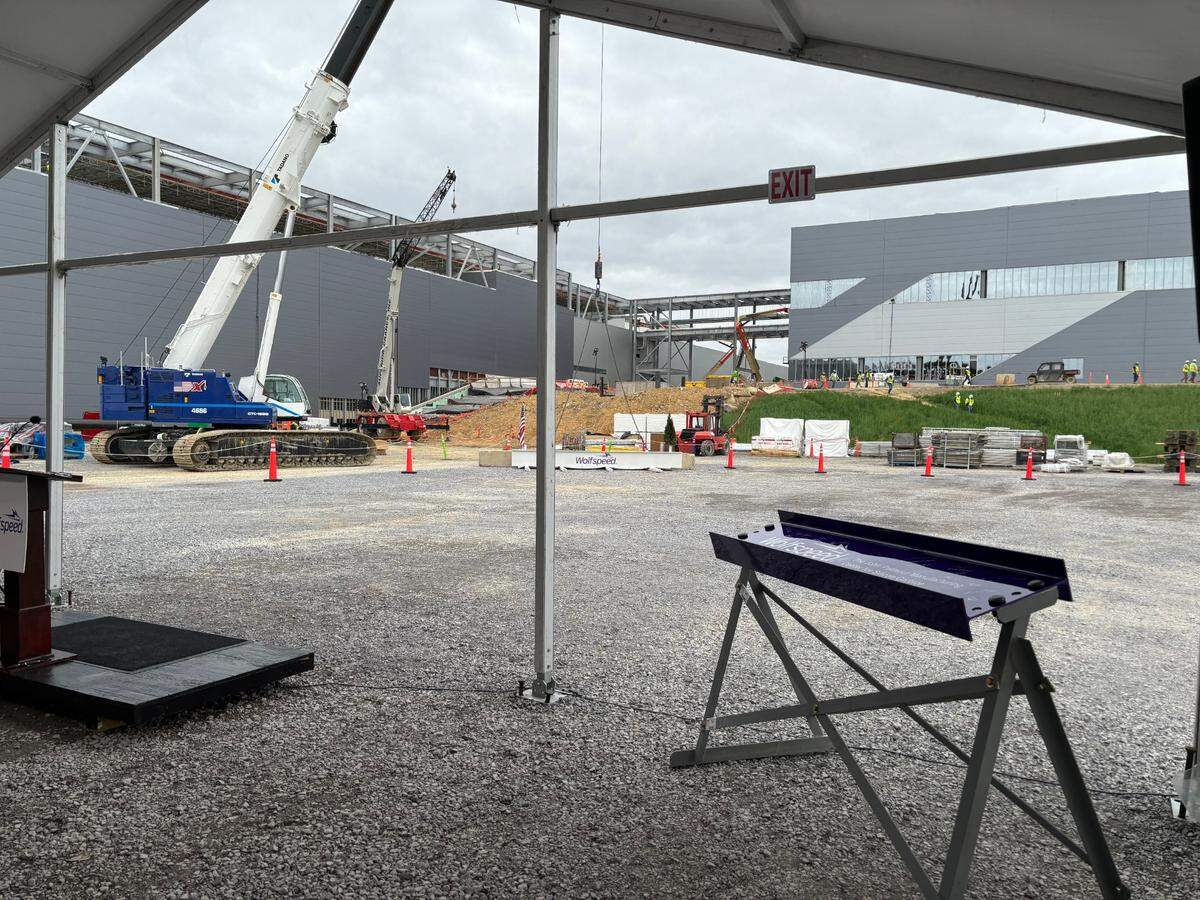
Wolfspeed and MACOM are the only two North Carolina recipients of CHIPS manufacturing awards, according to data from the Semiconductor Industry Association.
Instead of enticing chipmakers with federal dollars, Trump on Tuesday argued that companies will respond to the threat of tariffs. He used Taiwan Semiconductor Manufacturing Company as an example. The world’s largest semiconductor company, TSMC this week pledged to invest $100 billion in Arizona over the next four years.
“All that was important to them was they didn’t want to pay the tariffs,” Trump said. “So they came and they’re building, and many other companies are coming. We don’t have to give them money, we just want to protect our businesses and our people, and they will come because they won’t have to pay tariffs if they build in America, so it’s very amazing.”
While the president credited tariffs for TSMC’s commitment, CHIPS Act supporters may point to something else: In November, the U.S. Department of Commerce awarded the company $6.6 billion in grants and another $5 billion in loans to establish three chip fabrication sites in the U.S.
NC Reality Check is an N&O series holding those in power accountable and shining a light on public issues that affect the Triangle or North Carolina. Have a suggestion for a future story? Email realitycheck@newsobserver.com
This story was originally published March 6, 2025 at 12:03 PM.