GE commits $100 million to its NC engine factories, including long-running Durham plant
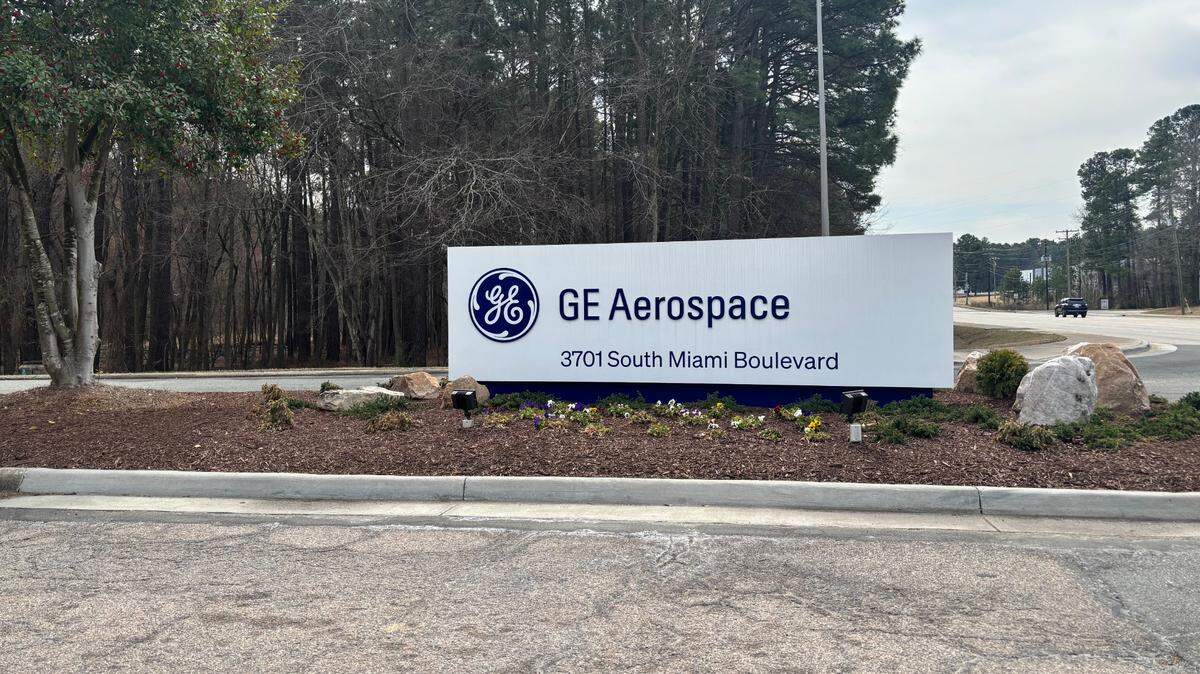
One of the world’s largest aviation engine makers has for the second time in the past 12 months committed to spend tens of millions of dollars in North Carolina.
On Wednesday, GE Aerospace announced it will invest $100 million at its four North Carolina sites — in Wilmington, Durham, the Ashe County town of West Jefferson, and Asheville — as part of the company’s plan to hire 5,000 U.S. workers and spend close to $1 billion across 16 states this year.
This money is in addition to the $46 million GE Aerospace pledged to invest in its four North Carolina locations last April.
Based in Ohio, GE Aerospace is the official successor of General Electric, the 133-year-old conglomerate that recently split into three separate public companies around aviation, health care and energy. Previously named GE Aviation, the engine manufacturer opened its Bull City site near Research Triangle Park in 1993.
This week’s separate $100 million pledge includes $52 million for the GE plant in Wilmington and $16 million in Durham to support production of the company’s commercial LEAP engine, which is used by Airbus and Boeing. The company says its Durham facility spans 500,000 square feet and employs nearly 400 workers.
The company now has close to 2,000 employees statewide, a spokesperson told The News & Observer, with more than 20 current open positions.
“This investment means that North Carolina will have just as big of a role to play in the future of flight as it did in its creation,” GE Durham plant leader Kristen Neubauer said in a statement referencing the state’s role in the first Wright Brother’s flight.
General Electric is among the four manufacturers who dominate the global aircraft engine market, along with Rolls-Royce, CFM International, and Pratt & Whitney.
On Wednesday, the White House mentioned the latest GE Aerospace news in a statement championing President Donald Trump’s domestic economic policies. Last April, GE Aerospace committed to invest $650 million in facilities worldwide — including around $450 million in 14 U.S. states — under then-President Joe Biden.