NC town has the world’s biggest shingles plant. It’s from a 360-year-old company
AI-generated summary reviewed by our newsroom.
- Saint-Gobain will open a new glass mat factory in Oxford by the end of 2025.
- The facility enables vertical integration by producing fiberglass mats in-house.
- Around 70 new workers will support production that feeds regional roof plants.
There are old companies and then there’s Saint-Gobain. The large French multinational building materials firm formed in 1665 when Louis XIV, the “Sun King” himself, commissioned glassmakers to decorate the Palace of Versailles.
Three hundred and sixty years later, Saint-Gobain is increasing its footprint in the Granville town of Oxford, about 50 miles north of Raleigh, where the company already operates what many consider to be the biggest roof shingles plant in the world.
By the end of 2025, Saint-Gobain expects to open a new glass mat factory on the same campus, bolstering both its local supply chain and headcount.
“There is a long-term need for more housing, more resilient housing, more energy efficient housing, more affordable housing,” Mark Rayfield, CEO of Saint-Gobain North America, told The News & Observer during a site visit this month. “That’s why North America is so appealing.”

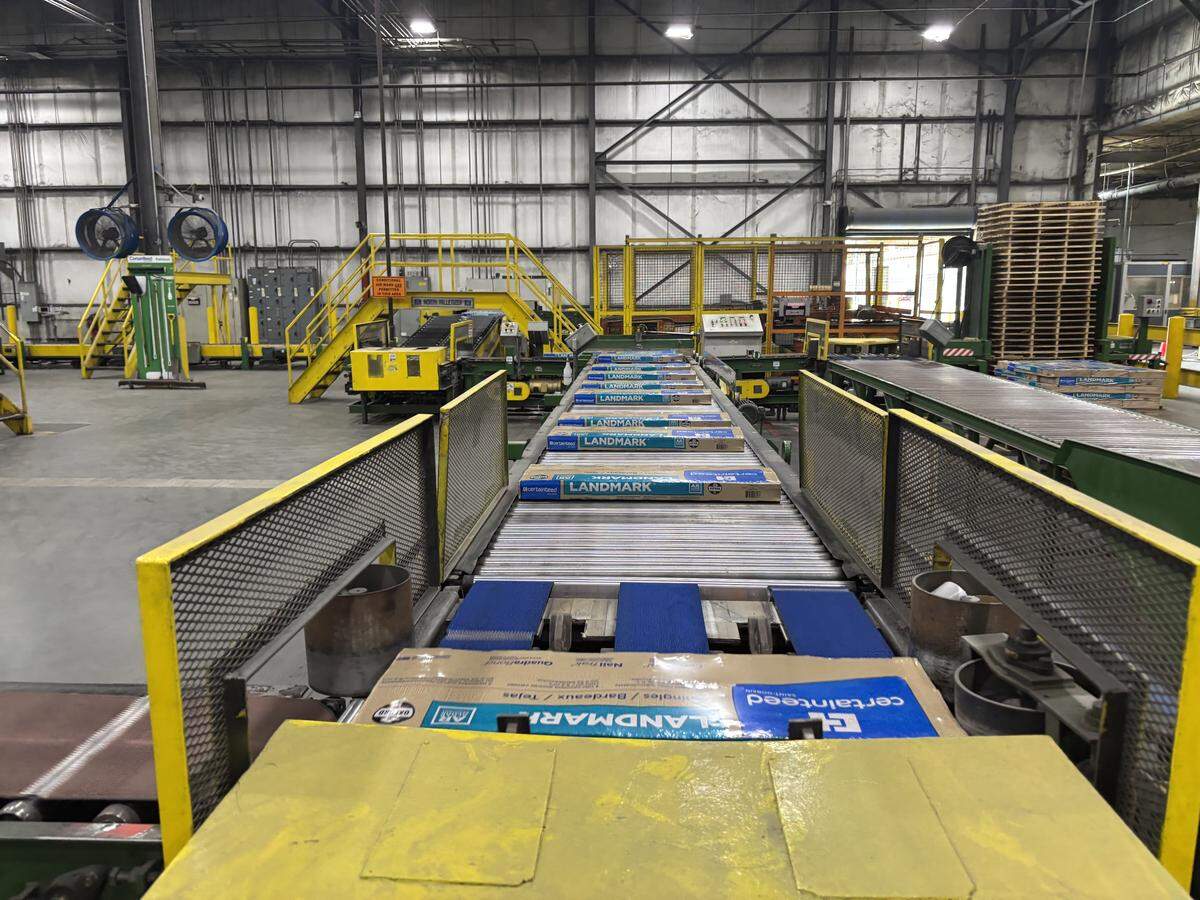
The Oxford shingles plant was opened in 1978 by the American materials company CertainTeed, which Saint-Gobain acquired 10 years later. Today, around 350 employees at the factory produce CertainTeed’s signature shingle, an asphalt residential covering called Landmark. It comes in more than 20 colors and gets shipped out of the Granville County campus on wooden pallets: 14 pallets per truck, 150 trucks per day.
Asphalt shingles, Rayfield said, are more common atop North America houses while European homes lean toward tile roofing. American builders also tend to use more gypsum, or drywall, and Saint-Gobain operates a gypsum wallboard plant about 25 miles from Oxford in the Person County seat of Roxboro.

In recent decades, construction firms have shifted from felt-based shingles to ones with fiberglass foundations. Thus, the core of CertainTeed’s asphalt shingles is a thin, durable fiberglass-based mat.
CertainTeed currently manufactures its own mat at two North American facilities and buys mat from external manufacturers. In 2022, it received a $125,000 state incentive grant to add a 225,000-square-foot glass mat production plant in Oxford, which Saint-Gobain says can supply all its regional glass mat needs in-house.
“It’s a critical vertical integration,” Patrick Cavanagh, the plant’s manager, said earlier this month while giving The News & Observer a tour of the campus.
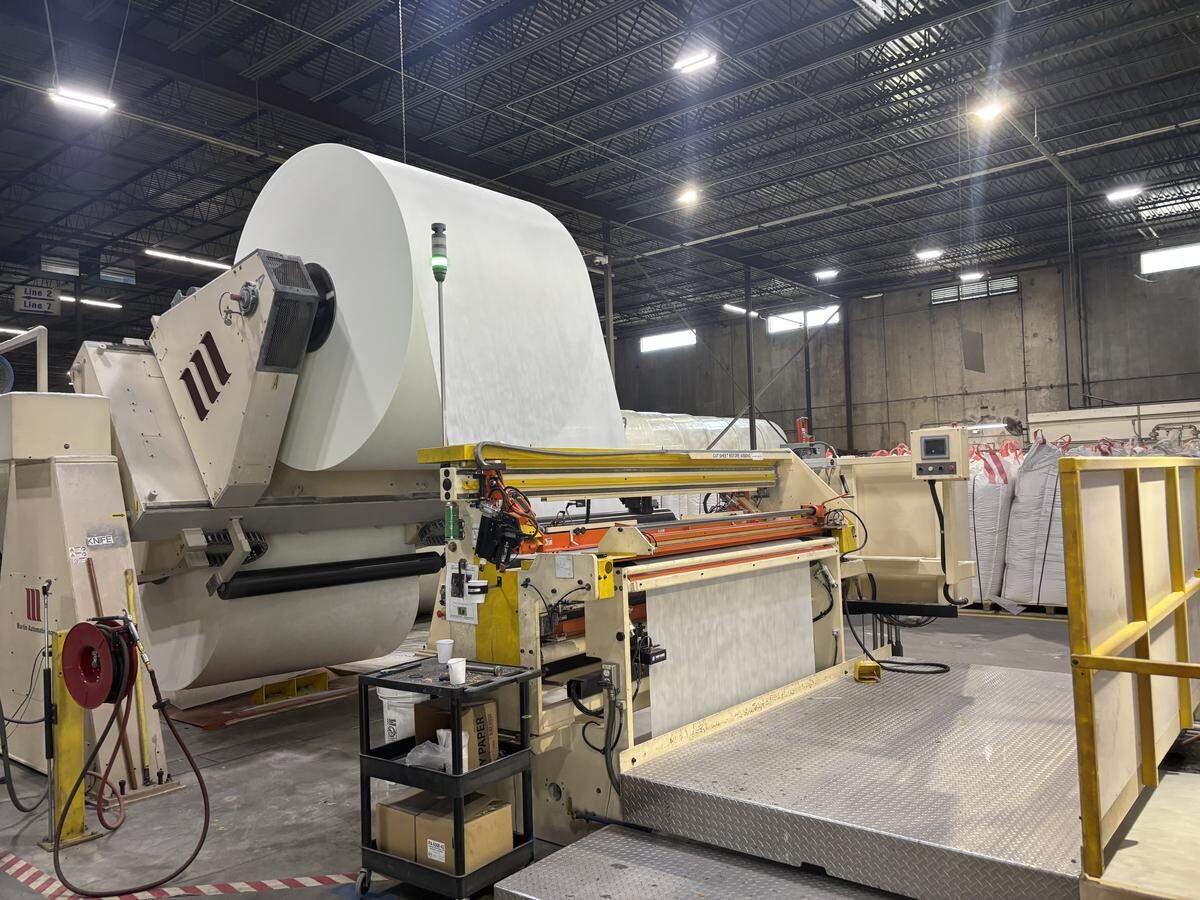
The finished mat is white and wool-like, though Cavanagh cautions “it’s not a blanket.” Making the rough material is involved: Fiberglass is fed onto conveyors and carried through water tanks. The stock is then strained, bound with chemical glue, cured, dried, and wound into rolls. Giant tubes crisscross a basement level to recycle excess water.
The ideal end result: huge rolls of fiberglass mats — some around 8 feet wide, or as big as can fit on delivery trucks. Rayfield estimated 9,000 of these rolls are enough to supply CertainTeed facilities for a month.
Saint-Gobain intends to store the rolls in a towering 10-story-warehouse currently being built in the back of the Oxford facility. These shelves will be fully automated, moving the rolls without human help, while the mat production side will employ around 70 workers, the company says.
From storage, these rolls will get shipped to shingle factories in the eastern United States — including the one right next door.
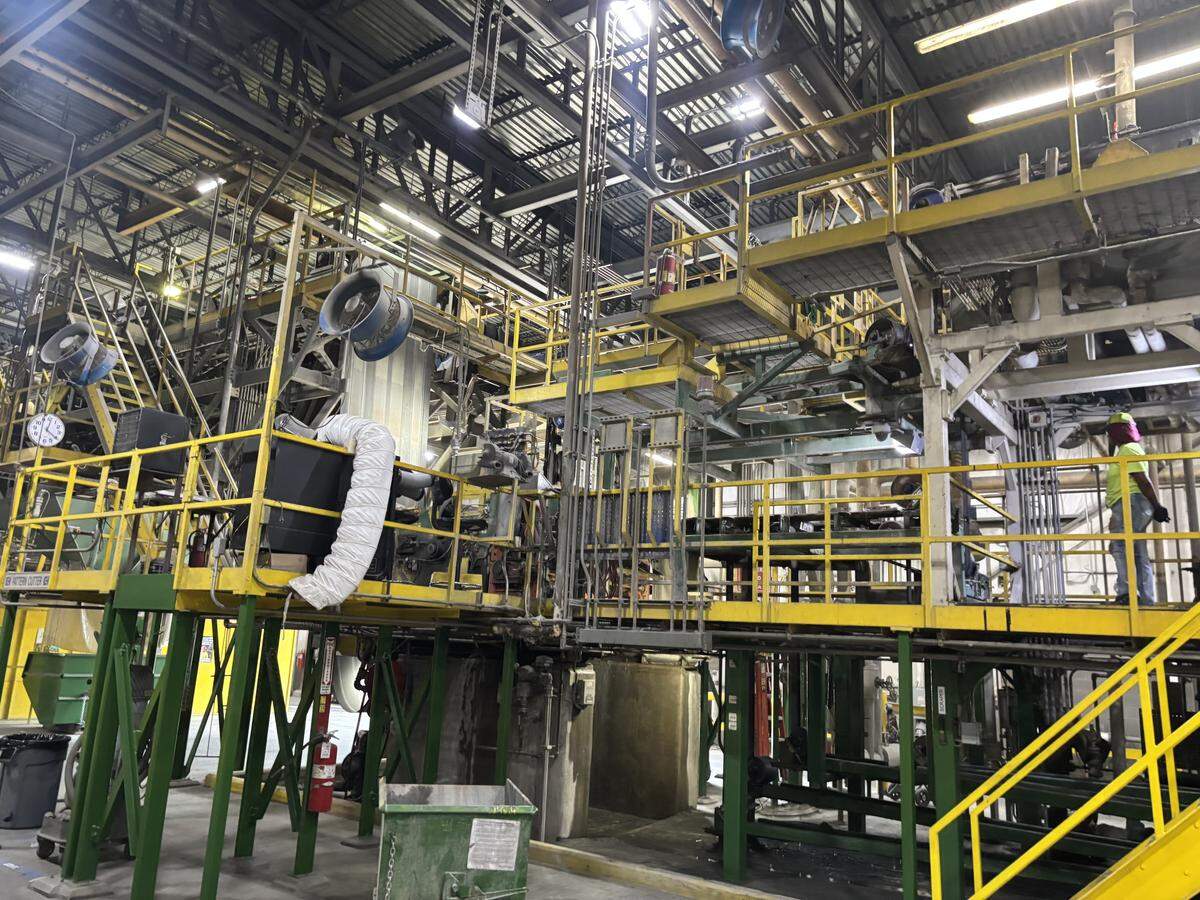
The Oxford shingle assembly line, which The N&O also toured, begins with the rolls of fiberglass mat unspooling over the course of 30 to 40 minutes. The white sheets leave the rolls looking like waterfalls as they flow up and down machines. Workers are positioned along the assembly line to conduct quality checks.
Eventually, asphalt is added to convert these sheets into black, granular, two-layered shingles, which are measured and cut before being enclosed in “Landmark” packaging.
These shingles are destined for residential homes, not the Palace of Versailles. But after more than three and a half centuries, Saint-Gobain has evolved.
This story was originally published July 31, 2025 at 11:54 AM.