Fujifilm opens $3.2 billion drug plant in Holly Springs, the Triangle’s largest
AI-generated summary reviewed by our newsroom.
- Fujifilm plans to create 1,400 jobs at a $3.2B drug plant in Holly Springs.
- The facility supports contract manufacturing for firms like J&J and Regeneron.
- Fujifilm plans more bioreactors to meet future production demand.
Fujifilm Biotechnologies, a division of the Japanese photography manufacturer Fujifilm, opened the Triangle’s biggest life science factory Wednesday in a Wake County town that’s become accustomed to biopharmaceutical site groundbreakings and ribbon cuttings.
During a ceremony attended by Gov. Josh Stein and various local leaders, Fujifilm Biotechnologies introduced the initial half of its multi-billion-dollar drug manufacturing operation in Holly Springs, a fast-growing community southwest of Raleigh. To date, the company has hired more than 650 workers at the plant and expects to reach 750 employees when it begins producing injectables there by the end of the year.
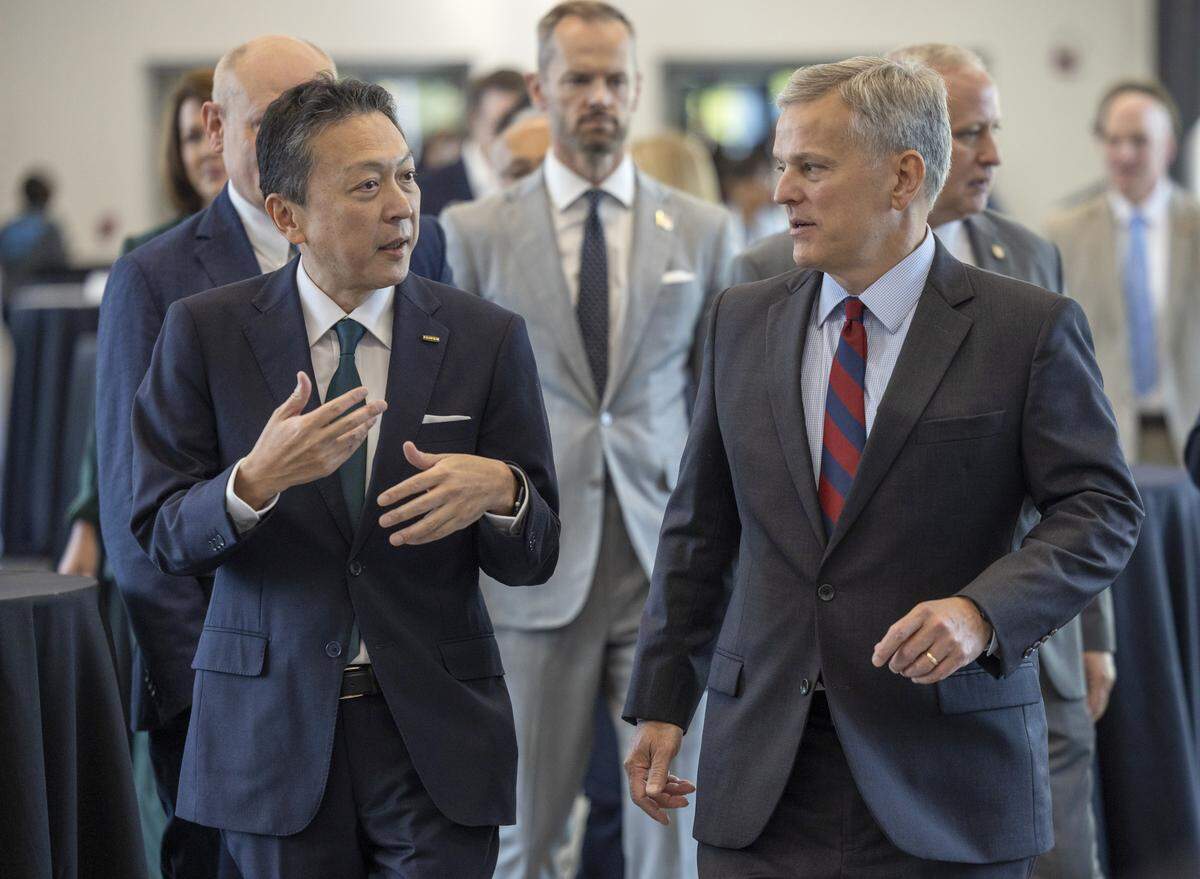
Fujifilm is a contract drug manufacturer, meaning it produces at scale the medicines other pharmaceutical companies create. It has announced three major drugmaker customers: Johnson & Johnson, TG Therapeutics and Regeneron.
“Precision of how you make it is so important,” said Fujifilm Biotechnologies CEO Lars Petersen. “Because when you manufacture in one facility versus another one, you need to make sure it is exactly the same.”
In March 2021, Fujifilm announced it would build eight local bioreactors, vessels that grow living cells. Then last year, the company committed to construct eight more bioreactors. Combined, it promises to spend up to $3.2 billion and create more than 1,400 jobs in Holly Springs by 2031.
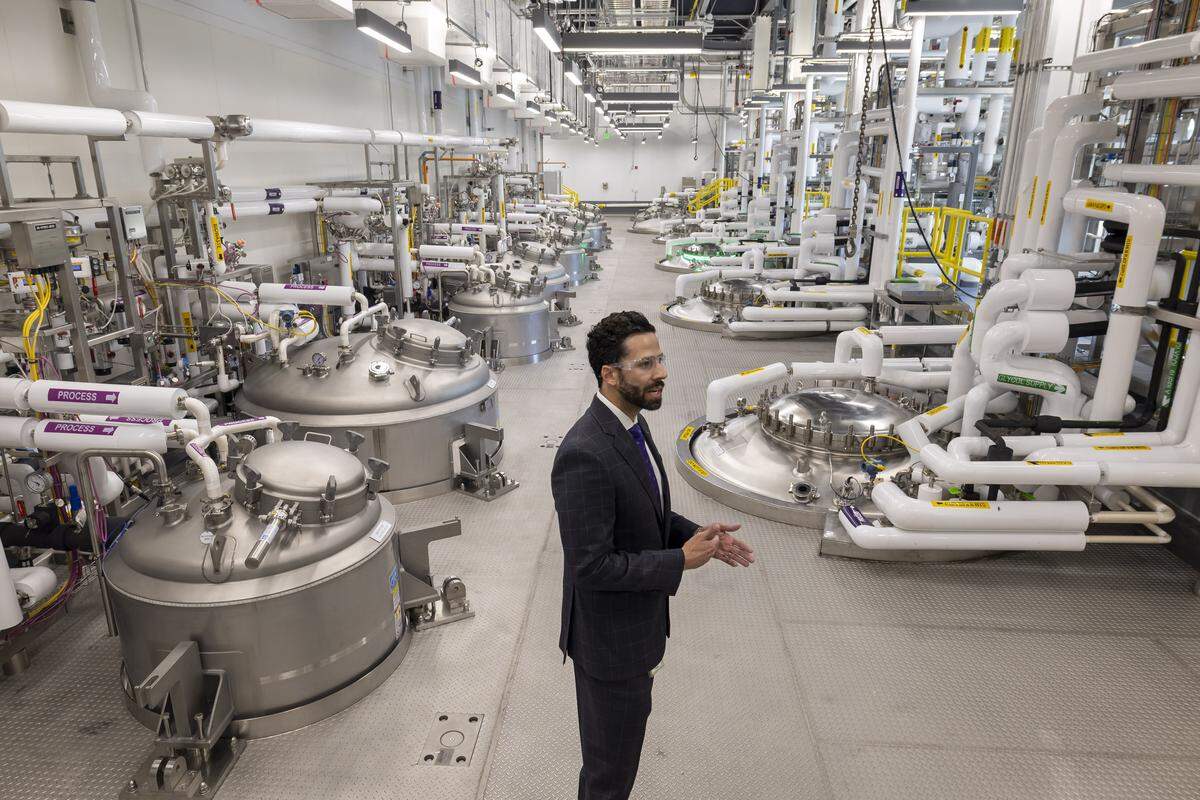
Inside look at Fujifilm in Holly Springs
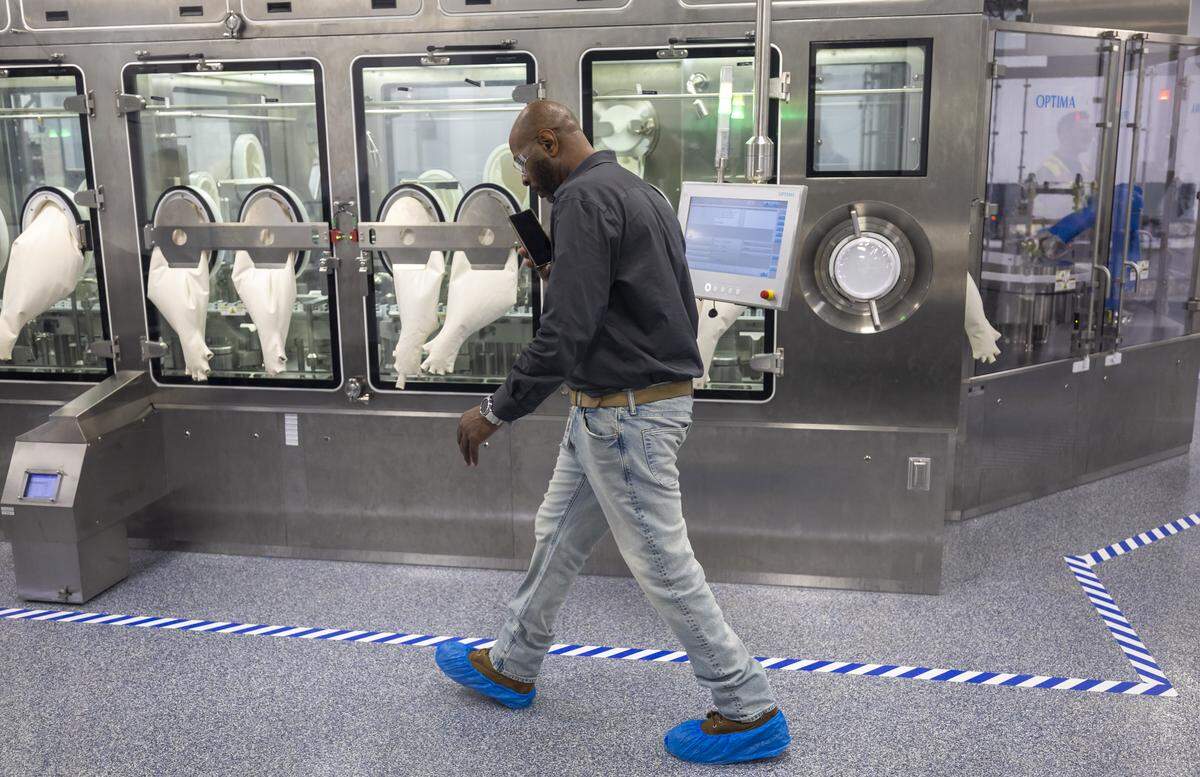
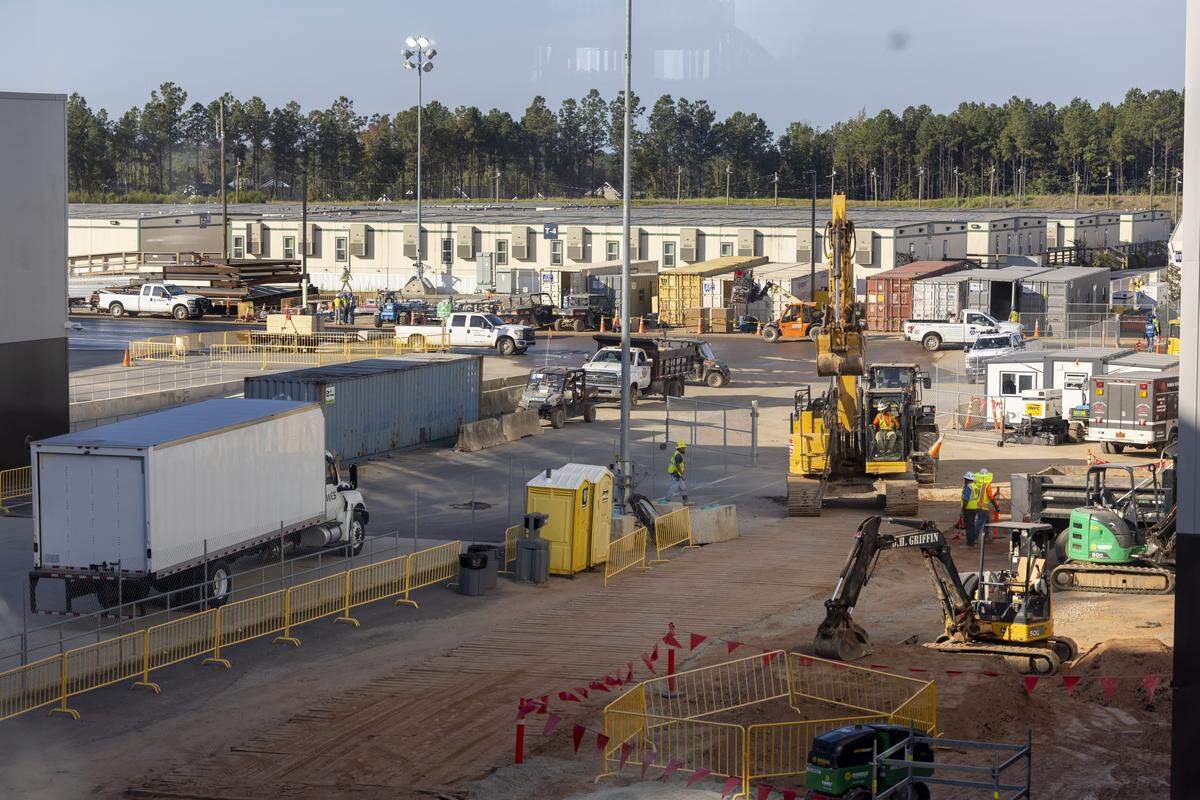
The facility is an end-to-end operation, from developing cell cultures through purification and quality checks. A quarter-mile hallway connects the factory’s two halves — with one side built and the other under construction.
Petersen said Fujifilm has more space on its Holly Springs campus to add bioreactors should demand meet the need. An advantage of contract manufacturing, he noted, was flexibility amid uncertainty.
“When you have supply chain disruption — it could be tariff, it could be COVID, it could be demand go up and down, market change — then you need to be able to move that medicine to another facility,” he said.
Fujifilm is one of several biopharma manufacturers to build new factories in Holly Springs, a town of 46,000 that has nearly doubled its population since 2010. Amgen and Genentech have sites across the street from one another while CSL Seqirus also has a production presence.
“What happened almost 20 years ago, the town council and Mayor Dick Sears at the time said we want to become a life science, bioscience hub. How do we get there?” Holly Springs council member Tim Forrest told The News & Observer in December. “So they started gearing infrastructure changes to the land development, water, sewer, all that for pending growth but also for how to recruit major businesses.”
Building NC-Japan connection
Fujifilm received economic incentives from both the state and local governments to fund its factory. In 2021, the state awarded a job development investment grant, or JDIG, worth nearly $20 million over 12 years for Fujifilm to create 725 jobs while retaining its 664 existing positions in North Carolina. Wake County and Holly Springs added $92 million in incentives at the time, including land donation and a tax grant.
In April 2024, the North Carolina Economic Investment Committee gave Fujifilm another job development investment grant, worth up to $14.9 million if it completes its expansion. Holly Springs and Wake County tacked on another $54.3 million in performance-based incentives.
“Biotechnology now ranks as one of the most important and fastest-growing sectors in our state’s economy,” Gov. Stein said in a speech Wednesday. “It ranges from biologics and health informatics to crop engineering and gene therapy and so, so much more.”
Fujifilm is one of several Japanese companies to recently announce factories in North Carolina, alongside Toyota, Kyowa Kirin, and the HI-CHEW candy maker Morinaga. Japan accounts for more foreign direct investment statewide than any other country, according to the Economic Development Partnership of North Carolina, with 74 Japanese companies opening or expanding local sites since 2014.
This story was originally published September 24, 2025 at 12:10 PM.