Raleigh’s First Citizens Bank expands again with new US branch deal
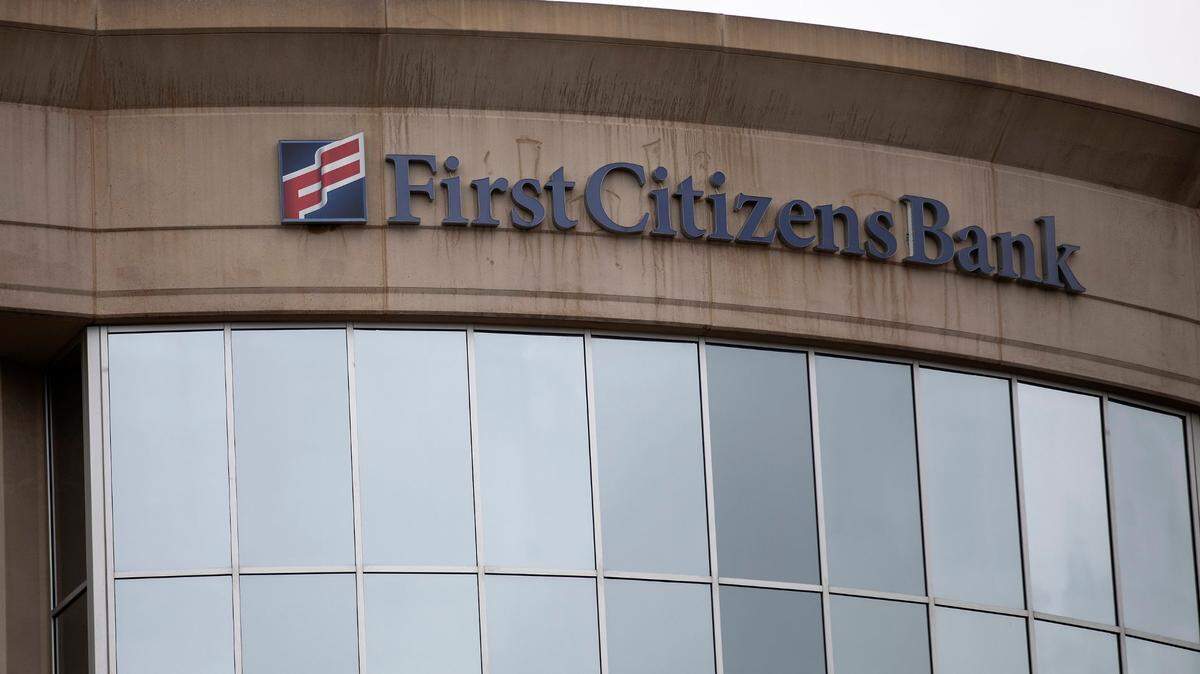
Two years after surprising the tech world by buying Silicon Valley Bank, Raleigh’s First Citizens Bank announced a smaller deal Thursday to continue its national expansion.
First Citizens has agreed to purchase 138 U.S. branches from Toronto-based BMO Bank, adding locations across 11 Midwestern and Western states — from southern Illinois to eastern Oregon. If regulators approve, this acquisition will grow First Citizens’ current footprint of 520 branches, most of which are in the Carolinas.
“I think it’s an incremental transaction that allows them to leverage their capital,” Christopher Marinac, director of research for the financial advisory firm Janney Montgomery Scott, told The News & Observer. “To me, it’s very logical what they’ve done.”
Already the country’s 16th-largest bank, First Citizens would add $5.7 billion in customer deposits and around $1.1 billion in loans through the deal. It agreed to pay a 5% premium on deposits to close the agreement.
A family-owned Triangle institution, First Citizens has grown considerably through recent acquisitions. It has bought more than 20 banks since 2009, the company says, including CIT Group in 2022 and the failed, startup-focused Silicon Valley Bank the following year.
First Citizens has increased its employee count over the past five years from 7,176 to 17,475, its annual filings show. It currently has the third-most deposits of any bank in North Carolina or South Carolina, behind Charlotte-based Bank of America and Truist Bank.
“We are enthusiastic about this opportunity to expand into new markets and offer our client-centered approach in even more regions,” company CEO Frank Holding Jr. said in a statement Thursday announcing the BMO buy. “This deposit franchise is solid, and we look forward to serving individuals and business clients in these areas.”
A member of the Holding family has led First Citizens since 1935.
Analysts react to First Citizens-BMO deal
BMO, which stands for Bank of Montreal, has sought to sell certain U.S. branches as it consolidates locations geographically, especially around California. For First Citizens, being the buyer comes with benefits and concerns, Truist analyst Brian Foran wrote in an Oct. 16 note provided to The N&O.
The move lowers the bank’s loan-to-deposit ratio and shows First Citizens is innovative to do deals despite not being one of the very biggest U.S. banks, he said. But Foran also wrote that First Citizens is already “kind of three disparate businesses — a Carolinas community bank, the old CIT national commercial lending, and SVB for (venture capital) banking.”
Now it is poised to enter new states. “We’re in a digital world, so branch maps don’t matter as much as they used to,” Foran wrote. “Still, it will feed into some investors’ perception that this is more a financial holding company than it is a typical bank franchise.”
Raymond James analysts called First Citizen’s BMO deal “an interesting and unexpected announcement,” in an Oct. 16 note provided to The N&O. “While the footprint of the acquired branches is rather surprising, the strategic rationale of the transaction leaves the bank in a better position for necessary actions in the future,” they wrote.
Marinac believes the purchase has little potential downside. “It should not carry much risk,” he said. “They can make immediate dollars … and it fits in with what they’re trying to do strategically in the Midwest.”
First Citizens and SVB, 24 months on
First Citizens Bank opened in 1898 as the Bank of Smithfield in Johnston County before eventually moving north to Raleigh. Today, its headquarters is in the city’s North Hills neighborhood.
The company made its splashiest acquisition in March 2023 when it purchased most of Silicon Valley Bank from the federal government. Before its collapse sparked a national banking crisis, Silicon Valley Bank, or SVB, had been the go-to financial institution for early-stage tech startups. Some analysts saw the marriage of California’s SVB and the family-owned southern First Citizens Bank as unusual.
But months after the deal, Triangle-area entrepreneurs had few complaints. “I’m so thankful that First Citizen saved them, and everything has been business as usual since then,” said Jud Bowman, a serial entrepreneur in Durham who has kept his SVB account for his startup Sift Media. “We didn’t even think about switching banks.”
On Wall Street, shares of First Citizens Bank’s holding company shot to all-time highs after the SVB sale. The stock price has retreated over the past year but remains approximately double what it was worth before the deal. Marinac said the SVB portfolio has not flourished under First Citizens, a fact he attributed more to sector trends than corporate decisions.
“The technology world, believe it or not, has struggled ever since Silicon Valley (Bank) failed,” he said. “Because what’s happened is that everybody’s focused on AI. If you’re not directly in AI, you’re kind of left on the wayside. I think that’s temporary, but it’s what’s happening. And so there has been this sort of crowding out of other sort of ordinary technology firms.”
This story was originally published October 17, 2025 at 3:01 PM.