No one was afraid to talk tariffs in NC at the world’s largest furniture market
I’m Brian Gordon, tech reporter for The News & Observer, and this is Open Source, a weekly newsletter on business, labor and technology in North Carolina.
On Sept. 29, President Donald Trump posted a characteristically blunt statement on his Truth Social platform. “In order to make North Carolina, which has completely lost its furniture business to China, and other Countries, GREAT again, I will be imposing substantial Tariffs on any Country that does not make its furniture in the United States. Details to follow!!!”
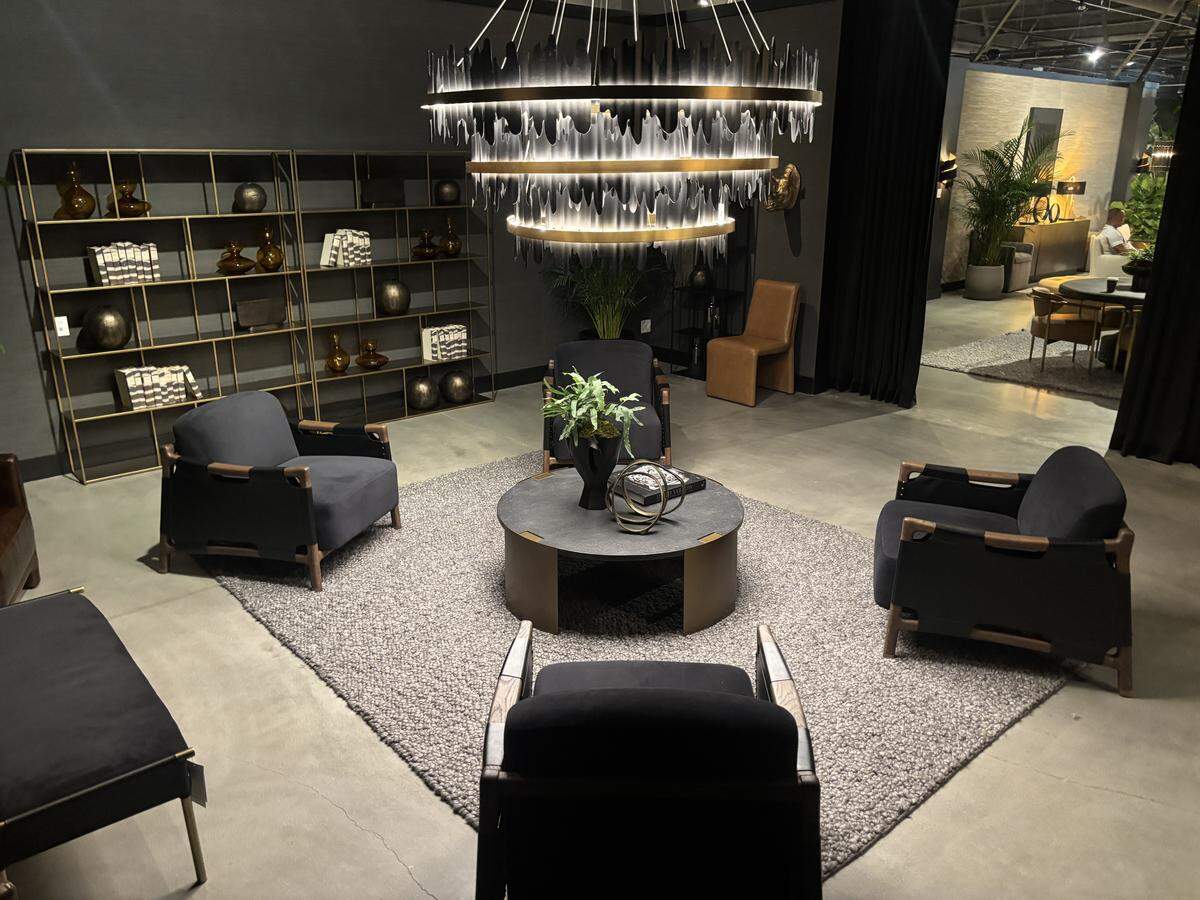
A few hours at the High Point Market proves North Carolina hasn’t completely lost its historically prominent industry. Twice a year, domestic and international manufacturers come to the Piedmont city of High Point to showcase at one of the world’s preeminent furniture events. Even reality TV stars make the trip.
“I do think for the combination of antiques and then all great new furniture, lighting, bedding trends, really the place to be is High Point,” said Carson Kressley of the original “Queer Eye for the Straight Guy” cast, who I randomly spotted shopping at this week’s fall market.
But many, many furniture jobs have left the state for overseas factories; between 1999 and 2009, North Carolina’s furniture manufacturing sector lost more than half its workforce, according to the regional Federal Reserve Bank. The state has retained its edge in high-end custom upholstery, but mass layoffs are still yearly occurrences.
Will tariffs bring positions back? I went to the Market to ask.
Vendors said country-based tariffs under the second Trump administration have already increased import prices. “We’re fortunate to have only raised our prices once so far,” said John Fiscian, an account executive at the home furnishings company Surya, which carries a wide selection of rugs from India and Turkey. “Compared to our competitors, that’s really great. Lot of people have already gone up three, four-plus times.”
Importers have split extra costs with customers. “We’re reacting to the tariffs with a surcharge,” said Lisa Samuels of the furniture manufacturer Bramble, which makes its goods in Indonesia. Since a trade deal this summer, the U.S. now imposes a 19% tariff on Indonesian goods — Bramble absorbs 9% and includes 10% as a line item on customers’ bills.
Having everything made in one country at least makes calculations simpler. “The other day I did a quote, and I had a fabric from China, one from Italy, one from UK and one from India, and all had different tariffs,” said Susan Guest, an interior designer in Hickory, North Carolina.
Imports still often cost less than North Carolina-made goods, she said.
If nation-specific tariffs alone don’t protect North Carolina furniture jobs, which have dwindled over the decades from 90,000 to around 30,000 today, then perhaps new sector-specific fees will. Earlier this month, Trump’s promised list of U.S. furniture tariffs went into effect: 10% on softwood lumber, 25% on some upholstery, and 25% on kitchen cabinets (which may rise to 50% starting next year.)
Such measures can return sector jobs to the Tar Heel State believes Ben Copeland of Vermont-based Copeland Furniture. “It’s going to look like a fair bit of investment and a lot of retraining,” he said.
Sales manager Carl Lovett at the Toronto-based manufacturer SUNPAN added nuance to the “Can jobs return?” question. Perhaps, but only if the manufacturers are already here.
Launching a facility would be more expensive than any tariffs, Lovett explained. And it’s not simply about one company choosing to onshore; so much of the furniture manufacturing supply chain now too exists halfway around the world.
The future of North Carolina’s furniture sector is both professional and personal for Cameron Sellers, a marketing executive at Hooker Furnishings, which has factories in Hickory and Cherryville. And Sellers’ father put himself through college by working in a North Carolina furniture factory. He then advanced in the industry at companies like Broyhill, Magnussen, and Sumter.
“It’d be hard to say it’s going to be what it was,” she said. “I don’t know. What I do know is we are invested here in High Point with this showroom.”
(As for aesthetic furniture trends, this season’s market featured a lot of items with chocolate brown and cinnamon tones, said Guest, the Hickory interior designer. “I think we all need a hug,” she hypothesized.)
.jpg "IMG_8822 (1).jpg")
Wolfspeed’s chip challenges go beyond bankruptcy
Wolfspeed is out of bankruptcy, rid of much of its debt, but still faces more typical — but still daunting — business headwinds.
The Durham semiconductor supplier released its first earnings post-bankruptcy this week, and Wall Street didn’t love what it saw. The company had lower losses (good) but also lower revenue (bad) than analysts’ expectations. Demand for its silicon carbide chips continues to lag its facility space, resulting in costly underutilization at its New York State and Siler City plants.
“We are focused on our customers and earning back their trust through consistent delivery,” Wolfspeed CEO Robert Fuerle said near the end of his remarks.
The chipmaker expects revenue will decline again next quarter as it closes its 150-millimeter device fabrication factory near Research Triangle Park. “We are taking a fresh look at every dollar we spend,” Fuerle added Wednesday.
Spun positively, this is all the company’s first step toward reinvention as it awaits a more favorable market. Wolfspeed chips power electric vehicles, and EV production should rebound, Fuerle said. Plus, the company is shifting more towards data centers.
It’s also a reminder though that exiting bankruptcy may have resolved the chipmaker’s biggest problem but not its only one.
.jpg "IMG-1165 (1).jpg")
Clearing my cache
- North Carolina loves Japan, and the feeling has been mutual. Gov. Josh Stein and top state economic officials were in Tokyo this week courting businesses at the annual Southeast U.S./Japan meeting.
- Amazon has begun constructing a $10 billion, 20-building data center in Richmond County. It's the largest corporate capital investment in state history. The company says the site could create 500 jobs, though its incentive agreement only requires 50.
- Swiss pharma giant Novartis, which has a facility near Research Triangle Park, will acquire Avidity Biosciences for $12 billion.
- Job announcements statewide: North Carolina awarded incentives for Pacific Life Insurance to hire 301 workers in Charlotte and the automotive parts manufacturer BorgWarner to hire close to 200 in Western North Carolina’s Henderson County.
- Starbucks workers rallied outside a Durham location this week as employees nationwide vote on a potential strike.
- Greensboro’s radio frequency device maker Qorvo is selling to the Apple supplier Skyworks.
National Tech Happenings
- Nvidia has become the world’s first $5 trillion company. It was worth only $1 trillion as recently as May 2023. The chipmaker maintains one of its earliest offices in Durham.
- Amazon will lay off at least 14,000 corporate workers, and reportedly closer to 30,000, as the country’s second-largest private employer reduces its white-collar workforce. Is accelerated AI the cause?
- The largest federal workers union, American Federation of Government Employees, has demanded the U.S. government shutdown end. “Both political parties have made their point, and still there is no clear end in sight,” its president wrote.
Thanks for reading!
If you enjoyed it, share it with a friend. If it was forwarded to you, sign up here to receive it every Friday.
This story was originally published October 31, 2025 at 6:30 AM.