Are drugmakers talking to us or Trump when they pledge new NC factories?
AI-generated summary reviewed by our newsroom.
- Drugmakers sometimes publicize NC plants amid tariff talks and White House deals.
- Federal PreCheck, monitoring and equipment orders will reveal which projects proceed.
- North Carolina offers supply chains, talent and sites but state incentives vary by deal.
I’m Brian Gordon, tech reporter for The News & Observer, and this is Open Source, a weekly newsletter on business, labor and technology in North Carolina.
How much of this is real? It’s a question you can ask about any major jobs announcement in North Carolina. That’s been true since before President Donald Trump uttered (or typed) his first tariff threat. It’ll be true after. The state’s on-record economic recruitment strategy is to “take shots on goal,” with an understanding that most projects don’t score — or at least never reach their stated hiring and investment targets. Regular readers of this newsletter can probably name a few examples.
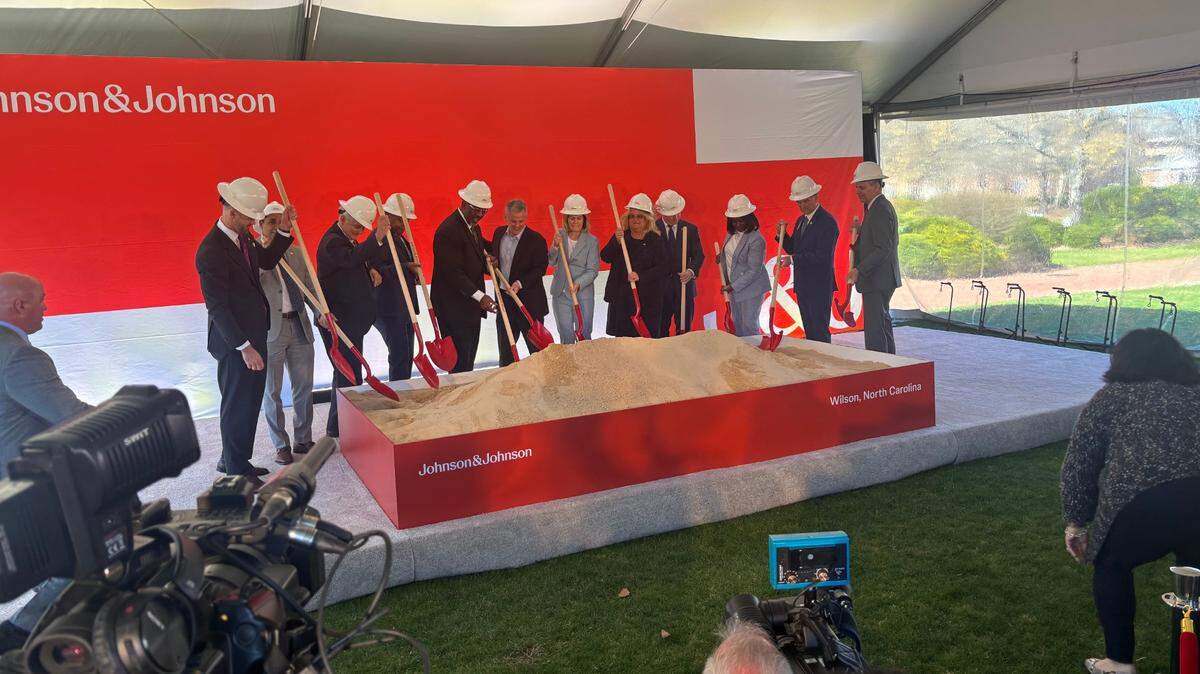
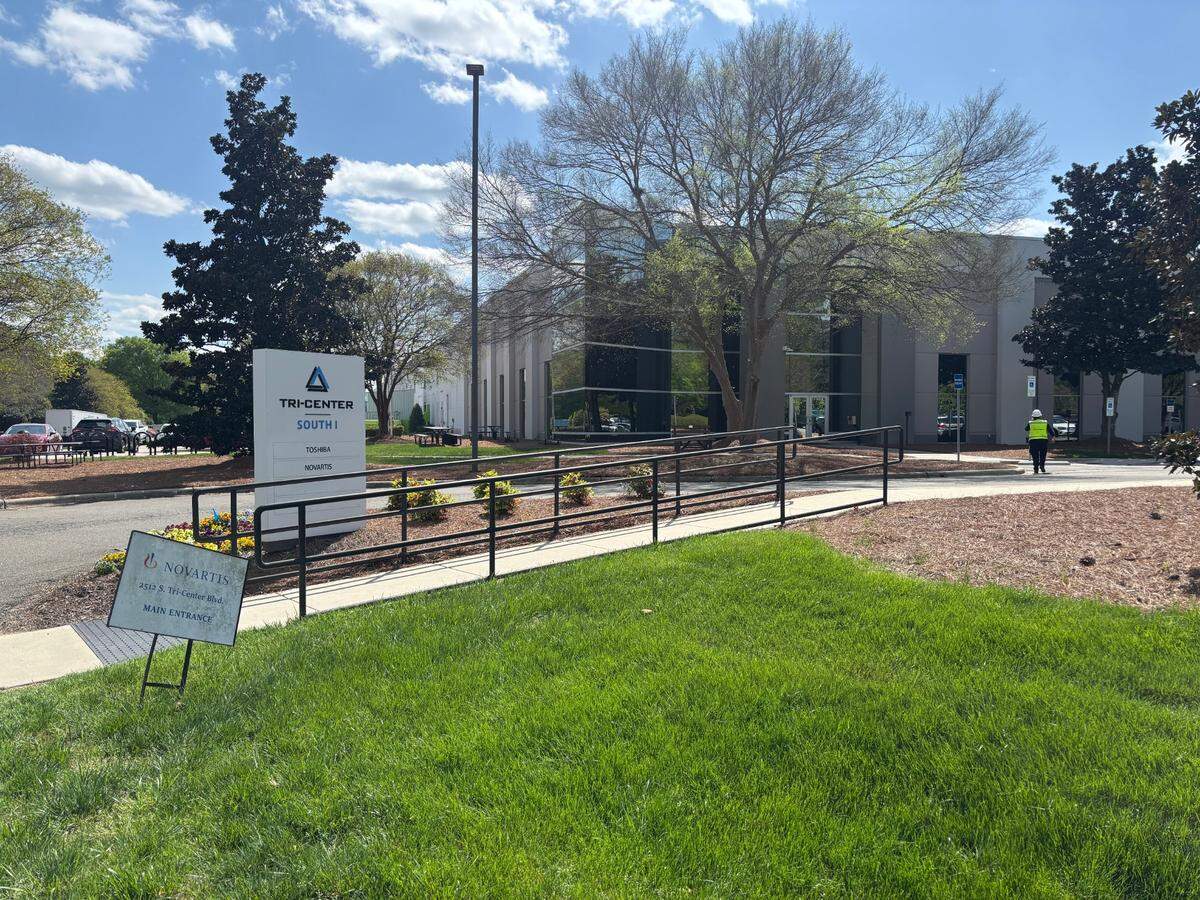
But the specter of pharmaceutical tariffs — which Trump at different points last year suggested could be 100% or 200% — has clouded at least how I interpret three recent local facility promises. In November, Novartis pledged to create 700 jobs across a trio of Triangle sites. Two weeks ago, Johnson & Johnson vowed to build a second plant in the Eastern North Carolina city of Wilson, where it is still constructing a first facility. And on Tuesday, the Roche subsidiary Genentech said it would direct an additional $1 billion-plus to build a future GLP-1 factory in Holly Springs.
In the past two months, these companies each entered confidential agreements with the White House to avoid tariffs. Novartis and Genentech said their exemptions will last three years; Johnson & Johnson did not share a length. Many of their competitors have signed similar deals. In return, these drugmakers committed to lower prices and increased U.S. footprints. Investment headlines followed, with Johnson & Johnson even repromoting its 2023 deal with Fujifilm in Holly Springs as new.
“Everything is negotiable under the current administration,” said Chris Tang of the UCLA Anderson School of Management. “It’s a business deal.”
So, here’s another question: Are these factory promises in North Carolina temporary verbal tariff dodges or genuine initiatives that will deliver more pharma work to what is already arguably the nation’s hottest drug manufacturing region?
The White House assures it will monitor their progress. “The Department of Commerce and CMS are working closely with these companies to ensure all obligations are met,” White House spokesperson Kush Desai wrote in an email to me. “And the President reserves the right to revisit pharmaceutical tariffs if any party reneges on their commitments.” On Feb. 1, pharma companies can begin applying for the federal government’s new PreCheck Pilot Program, designed to quicken manufacturing site construction. Which drugmakers join could be telling.
There are other ways to gauge the validity of pharmaceutical pledges says Prashant Yadav, a senior fellow for global health at the Council on Foreign Relations. “After an announcement, typically, there is a sequence of steps that need to happen,” he said in a phone interview. “The company breaks ground on a land lease. It signs up for the construction company. It orders the equipment needed to set up the plant. And then, of course at that stage, it’s already in the place of recruiting people and signing job contracts.”
Private construction contracts are difficult to track, Yadav said, but drugmakers serious about establishing new U.S. facilities should be placing more equipment orders — which should lead to higher revenues for public equipment companies. In a recent analysis, he and a coauthor found some upward momentum — but not a ton. “Current corporate statements and the lack of significant stock market movement suggest that equipment suppliers are uncertain whether and how many facilities will break ground in the near future despite the capacity expansion announcements,” they wrote.
This was a nationwide look. When it comes to North Carolina, Yadav told me the region’s network of drug manufacturing plants, suppliers and talent pool makes our factory announcements “the most salient and tangible.” And pharmaceutical companies were moving operations here before tariffs. “(During the pandemic) we realized a lot of the pitfalls of not having all our manufacturing done in one country or end-to-end in our facility,” said Joshua Barrett, associate research director at the Center for the Business of Health at UNC’s Kenan-Flagler Business School.
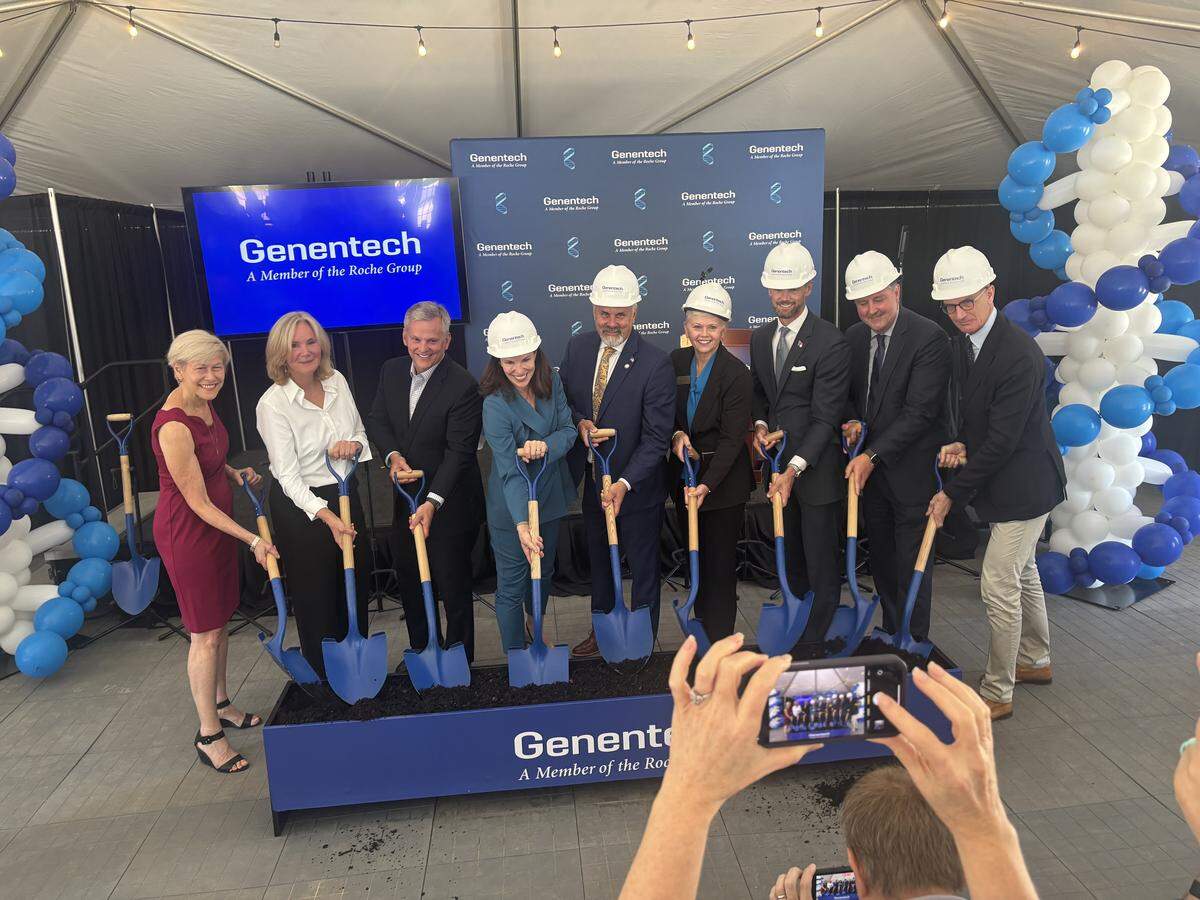
Now, there are reasons for skepticism, too. North Carolina hasn’t supported the latest Genentech or Johnson & Johnson expansion plans with its main incentive tool, the job development investment grant. Under their respective JDIGs, Genenech aims to build a $700 million site; Johnson & Johnson only one Wilson facility.
Yadav has more faith in facilities that will make a specific, trendy treatment — like Genentech’s plan to break into the GLP-1 anti-obesity market. But he found Novartis’s Triangle announcement in November to be more general. “This is the one where I asked the question,” he said. “Because there are many (Novartis) global sites which are underutilized, and including the past one in North Carolina.”
It was only last April that Novartis left a 2019 state agreement to create 200 jobs at a gene therapy site in Durham, with the company saying it did “not expect enough growth to meet the headcount commitment.”
Now, seven months later, the Swiss drugmaker states it will add more than three times as many jobs (Though North Carolina’s new incentive is only for 380 positions across Durham and Wake counties). “At the time of the deadline for notifying the state regarding commitments from the 2019 grant, Novartis had not yet finalized plans to invest an additional $23 billion in the US, nor had we decided where in the US we would use that investment to expand,” the company wrote in a statement. “The decision at the time was based on expectations for the existing project alone.”
To be fair to Novartis, the company maintains another previous state incentive deal. And after announcing its 700 jobs in the fall, it signed a lease to occupy more than 200,000 square feet inside the Pathway Triangle biomedical facility in Morrisville.
As is often the answer, time will tell how these projects advance. And I’m not breaking news by suggesting companies are strategic in how they announce investments. It just seems that more than ever, the recent headlines drugmakers generate in North Carolina are for an audience of one.
Want a rodent in your life? Call the EPA.
Anyone in the Triangle want to adopt a rat? On Thursday, the Environmental Protection Agency recommitted to stop using mammals to test chemical toxicity by 2035, a target the agency initially set during the first Trump administration. The Biden-era EPA had halted this pledge, believing non-animal alternatives wouldn’t match the results gained by using mice, rabbits and other mammals within this timeline.
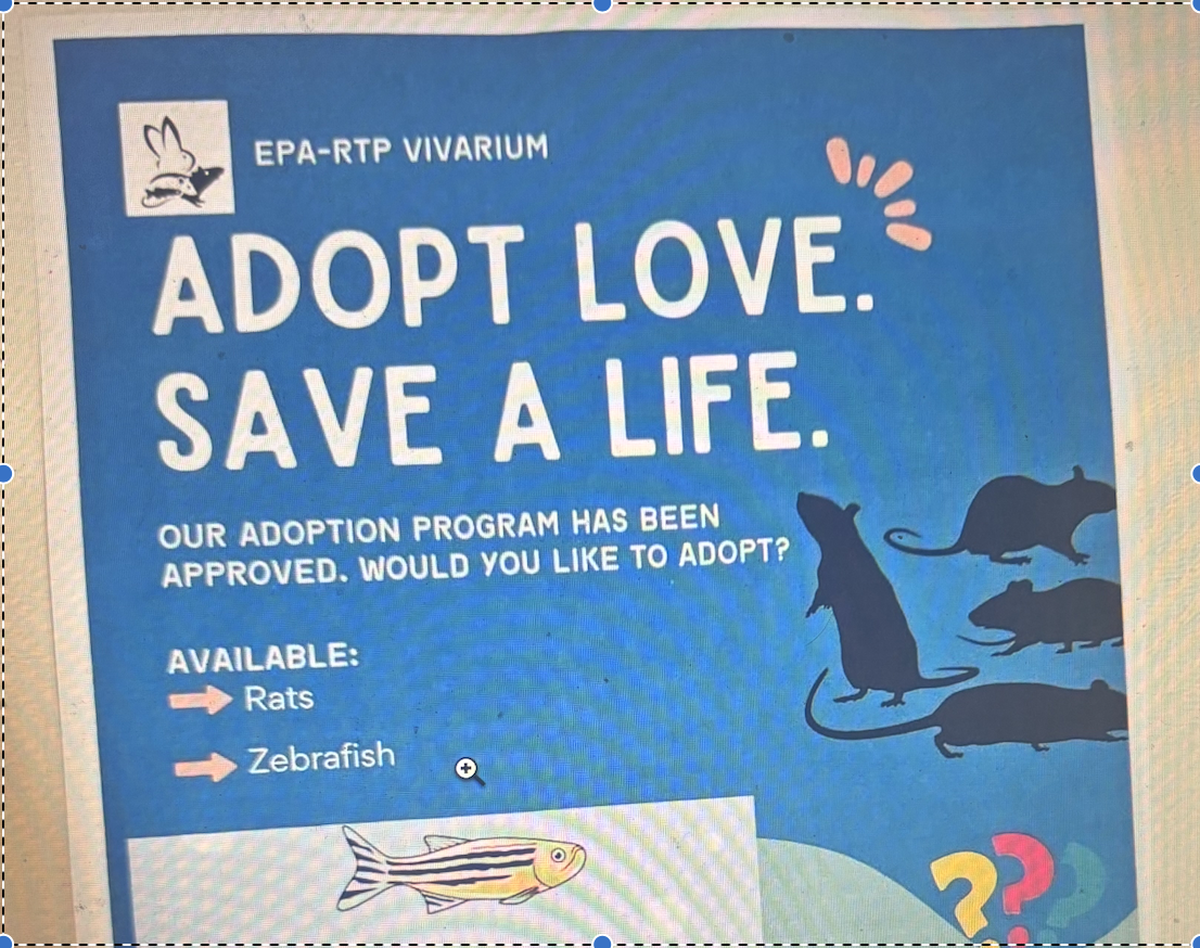
Staff at the large EPA campus in Research Triangle Park have already tried to find some of these animals new homes. Last year, the RTP office started an adoption program, with rats and zebrafish available. “Adopt love. Save a life,” one sign at the local office read. A pair of rabbits have also since been adopted from the North Carolina campus, the EPA stated in its Jan. 22 announcement.
Within a six-month span last year, the EPA said it cut the number of rodents at its newly formed Office of Applied Science and Environmental Solutions from 466 down to 41. In place of mammals, the agency promotes emerging New Approach Methods like computer modeling and in vitro diagnostics. “The scientific community is moving away from animal testing, and huge advances in developing NAMs have been made in recent years and are expected to accelerate,” the EPA wrote this week.
While animal rights activists rejoice, others worry adoption efforts signal an overall retreat from testing. “The move reflects EPA’s drastic planned cutbacks in toxicological and other basic research work,” the nonprofit Public Employees for Environmental Responsibility wrote in early July. Later that month, the EPA confirmed it would dissolve its scientific research division.
Clearing my cache
- A Raleigh business consultant has organized a letter with more than 1,300 signatures that urges congressional leaders to reauthorize SBIR/STTR programs, which fund small business research and development. The federal programs lapsed last fall.
- NCInnovation has started its first “pipeline program” at a UNC System school. The nonprofit says this inaugural program will help UNC-Asheville faculty commercialize their research. The nonprofit will have to do more to quiet its critics.
- CJ Logistics America is laying off all of its 99 workers in the Forsyth County town of Rural Hall, near Winston-Salem, after it says a customer chose another supply chain services provider.
- The new North Carolina AI Leadership Council met this week and said it doesn’t believe Trump’s executive order attempting to block “onerous” state AI laws will obstruct its mission, State Affairs reports.
National Tech Happenings
- Tariff talk No. 2: President Trump pulled back his tariff (and military) threat over Greenland, posting online that he and NATO Secretary General Mark Rutte “formed the framework of a future deal” at the World Economic Forum in Davos, Switzerland.
- Got to rob ‘em all? A trio of armed robbers stole more than $120,000 worth of Pokémon merchandise in New York City, another crime related to the wildly popular cards. There’s a decent chance most of them were printed in North Carolina.
- Will vibe coding sink software companies? The release of Anthropic’s new AI agent Claude Cowork has precipitated a sell-off of major “software as a service” stocks like Salesforce, Intuit and Adobe.
- The White House posted an altered image of a woman arrested in Minnesota for interrupting a church service where she believed an ICE official worked. “Enforcement of the law will continue,” a White House spokesperson posted in defense of disseminating this fake image. “The memes will continue. Thank you for your attention to this matter.”
- TikTok has reached a deal to stay in the U.S. through a majority American-owned venture.
Thanks for reading!
This story was originally published January 23, 2026 at 10:02 AM.