High gas prices hurt Triangle businesses, nonprofits and, yes, gas stations
AI-generated summary reviewed by our newsroom.
- Triangle nonprofits report fuel costs have exceeded their budgets and contingency funds.
- Higher fuel costs are hurting drivers for Raleigh-area trucking businesses.
- Gas stations aren’t turning high profits, and say rising base costs squeeze margins.
No money to give raises. Less wiggle room on profit margins. The possibility of future tough decisions.
Triangle-area businesses and nonprofits are feeling the squeeze from higher fuel prices, just like everyone else.
A few leaders from these groups, whose work relies on vehicles, met Thursday with Rep. Deborah Ross, a Democrat from Raleigh, to discuss how rising gas and diesel prices are affecting their industries.
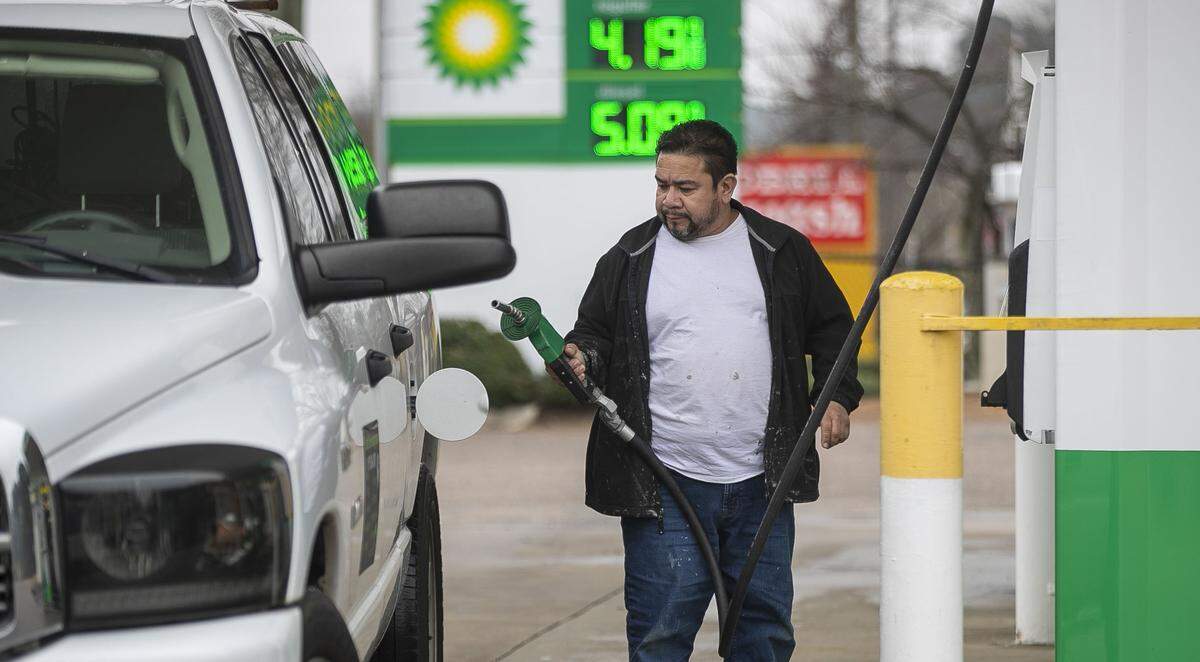
As of Thursday, the average price of a gallon of unleaded gasoline in North Carolina had surged to $4.22, according to AAA, and diesel had hit $5.50. Prices have stayed high since the United States and Israel attacked Iran.
How high gas prices are affecting NC nonprofits
Adam Hartzell, CEO of Raleigh-based SouthLight, a nonprofit community behavioral health clinic, said high gas prices are having three main impacts on the organization, which provides mental health and substance use treatment services to people in Central North Carolina.
First, many of the organization’s patients use their own transportation, and the increased travel costs are affecting how frequently patients feel they can make it to appointments, he said.
Second, about one-third of SouthLight’s services are provided in communities, with counselors and other individuals traveling to provide care. The nonprofit budgets for gas in advance, so that it can figure expenses into contracts, grants and overall operating costs.
At this point, the nonprofit has exceeded its budget and its contingency add-on.
“Those grants and contracts, they don’t change,” Hartzell said. “We are contractually obligated to provide those services at the rate that we said we would do it.”
Third, SouthLight has a large vehicle, which Hartzell described as a “big bus,” that teams use to help rural and underserved populations. Costs have surpassed SouthLight’s gas budget for this mobile unit, too.
“What we’re seeing is a rise in cost as a nonprofit business who is really capped on what we’re able to do about how we deliver our services,” Hartzell said.
Boys & Girls Clubs of Wake County serves about 1,000 kids every day, said CEO Matt Taliaferro.
Its 13 buses pick up students after school and drive them to a center where they can stay until their parents arrive.
Boys & Girls Clubs of Wake County also has a food delivery truck that brings dinner to the kids.
Last year, the nonprofit spent about $35,000 on fuel, Taliaferro said. It’s on track to spend more than $50,000 this year.
Its employees are also paying more for gas to get to work.
“It impacts their morale, as my employees are beginning to feel the squeeze,” Taliaferro said. “There are more things on their mind as they are having a harder time to make ends meet.”
But Taliaferro also hears from families of the kids the organization serves — families who are already on tight budgets.
“When they come in and tell us that they can’t buy the groceries or they’re having to make decisions about various different things in their lives, that’s hard to hear,” he said.
How high has prices are affecting NC trucking company
Believers Trucking LLC decided last year to move its yard to Durham. Now that gas prices have gone up, some of its drivers who live farther away are frustrated, having to spend more just to get to work, said CEO Etienne Hightower.
The company has to meet its contractual obligations, and can’t renegotiate prices.
“Nobody wants to pay us more to haul stuff, yet all my expenses are going up,” Hightower said.
Now, Believers, which primarily works for Amazon Freight, can’t afford to give annual raises to about 50 drivers.
But while the company isn’t able to bump up wages, it is trying to help drivers in different ways. Believers is setting up a “crash pad” to help cut down on commute times for drivers, and it started offering life insurance for them.
“Right now, I’m fighting to maintain my staff, their quality of life, and I want to give them more,” Hightower said.
Are gas stations profiting?
It would be easy for drivers to conclude that with higher gas prices, gas stations are making greater profits, said Gary Harris, executive director of the North Carolina Petroleum & Convenience Marketers Association.
But that isn’t necessarily the case, he said, because oil prices are going up.
“What so many people don’t understand is that with that rise in base cost, our ability to price more of a margin of profit is squeezed,” Harris said.
If a gas station’s fuel prices are higher than its nearby competitors, stations charging more will lose customers.
Convenience store purchases are also declining, Harris said, because customers are buying less fuel.
Gas prices won’t drop as quickly as they rose. But once they begin to drop, stations will have to lower prices to align with their competitors.
“If they go down, I have to go down,” Harris said. “If I don’t, I lose product, and I lose sales to them.”