RDU's massive new parking lot has a novel stormwater system. Here's what to know
Raleigh-Durham International Airport will finish building one of the state’s largest paved parking lots by year’s end, with nearly 11,000 spaces across 110 acres. To handle runoff, RDU is using an experimental stormwater system that state regulators have not yet approved for widespread use.
FULL STORY: RDU tries novel approach to stormwater flowing off its massive parking lot
Here are key takeaways:
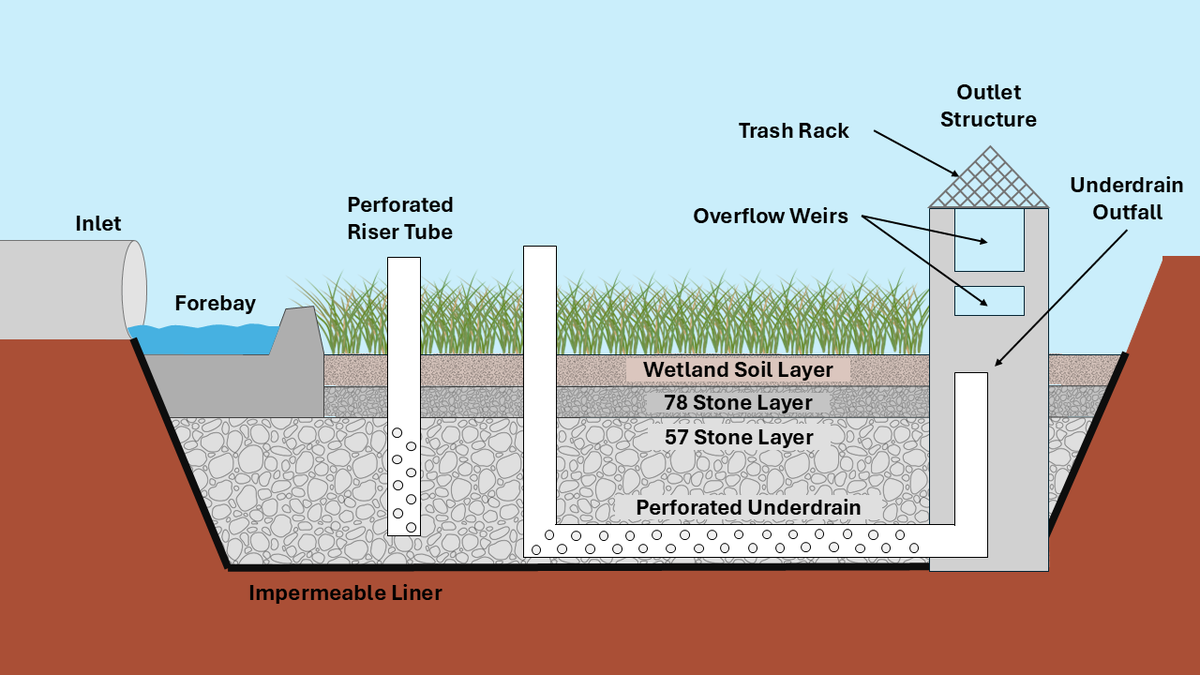
- RDU is building seven “submerged gravel wetlands” around Park Economy 3, ranging from a quarter-acre to a full acre. Water from the lot filters through sandy soil planted with wetland plants before settling through layers of gravel and eventually draining toward Crabtree Creek.
- The technology was developed by University of New Hampshire engineers more than a decade ago and is widely used there. But it’s still novel in North Carolina. State regulators approved RDU’s project as a “pilot study” in partnership with N.C. State University researchers.
- The wetlands handle one to two inches of rain over 24 hours. During hurricanes and other large storms, water will drain out untreated. NCSU stormwater specialist Bill Hunt said the system “just passes the big storms safely without causing erosion.”
- Jean Spooner of the Umstead Coalition is skeptical the wetlands will adequately remove nitrogen, but said she trusts Hunt’s oversight. Runoff during construction of the parking lot washed sediment into Lake Crabtree.
- NCSU graduate student Anna Dias will monitor water quality through summer 2027. Hunt expects the practice will eventually be approved statewide.
The summary points above were compiled with the help of AI tools and edited by journalists. The full story in the link at top was reported and written by Richard Stradling.