Don’t qualify for a mortgage? ‘Fractional ownership’ is an option. What to know.
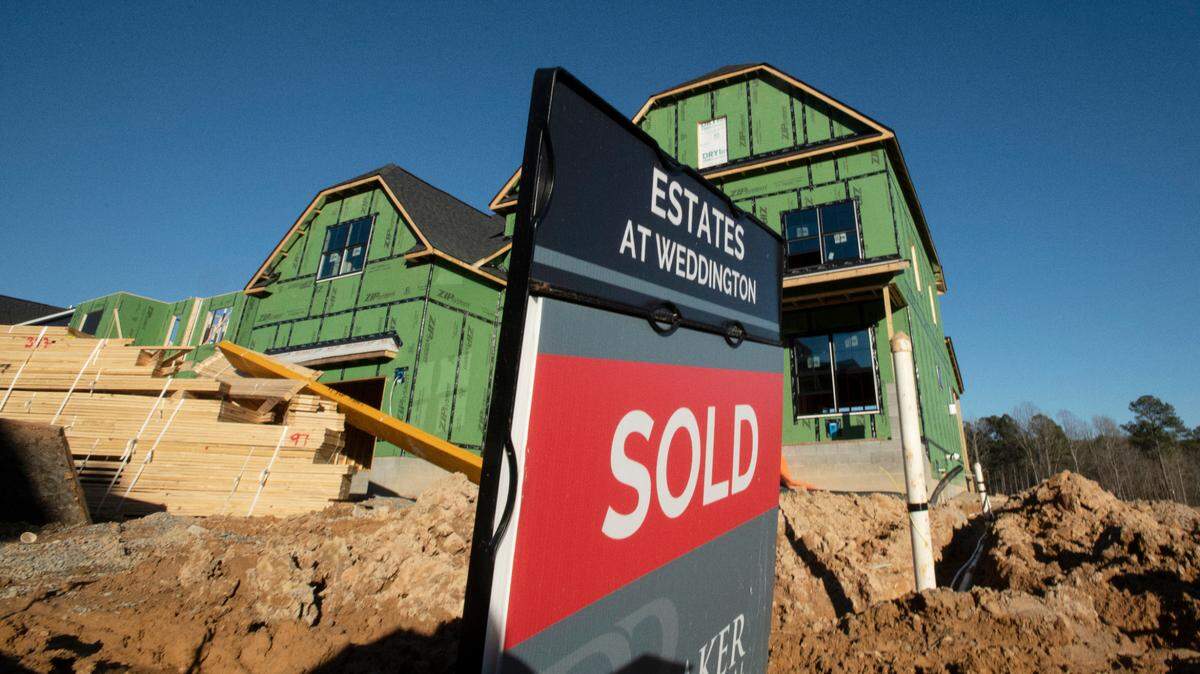
As higher mortgage rates lock out many would-be buyers across Wake County, alternative home-financing solutions have emerged out of Silicon Valley.
Among them is Ownify, a San Francisco-based startup that is testing its product after landing $7 million in seed funding led by Lobby Capital.
Unlike “rent-to-own” models, such as Divvy Homes, where buyers rent the property until they’ve saved for a down payment, Ownify’s model offers fractional ownership, or shared equity. Instead of taking on debt, buyers partner with an equity provider to buy the home with cash, putting a 2% down payment. They build equity in the home while living in it.
“We set out to create ‘Rent-to-Own 2.0, or a better version of rent-to-own,” Ownify founder and CEO Frank Rohde, told The News & Observer in a video call. “We provide true equity ownership. It’s not a savings account.”
However, fractional ownership, as a concept, isn’t new. Here’s a closer look at what first-time homebuyers should know.
What is fractional ownership?
Fractional ownership, also known as shared ownership, allows multiple owners or families to acquire high-value assets like a house, a vacation home or a condo.
Each party owns a portion, or “fraction,” of the property, matching their share of the purchase price. This allows buyers to maximize their purchasing power, without having to pay the full cost upfront. The value of each party’s share changes as the asset appreciates or depreciates.
It can also take several forms: joint tenancy, which gives all parties an equal interest and rights to a property; or tenancy in common, which gives each owner a partial interest in the property.
This model first became trendy in the 1960s with the idea of “vacation timeshares.” Later, it grew to include all sorts of property like supercars, airplanes, and yachts.
Most recently, it’s resurfaced as an alternative home-financing solution with products like Ownify. “These types of models pop up in low interest rate environments,” said Stacey Anfindsen, an Apex appraiser who analyzes MLS data.
As inflation, high mortgage rates and home prices keep homeownership out of reach for many across the Triangle, he said rent-to-own and fractional ownership models have picked up in recent years. “It has lots of benefits for builders. But on the downside, these sales eliminate buyer options.”
How it works
Ownify advertises its fractional ownership model as an “attractive alternative” to the traditional debt-based mortgage.
Ownify customers, nicknamed “Ownis,” partner with an equity provider to buy the home with cash. They make a comparatively low-down payment of 2% and, while living in the home, they build equity over time — roughly 1.6%, or about 13 “bricks,” per year.
In return, Ownify covers additional upfront costs, such as due diligence fees and earnest money.
Effectively, they buy their home “brick by brick,” Rohde said.
After five years, they own about 10% of their home’s equity. At that point, they can buy the remaining equity, at fair market value, “or cash out and walk away.”
Fractional ownership versus ‘rent-to-own’
Divvy Homes and Home Partners are among a handful of rent-to-own companies currently on the market.
In contrast to fractional ownership, rent-to-own is a type of lease agreement that allows tenants to rent a property while saving for a down payment, or working on their credit.
After a certain time, the tenant has the option to purchase the home. In some programs, part of their monthly rent will also go toward the purchase.
The price is fixed and determined at the onset of the agreement.
The pros and cons
Proponents argue fractional ownership offers first-time buyer numerous upsides.
Among them: It gives buyers access to a property they couldn’t otherwise afford and more bargaining power with “all-cash” offers. There’s also shared accountability, a lot less risk, and the chance to build equity if it goes up in value.
On the downside: Buyers don’t own the property outright. There are also fewer financing options and high maintenance costs and fees, depending on their ownership agreement.
April Russell is a Raleigh-based mortgage loan officer with Movement Mortgage, an equal housing opportunity lender. She’s not familiar with Ownify and could not directly comment on the company. Speaking generally, she cautioned buyers to read any contract’s fine print. “Some agreements may require a non-refundable deposit,” she said. “A buyer needs to make certain.”
Cory Sherman, a broker with Homegrown Real Estate in Durham, is not an “Ownify-accredited” real estate agent.
He said the company’s promise to cover due diligence and earnest money expenses could be a “game changer.” “In an environment where the competitiveness of a buyer’s offer can wildly depend on how much they’re able to offer in due diligence, this could be huge,” he said.
But he also advises buyers to research all of their options. Among them: State Employees’ Credit Union or an USDA loan, which offers up to 100% financing. Others, like an FHA loan, allow eligible buyers to pay as little as 3.5% of the purchase price for a down payment. “In most cases, there are better alternatives out there.”
This story was originally published July 24, 2023 at 5:30 AM.