A massive housing development is being planned along Durham-Chapel Hill line
The plans started 20 years ago.
Leigh Village was meant to be a stop on the Durham-Orange Light Rail Transit Project, a compact and walkable neighborhood where thousands of people could sleep, shop and hop on the high-speed train to jobs in Durham or Chapel Hill.
But when transportation authorities finally shelved light rail in 2019, landowner Jed Harris and the team behind the proposed mega development kept at it.
“The need is still there,” said Dan Jewell, regional director for the land planning firm Thomas & Hutton.
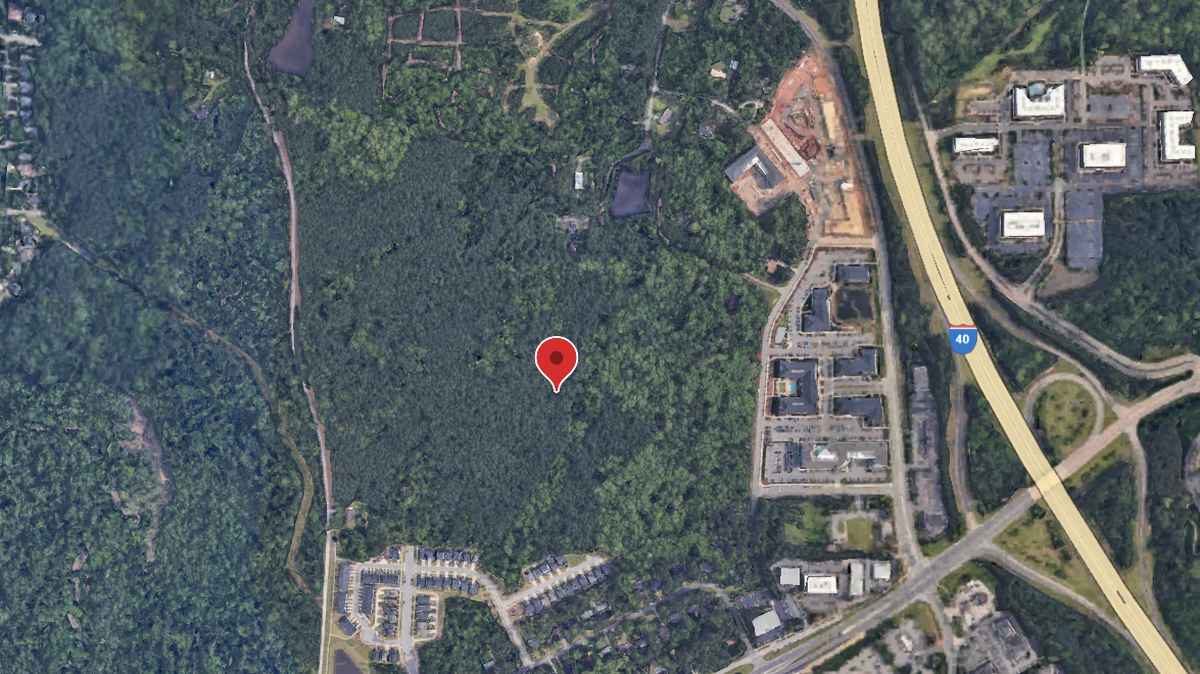
In October, Harris and Jewell submitted an annexation and rezoning proposal to the Durham planning department for land near the busy juncture of Interstate 40 and N.C. 54.
If fully built, Leigh Village would be the largest residential community in Durham’s recent history. That could take decades, though.
“We’re looking at essentially enabling development, but we don’t really know exactly what form it’s going to take,” Harris said.
Leigh Village has a maximum of 4,100 units, dwarfing the second-largest proposal under consideration in Durham, according to senior planner Andy Lester.
“The next largest proposed rezoning, in terms of the proposed number of units, is 1,900 units,” Lester said in an email.
What’s in Leigh Village proposal?
Here’s what is in the plans shared with The News & Observer:
- Number of units: Up to 4,100.
- What type of housing? A mix of apartments and townhomes. No single-family homes.
- Total acreage: 85.23 acres, split among a handful of landowners.
- Location: On forested land northwest of N.C. 54 and I-40. (Exit 273)
- Will any units be affordable? Yes. The proposal includes two commitments, broken down below.
- Affordable apartments: 9% of the apartments would be rented at affordable prices for 30 years. The proposal is split evenly among those making 100%, 80% and 60% of the area median income.
- Affordable townhouses: 3% of the for-sale townhomes would be sold with 20-year deed restrictions limiting the sales prices for those making 80% of the area median income.
- Parking: Primarily in decks.
- Building height: The wood-framed buildings would likely top out around five stories.
- What else? The plan also calls for office and commercial, plus two paved greenway paths. Developers hope to be included along bus rapid transit routes.
The proposed timeline
The team says no developers have been selected yet.
“We would like to be picky,” said Laurel Martin-Harris. “We want to feel proud of what goes here.”
Martin-Harris is Harris’s daughter. She and her dad are coordinating the project from California, where they now live.
“Most likely, the land will be sold off in parcels — let’s say 10 acres, maybe five acres,” Harris added. “And the infrastructure will be built out incrementally as part of that.”
They hope Leigh Village will be annexed into Durham’s city limits this year, but it could take longer to put it to a vote.
Senior manager of growth management Alexander Cahill said the planning department is awaiting more documents before Leigh Village can be added to the agenda.
The Planning Commission hears the item first, then gives its advice to the City Council, which has the final say.
BEHIND THE STORY
MOREWhy did we report this story?
The Triangle is growing, with the population expected to double to more than 2.9 million people by 2050. But many lack affordable housing today.
Over the past five years in Durham, rent has increased 55% and median home prices rose 48%. The N.C. Housing Coalition reports nearly 1 in 3 Durham County households are cost-burdened, meaning more than a third of their income goes toward paying the rent or mortgage and utilities.
Solving the affordability crisis has become one of the most critical issues facing local leaders.
We want to know your questions about affordable housing. What stories should we be telling? Contact us here.
This story was originally published March 28, 2024 at 8:00 AM.