Property taxes are on the rise. How does NC compare to other states?
Higher property taxes are likely around the corner for many homeowners in Wake County after newly released revaluations saw home values jump by as much as 65%.
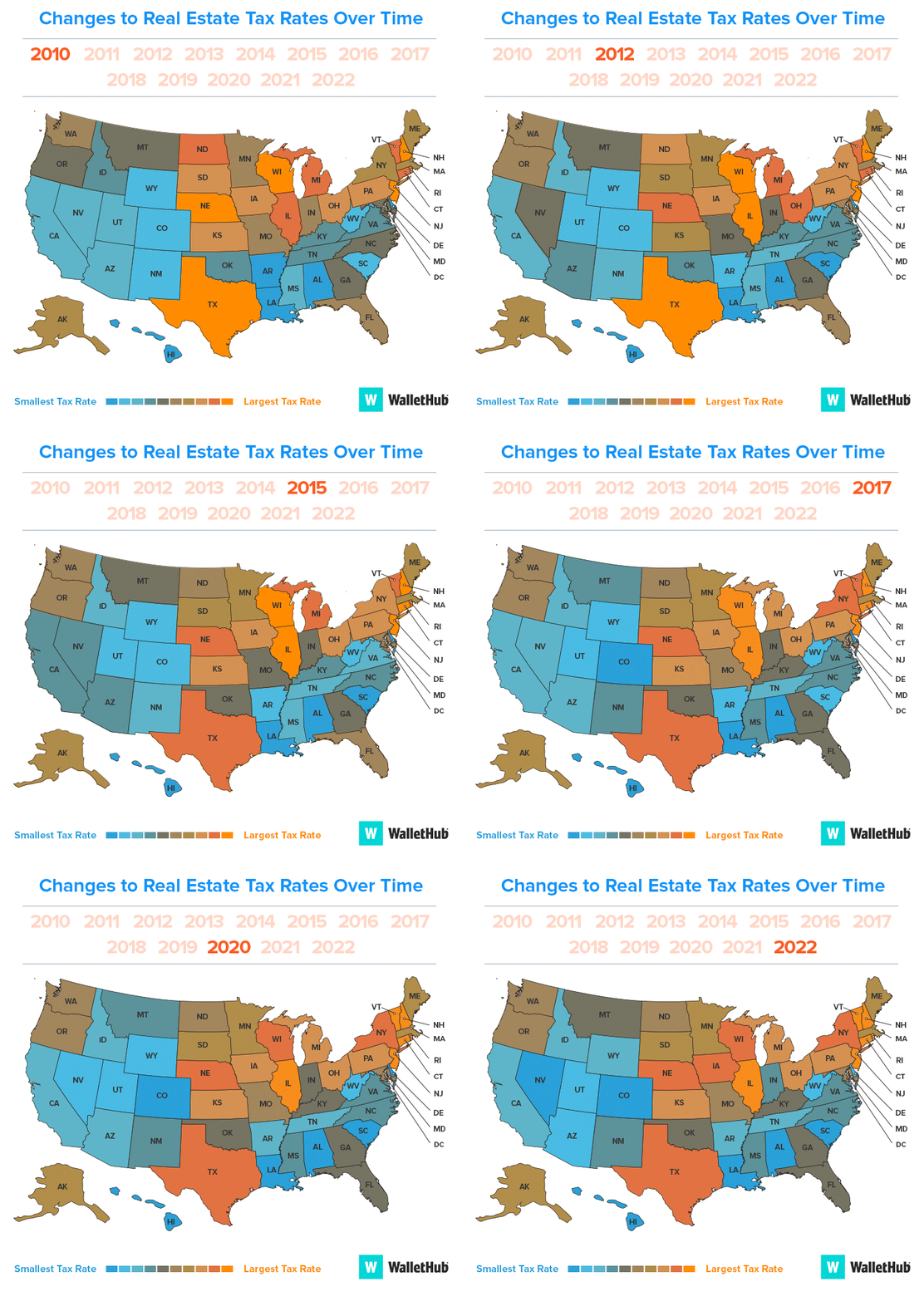
Even so, North Carolina overall is still considered a better-than-average deal for property taxes compared to other states, according to a new WalletHub study.
The Old North State ranked No. 17, just behind California, with an effective real estate tax rate of 0.73%.
“North Carolina has a moderate property tax rate,” said WalletHub analyst Cassandra Happe in an email to The N&O.
In North Carolina, the state does not set property tax rates, counties do. To come up with a statewide “rate,” WalletHub divided the “median real-estate tax payment” by the “median home price” in each state. Based on these rates, they determined the dollar amount paid as real-estate tax on a median-value home.
For some perspective, take a home worth around $281,900, the median home value in the United States as of 2022, according to Census Bureau. That would cost residents $2,069 annually in North Carolina based on WalletHub’s estimates.
For a home priced at the state median home value of $234,900, as cited by the study, this puts annual taxes at roughly $1,724.
“This balanced approach to property taxation is positioned between states with higher rates, like New Jersey, and those with lower rates, like Alabama,” Happe said.
Hawaii has the lowest real-estate tax at .27%. New Jersey, the state with the highest, is at 2.33%.
The study noted the average American household spends $2,869 on property taxes for their homes each year, according to the U.S. Census Bureau.
Do higher property values equate to higher taxes?
Home values across North Carolina have shot up in recent years.
In places like Wendell, it’s as high as 65%, according to the county’s newly released 2024 revaluation. In Morrisville, the increase is closer to 45%.
Wake County overall shows a 51% bump. (Chatham, Durham, Johnston and Durham counties will all hold their revaluations in 2025.)
However, higher property values don’t automatically mean higher property taxes. The county and its municipalities will set new property tax rates later this year.
As a rule of thumb, if a property’s value increased by over 41.5% and local governments keep their “revenue-neutral” rates, people will likely experience a property tax increase. If a property’s value increased under 41.5%, people could see a property tax decrease.
Anna Johnson contributed to this report.
This story was originally published February 23, 2024 at 11:43 AM.