She started as a field laborer. She now manages major Holly Springs construction site
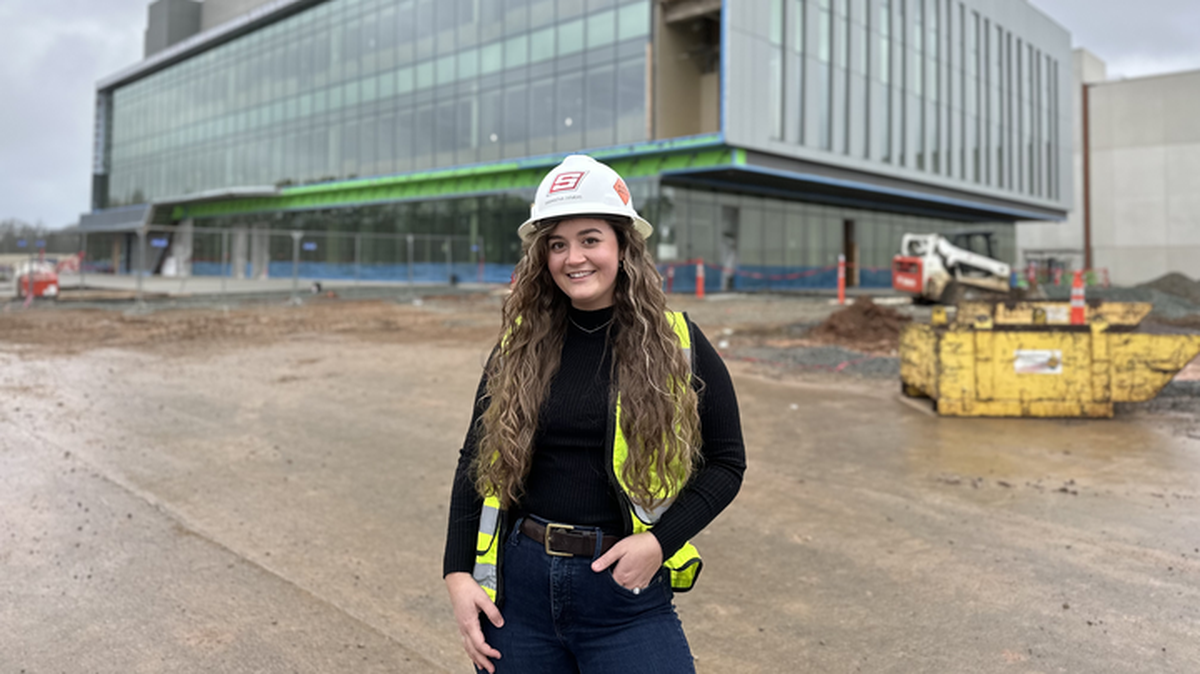
As a woman working in construction, Samantha Demers knows what it’s like to be the only woman in the room.
For nearly a decade, the 29-year-old, who is originally from rural Vermont, has worked in the industry: starting as a field laborer on a road crew before relocating to the Triangle six years ago where she worked her way up into management. Her resume includes projects like the revitalized Brentwood Park in Raleigh and TapStation, a former gas station that’s now a bar and grill, in Apex.
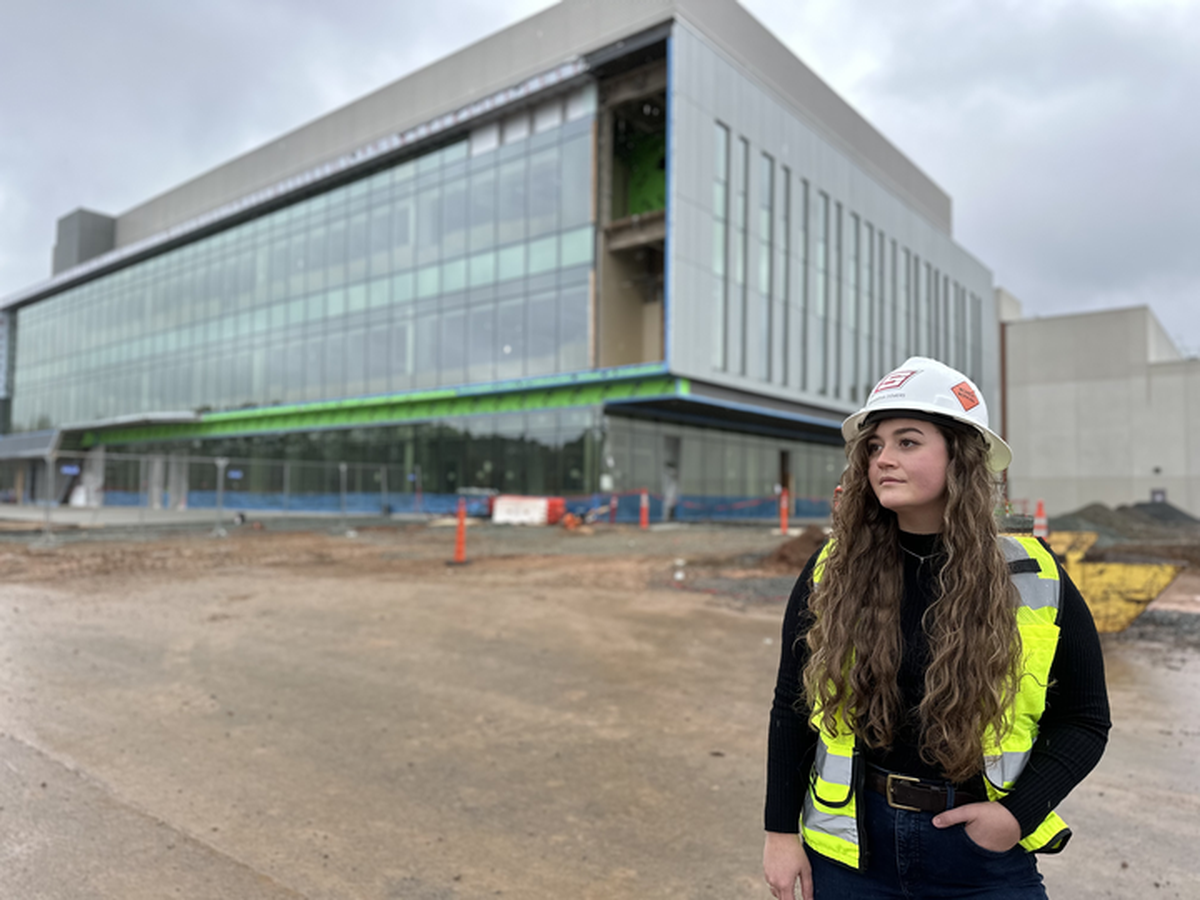
Today, Demers is a project manager at Samet Corp. She’s currently working in the field as a lead on Amgen’s new 350,000-square-foot multi-product drug manufacturing plant under construction in Holly Springs. (California-based Amgen broke ground on the $550 million expansion project in 2022. It’s slated to open in 2025.)
“Everything you do has higher stakes,” Demers told The N&O. “The end result is a facility that will play a part in creating lifesaving medicines. This pushes the construction teams to be faster.”
Since 2012, the number of women in the construction industry has jumped — from 802,000 to 1.29 million women in 2023. That’s up 60.5%, according to the latest data from the U.S. Labor Bureau.
Many are entering upper management where the gender pay gap is lower compared to the U.S. average. Women in construction earn about 95% of what men make compared to an average 81% in all other industries.
Still, women are underrepresented. In North Carolina,, women are 10.7% of the total workforce and only 4% work in the field, a Fixr study found.
Demers understands challenges remain.
As part of this year’s Women in Construction Week, organized by the National Association of Women in Construction, she talked to The N&O about her journey in the industry.
Here’s what she had to say: (This interview has been edited and condensed.)
How did you get into the construction industry?
I grew in central Vermont working at my father’s sawmill and lending a hand in local projects. I always loved the problem-solving nature of this work, and the reward of a finished product.
Later, I studied architectural engineering technology and construction management at Vermont Technical College. That steered me right into the construction industry.
Talk us through your day.
I’m currently assigned to Amgen’s project in Holly Springs. In my role, I’m responsible for all financial aspects of the project, including executing contracts, drafting change orders and submitting payment applications.
I also work with our team to provide schedule updates and monitor the progress of the job to ensure we can deliver the best quality product in the quickest time frame.
Although the end result is a building, all of this work focuses around people. That structure represents months of teamwork, design, problem solving and human effort.
What’s the ratio of men to women on your site?
For this job, I’m seeing one woman for every six to eight men. There’s about 600 laborers on site.
That’s much higher than the average ratio of men to women. Typically, I’ve seen less than one woman for every 10 to 12 men.
Out of Samet’s team of 11 managers, four of them are female.
What are some of the biggest challenges you’ve faced?
From my classes in college to my first job out of school until now, working in a male-dominated industry is all I’ve known.
It’s my personal goal to represent women and ensure my voice is heard.
As a young woman, it’s hard establishing credibility and trust with clients and superiors. At times, proving this can feel like there are two strikes against you. But fighting for a place at the table ultimately results in a better work environment for everyone.
Have you ever experienced sexism in your career?
Sexism is something that has long been part of the construction industry, although it’s evolving in the right direction.
For me, everyday sexism looks like people mistaking me for a project engineer or some sort of administrator just because I’m a younger woman.
Without fail, when walking into a meeting or meeting others for the first time, I get overlooked as the lead project manager. People often are taken aback like, ‘Oh, you’re one of the leaders on this project and not necessarily a supporting staff member.’
Some of this is certainly rooted in stereotypes, but often the surprise in the other person’s voice can be unsettling.
What would surprise people about your job?
People should know that as much — if not more — of the project’s work happens off site. There are countless months, often years, that go into pre-planning, design, safety, funding and selections before the first shovel even hits the ground.
Construction may look like “swinging a hammer” to those on the outside. But it’s a more nuanced business that takes forethought and a lot of movement behind the scenes for the actual in-place work to happen.
Where would you like to see the industry go?
I’d like to see more diversity. Different perspectives build successful projects. This opens the door for more women of varying backgrounds to join the industry and really transform what a group of “builders” looks like.