Durham picks developer to redo old downtown police HQ, but questions remain
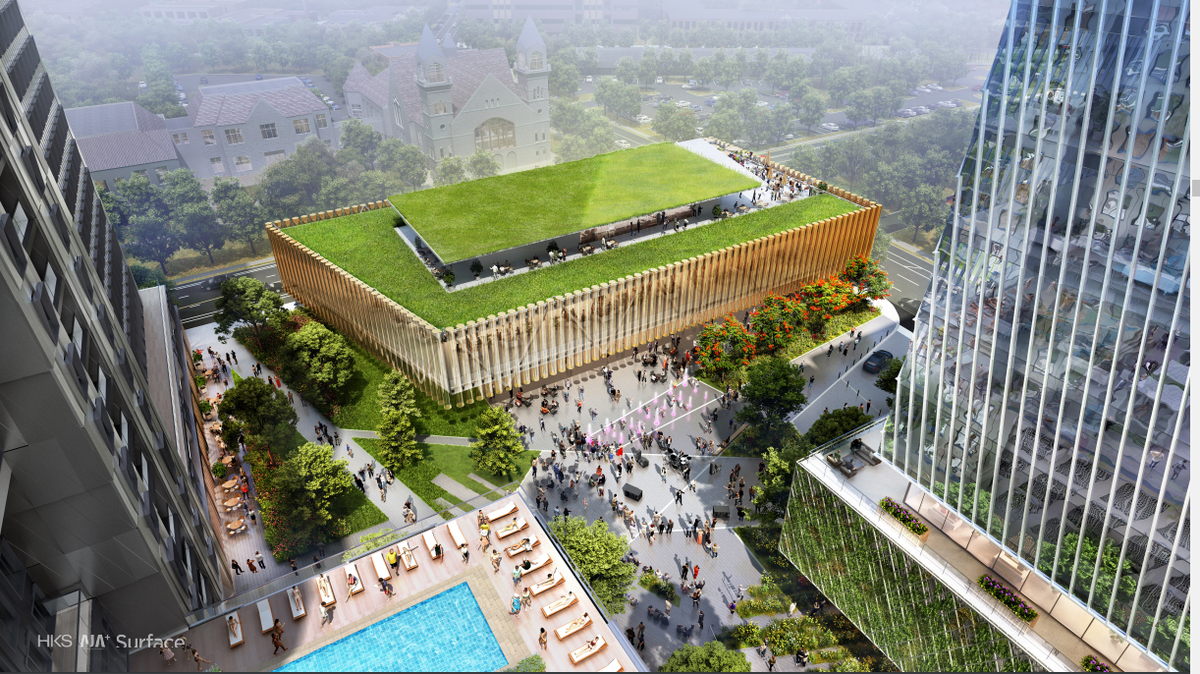
The city of Durham has picked a firm to breathe life into its old police headquarters building with a nearly $300 million redevelopment of the prominent downtown property.
City Council members unanimously selected The Peebles Corp. on Monday night for the ambitious revitalization project, though they still haven’t decided whether to spend a few million extra to preserve the historic building standing there today.
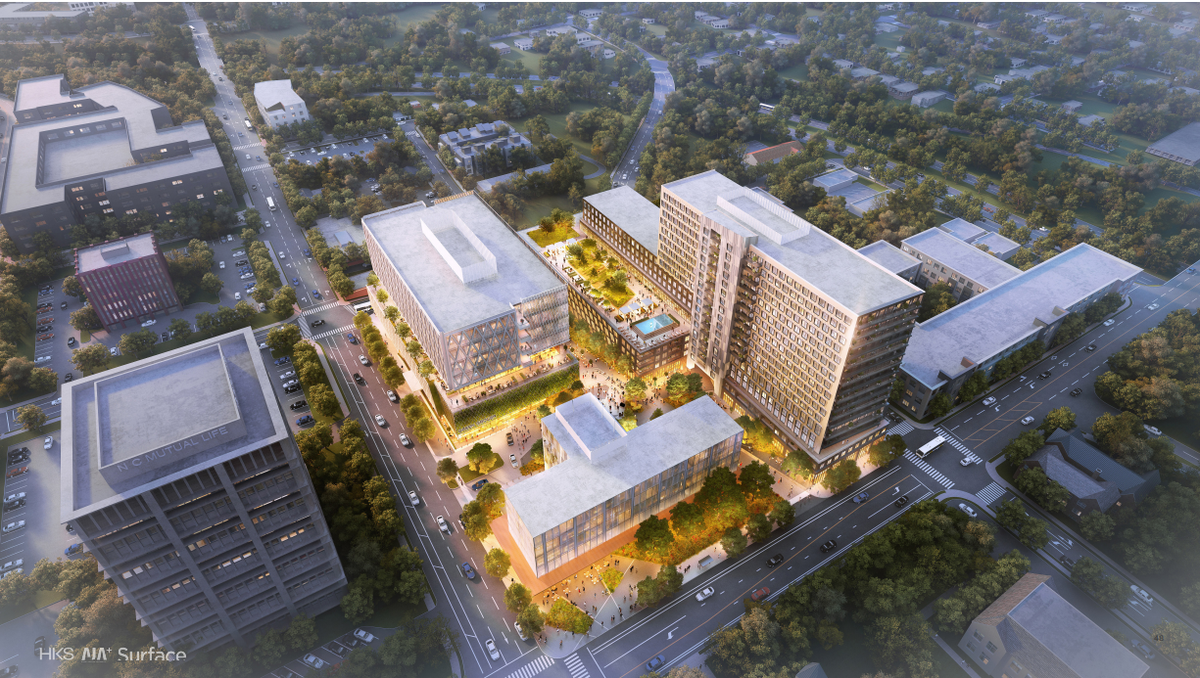
In its proposals, Peebles shared plans for crafting “a beacon at the gateway to downtown Durham.”
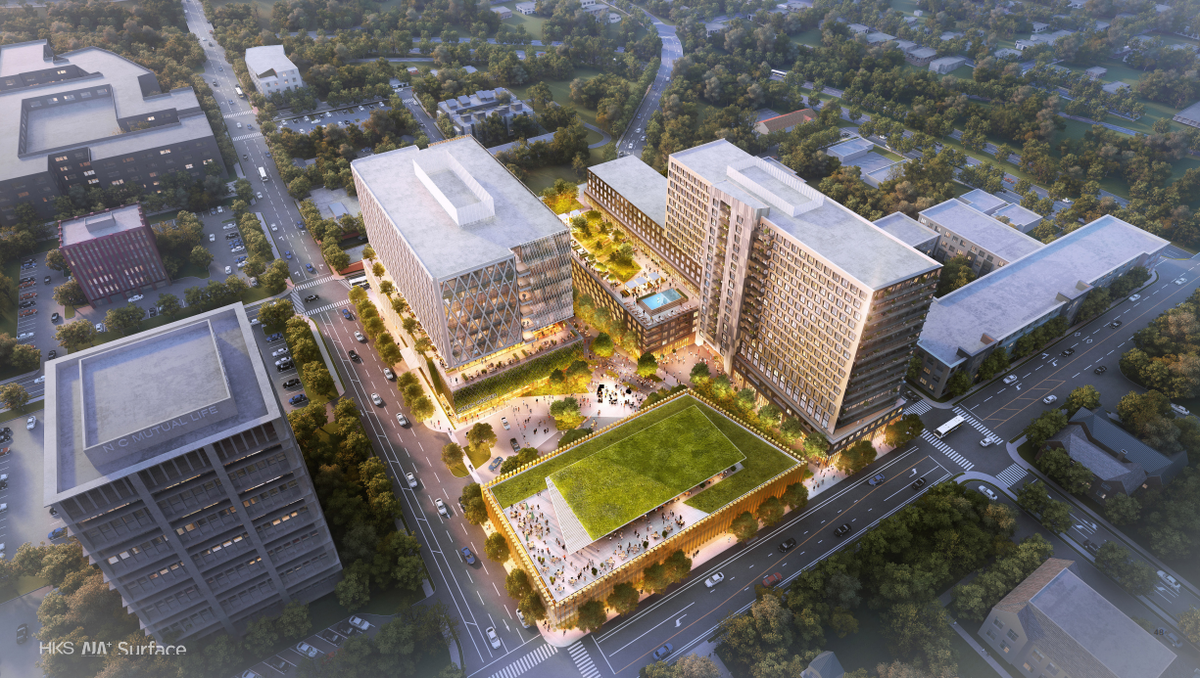
- Apartments: A total of 380 residential units, 92 of them permanently affordable at 60% of the area median income and below. Most are rentals, but 26 will be condos offered for sale.
- Commercial space: Labs and retail shops totaling 250,000 square feet, including a “grocery anchor tenant, like Fresh Market or Trader Joe’s.”
- Parking spots: 791.
- Open space: A plaza and outdoor seating at the heart of the three buildings, connected by landscaped walkways and decorated with public art.
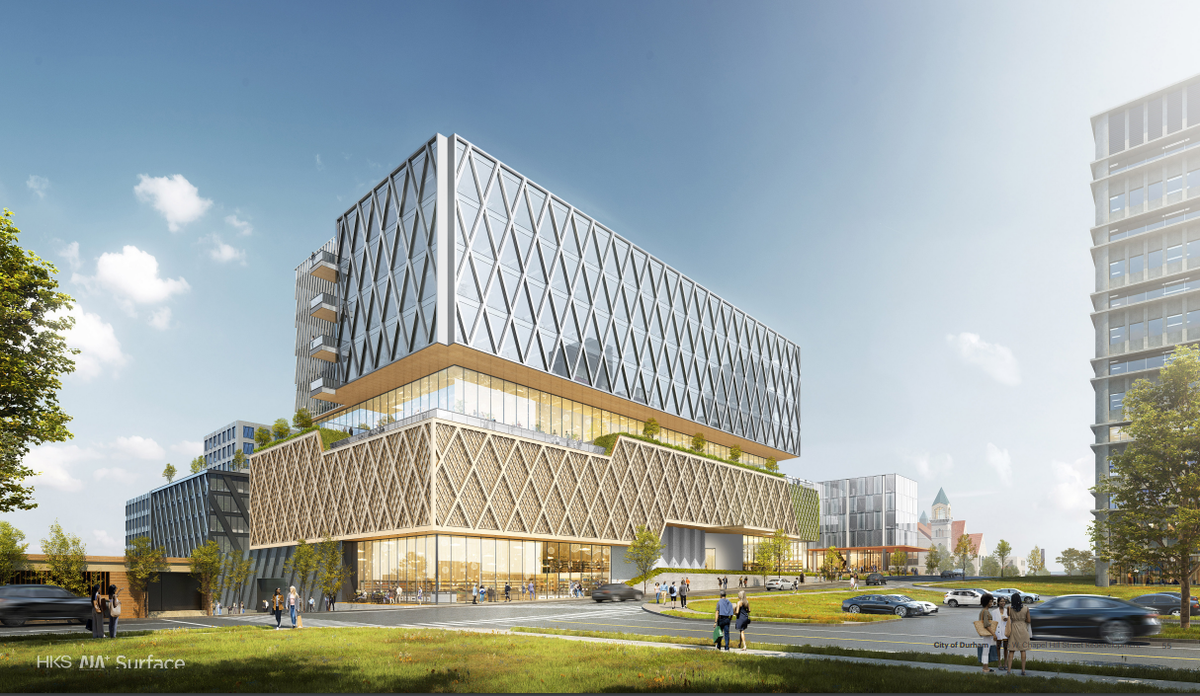
- Undecided: Whether to preserve the former police HQ. If so, it would be transformed into a 100-room hotel. If not, it would be replaced with a cultural center and museum.
Nicole Thompson, president and CEO of Downtown Durham Inc., said this location was pivotal and could catalyze development downtown like the city’s investment in the Durham Bulls Athletic Ballpark did 30 years ago.
A modernist building
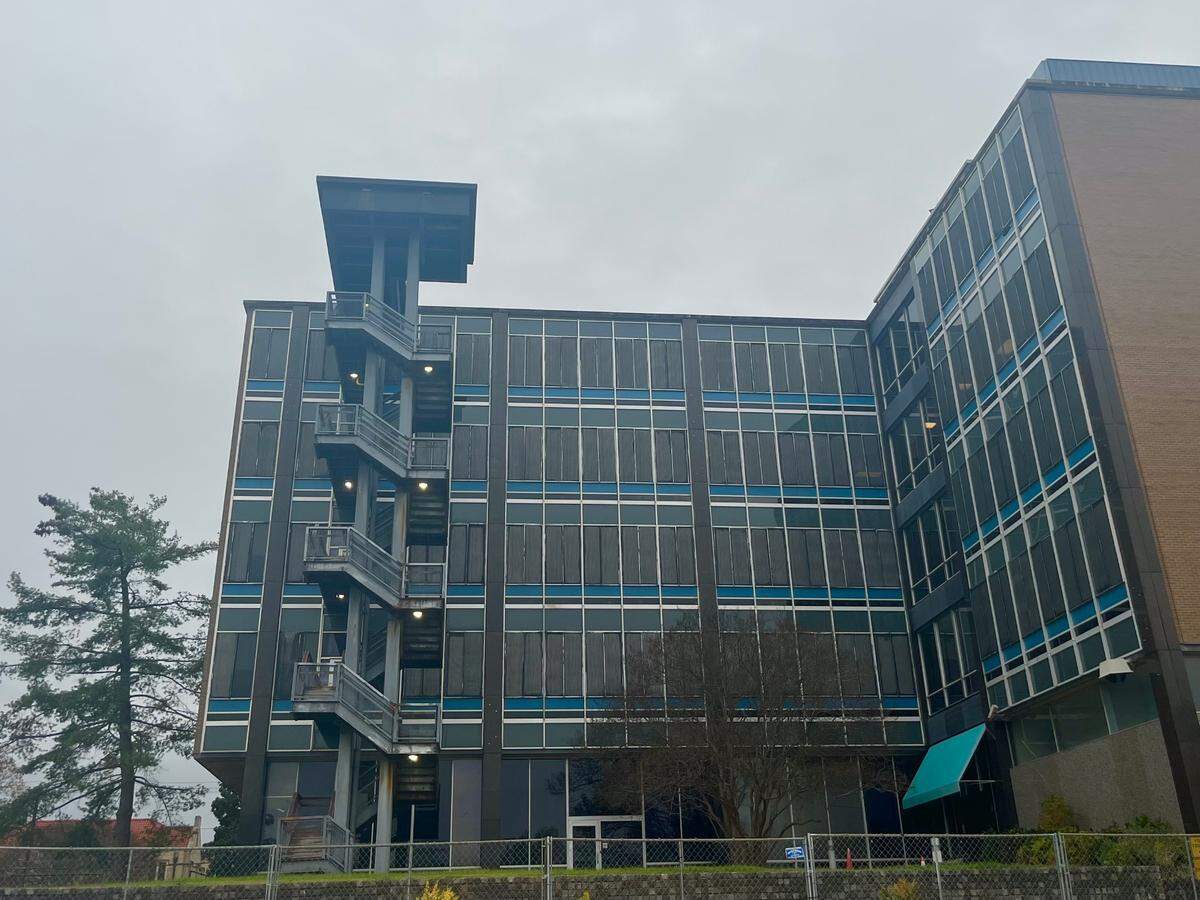
The only structure on the 4-acre city-owned property was designed by modernist architect Milton Small in the 1950s to serve as the office for Home Security Life Insurance Co.
It’s located at 505 W. Chapel Hill St. and served as police headquarters for a quarter century, beginning in 1992., though it’s sat vacant since 2018.
George Smart, executive director of NCModernist, argued for preservation.
“It’s gorgeous,” Smart said. “You’ve got cherry and mahogany along the walls. You’ve got terrazzo floors. You’ve got floor-to-ceiling windows. You’ve got great architectural elements that were put in place by Phil Freelon and Patricia Harris when the building was rehabbed a number of years ago.”
Several others, including local pastor James Blake, urged more affordable housing on the site.
“The cost to live in our city is continuing to rise, and many who work in our city are unable to afford to live here,” Blake said. “Our responsibility as citizens of Durham is to ensure that Durham is a city for all and not just a destination for the elite.”
Construction will require city investment
Peebles says construction costs will approach $300 million and work would last three years from groundbreaking.
Financing the deal would require a federal 4% low-income housing tax credit and city investment, the company says. The city will be asked for a loan of at least $57 million, which could be risky. If preserving the building, they’d also request a $3.8 million subsidy and upfront sale of the land for $7.5 million.
The precise terms of the deal will be worked out in the weeks ahead, and the City Council will take another vote.
The plans could also change, the firm’s vice president Donahue Peebles III said earlier this month, when pressed whether more labs were really necessary in Durham. (He thinks they are.)
“These transactions are complicated. We understand that political objectives change over time. We’re not wedded to any particular execution. The only thing we are wedded to is a partnership with the city of Durham,” he told the City Council.
If the site is a success and is eventually resold, the city’s return on investment could be around $20 million, though city staff caution many assumptions and caveats come with that figure.
Peebles, which bills itself as the largest Black-owned real estate company, is a national firm whose closest office is in Washington, D.C.
The company beat out two national competitors, Akridge and Conifer, by scoring higher on criteria set by the City Council in the fall. and by its reputation on similar public-private projects underway in Charlotte and Boston.
The Charlotte project has been repeatedly delayed since 2016. Company founder and CEO Don Peebles blamed this on how long it took local leaders to untangle legal development rights, as well as broader economic concerns.
“We are working on the site right now. It has been financed,” Don Peebles assured Durham leaders Monday night.
This story was originally published August 22, 2024 at 8:12 AM.