NC’s build-to-rent housing is booming. What does this say about our market?
.jpg)
Build-to-rent housing is surging across North Carolina as demand grows among would-be buyers who can’t find single-family homes they can afford in a tight market.
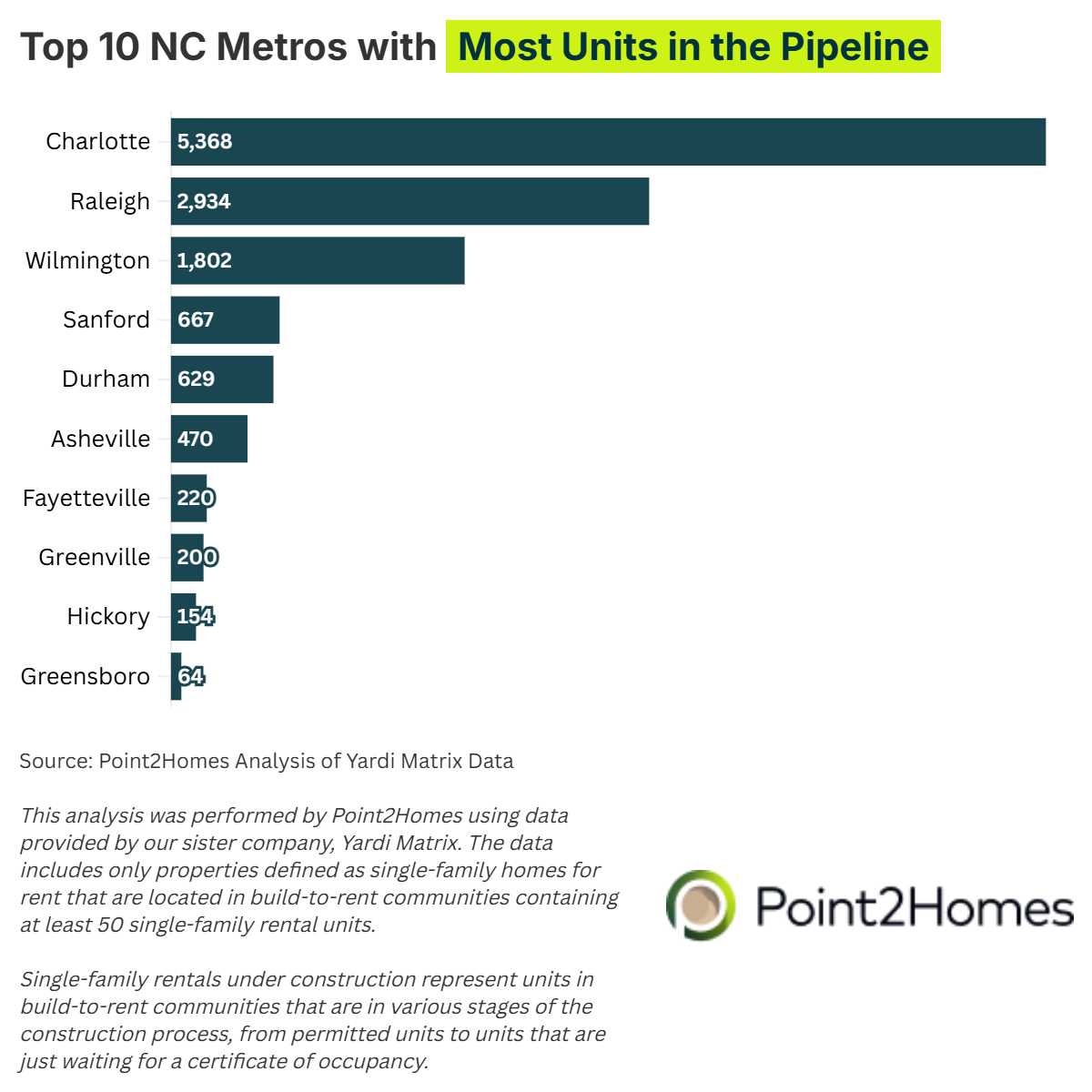
More than 12,398 new, single-family rentals are currently in the pipeline, according to a new Point2Homes build-to-rent report, just behind powerhouses like Texas (28,812), Arizona (13,692) and Florida (13,591).
Popular with millennials and Gen Z, build-to-rent homes (BTR) are designed to offer the perks of homeownership — without steep down payments, maintenance costs, real estate and school taxes, or homeowners’ association fees.
Given North Carolina’s “affordability, space and shift toward suburban living,” it’s an emerging hub for build-to-rent projects, analyst Alexandra Ciuntu said in the report.
The trend is helping to alleviate the nation’s housing shortage but is unlikely to solve the growing crisis, analysts say.
Nationally, build-to-rent single-family construction is set to boost existing inventory by 53.5%. North Carolina, meanwhile, is far outpacing this growth. Supply is expected to jump 152% in 2025, the fifth-highest increase of all states, the report said.
Nationally, North Carolina ranks No. 4 in single-family rental construction and No. 2 in the region, just behind Florida and ahead of Georgia, the data showed.
The state’s two largest metros, Charlotte and Raleigh, are in the lead with over 5,300 and 2,900 units, respectively. “Strong job market, proximity to universities, growing population of remote workers and students” are fueling the need for high-quality rentals, the report said.
The Wilmington metro isn’t far behind with 1,800 units on the way.
Point2Homes used data provided by its sister company, Yardi Matrix, and included only properties defined as single-family homes for rent in communities containing at least 50 units.
NC’s built-to-rent boom
BTR neighborhoods are increasingly popping up around the Triangle.
Last month, Charlotte-based Crescent Communities announced plans to build hundreds of rental homes — mostly apartments and townhomes — on a 6.5-acre site in Durham’s emerging University Hill neighborhood. Amenities include an indoor/outdoor sky lounge with wine and beer on tap, a bike lounge stocked with rentals and “fix-it” stations, and a “futuristic” fitness studio featuring private yoga rooms.
The firm has also developed several rental properties in the Triangle region, including NOVEL Morrisville and NOVEL Cary. Monthly rents range from $1,445 to $3,635.
.jpg "novel-cary-community-full-outdoor-countertop-with-refrigerators-under-a-modern-pergola-next-to-the-pool(1).jpg")
As developers extend their reach into secondary and tertiary markets, the state’s sector is poised for continued growth, analysts say.
Smaller cities like Pineville and Sanford are expected to increase in demand. At present, each has contributed over 650 new units to the state’s growing pipeline, the report said.
Even in smaller places like Mooresville, Wendell, or Leland — a town 10 times smaller than Durham, yet on track to deliver just as many rental homes — growth is forecast.
Will it likely continue for the foreseeable future?
“Perhaps, if home buying continues to be out of reach for young adults,” said Jessica Lautz, deputy chief economist at the National Association of Realtors.
In Raleigh, the median sale price (mid-point where half cost less and half cost more) was $456,000 in December 2024, according to Redfin. That’s up 14 % since last year. In Durham, the median sale price was $410,000, up 0.73%, Redfin found.
“They will need a bigger space if they have growing families or even just a yard for a dog to play in,” Lautz said. “Built-for-rent may be their solution — even if temporary — as they save for their down payment for their first home.”
The uptick comes as North Carolina struggles to build enough houses for its surging population, according to analysis by Bowen National Research.
The number of households in the state is projected to increase by 5% (218,160 households) between 2024 and 2029.
The result: an estimated housing gap that will grow to 764,478 units — 322,360 rental units and 442,118 for-sale units, the report found.
The statewide vacancy rate for multifamily rental units is 5% — within the “healthy market” range of 4% to 6%. Affordable rental programs show “near-zero” vacancies.