Raleigh Country Club is the second to challenge city’s ‘missing middle’ housing plans
Raleigh Country Club is suing the city and local businessman Mark Thompson in an attempt to reverse approval of a 16-unit townhome project adjacent to its property.
In a petition filed in Wake County Superior Court on Jan. 8, the club argued the city incorrectly denied its right to an appeal last November. It wants the case remanded to the city’s Board of Adjustments, in what is the latest dispute triggered by the city’s 2021 “missing middle” housing reforms and its push to build higher density in traditionally single-family neighborhoods like Raleigh’s King Charles.
“I’m not asking for anything other than my appeal to be heard,” said Christian Anastasiadis, chief operating officer for McConnell Golf, which owns RCC.
“The city erred.”
Triangle Business Journal first reported the lawsuit.
The developer and the city of Raleigh have declined to comment.
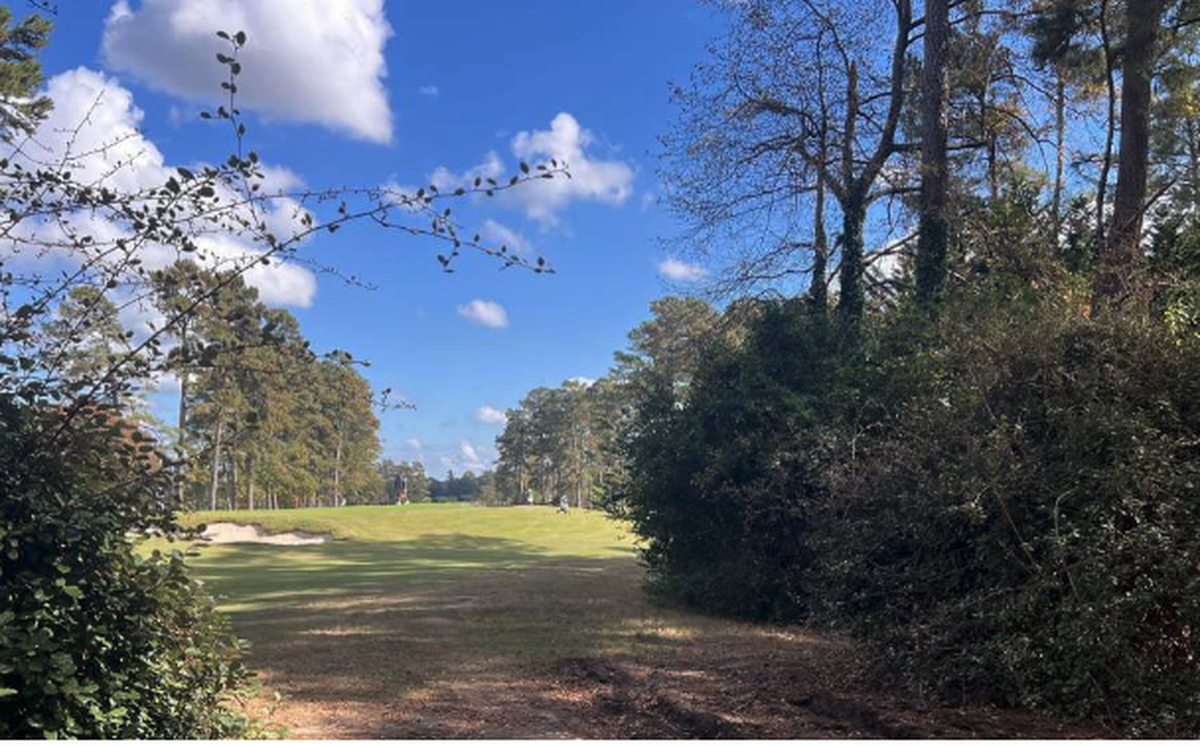
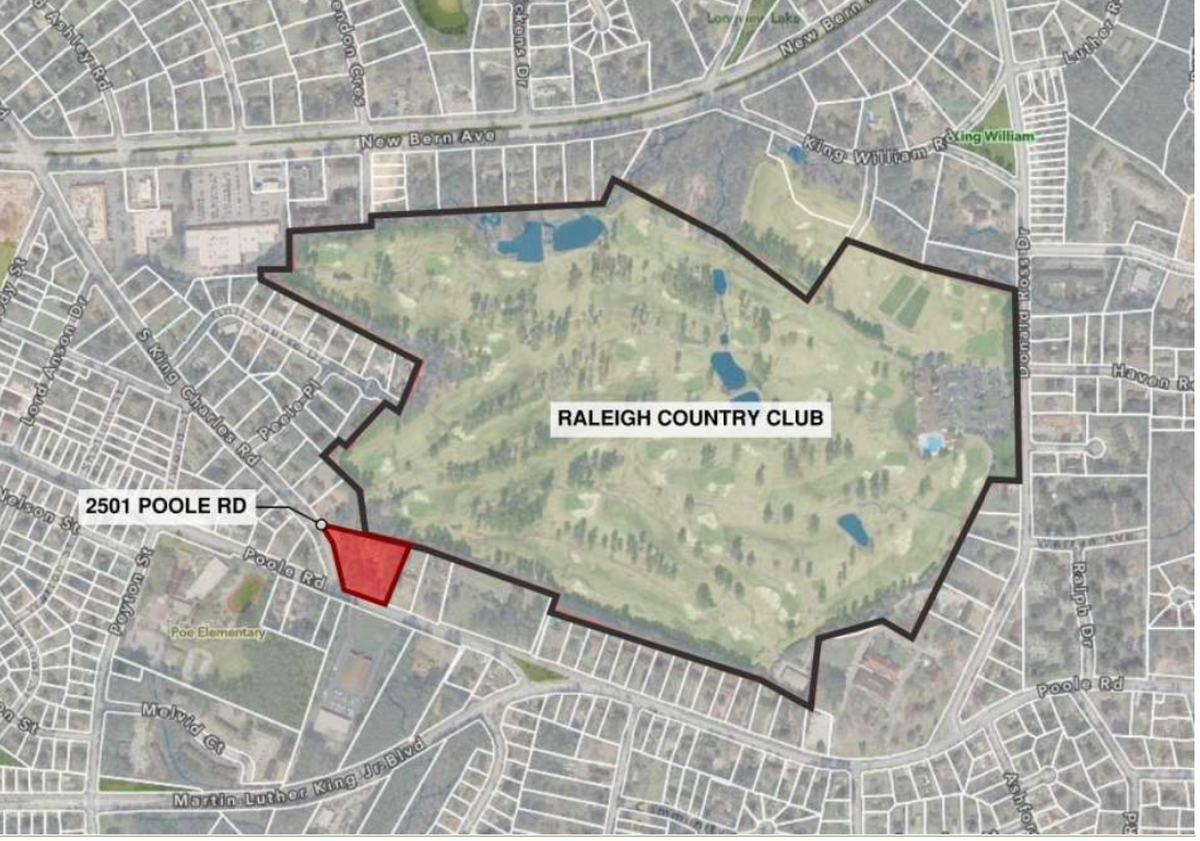
The 2.14-acre lot at 2501 Poole Rd. backs up to the southwest edge of the club’s golf course. The club says it’s worried about density and other impacts like noise, odor, litter pollution and erosion to the current tree buffer. It also argues the project doesn’t conform to the neighborhood’s conservation overlay district or the unified development ordinance, UDO, which was adopted in 2013 and outlines all local rules and regulations for land use.
In a video call this week, Anastasiadis condemned the city’s lack of transparency.
“There was no zoning hearing. No announcement. This is pure upzoning without citizens’ involvement,” he said.
He said he’s still waiting for a reply from the city or Thompson. They have 60 days to respond to the filing.
What happened?
In May 2024, Thompson received administrative approval to tear down a 1938 colonial home at 2501 Poole Road and replace it with 16 two-story townhomes.
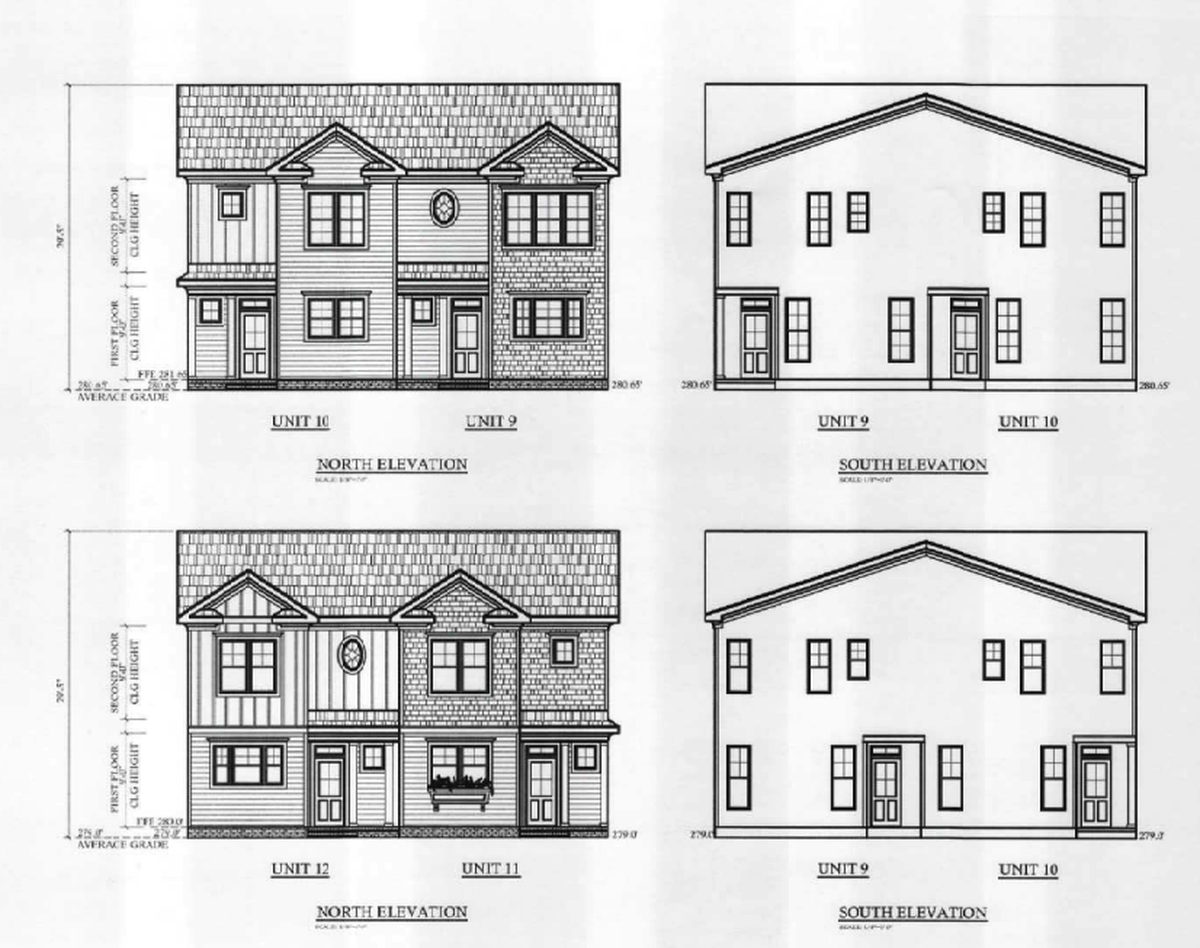
Called Chailyn’s Cottages, it would span eight buildings and include three-bedroom units — ranging from 1,695 to 1,730 square feet, according to approved plans. Parking would be in surface lots with 36 spaces.
A month later, RCC appealed. Then in December, the city’s Board of Adjustments, by a 4-0 vote, granted Thompson’s motion to dismiss RCC’s appeal based “on standing” — it concluded that RCC didn’t “meet its burden of demonstrating that it would suffer special damages as a result of the decision being appealed.”
The club refutes this. “The club has standing since it would be impacted by noise, odor, litter pollution and trespassing from project users,” the club’s lawyer, Craig D. Justus of Asheville, said in the filing.
The club’s property value, leasehold interest and business assets would also be diminished, he argued.
The property is zoned R-4, which typically permits only up to four units per acre. It’s also in the King Charles Neighborhood Conservation Overlay District, which was established in 2005 to preserve the neighborhood’s history and architecture by enforcing lot sizes and heights.
In the lawsuit, the club says the project incorrectly treats the minimum lot size (33,541 square feet) as a site requirement. “As a result, it has substantially more density than what is allowed,” Justus said. The filing also raises the question into whether the property falls into the city’s frequent transit overlay, which supports future bus rapid transit. The site has not been mapped by an amendment or ordinance, Justus said. “The BOA’s order should be reversed and the matter remanded to consider the merits of the appeal.”
The ‘missing middle’ debate
RCC’s action is the latest in a string of lawsuits pitting property owners against the city and developers over Raleigh’s missing middle laws.
Starting in 2021, Raleigh began loosening zoning rules to incentivize developers to build what it calls “missing middle” housing — like duplexes, townhouses and accessory dwelling units — in single-family neighborhoods. Until then, these housing types were prohibited in many Raleigh neighborhoods.
Proponents say it’s a more efficient use of land and boosts supply. They argue it also creates more affordable housing options for young families, singles and seniors.
But it’s also sparked backlash and lawsuits.
In addition to RCC’s case, Hayes Barton residents sued the city and a developer in 2023 over plans to build 17 townhomes in one of the city’s most historic neighborhoods. RCC’s attorney, Justus, is also representing the Hayes Barton homeowners in that case.
In 2024, a judge found the city erred and ordered BOA’s approval be reversed. The project is now stalled as homeowners continue to challenge the city’s missing middle rules in the courts. Last November, the city asked the N.C. Court of Appeals to have the case dismissed. The appeal is pending.
In both the Hayes Barton and RCC cases, developers are not likely to break ground anytime soon, said Eric Braun, founder of RaleighForward and a retired land-use and litigation attorney.
“They’re on notice. Even if their development approvals are found to be valid, the underlying ordinances could be invalidated by the courts. They could still be at risk,” he said.
“The city could deem them legal nonconformities and require additional measures to bring them into legal conformity where possible. In a worse case, neighbors could sue again and seek to have the projects torn down if they cannot be made to conform to current ordinances.”
Alternatively, he added, the city could re-enact reforms as zoning ordinances rather than treating them as text changes. “This would correct any procedural defects found by the courts.”
Either way, it will likely take “another year or more to resolve,” he said.
This story was originally published March 3, 2025 at 5:00 AM.