Restrictive covenants are a cruel reminder of Wake’s racist past. See how they spread
A new time-lapse video map shows how racially restrictive covenants rapidly spread across Wake Country from 1906 to 1950.
First, it’s just a small cluster of red dots — each representing a restrictive covenant — along Wade Avenue in Raleigh’s Glenwood-Brooklyn District.
Then, it quickly expands.
Over time, the map bleeds red as large swaths of land became subdivided into “streetcar” suburbs for working- and middle-class white people, coinciding with the suburbanization of land north of the city limits.
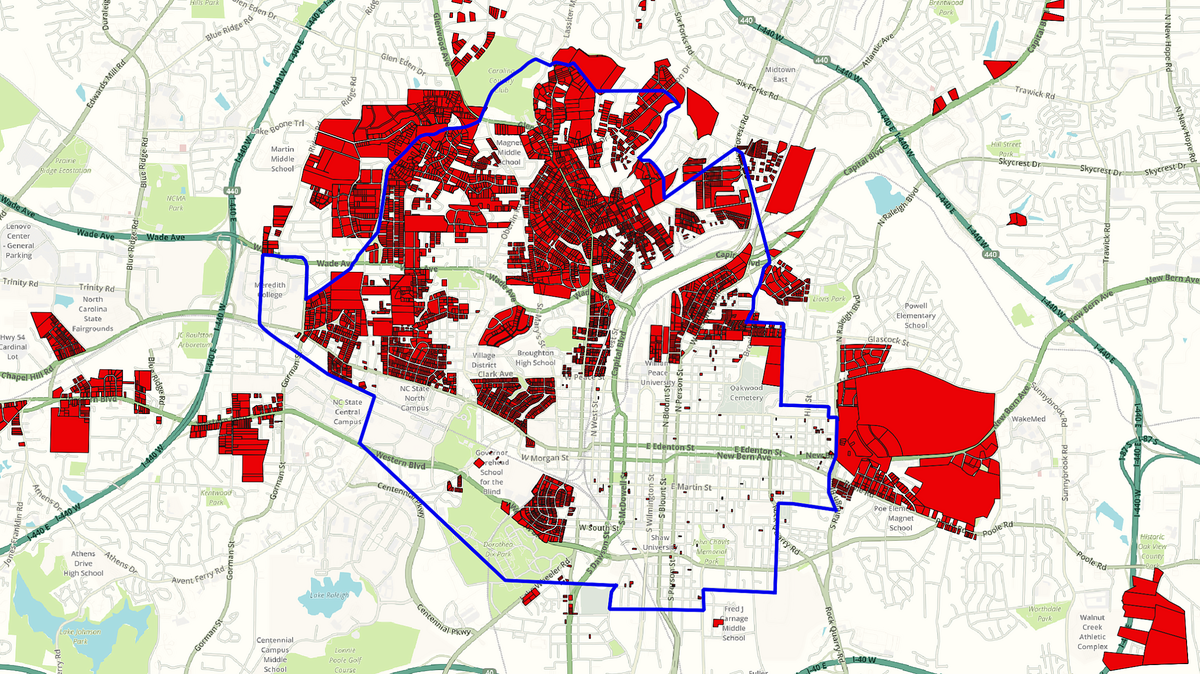
The video is now part of a growing archive of resources under the Wake County Register of Deeds’ Racially Restrictive Covenants Project.
This month, husband-and-wife team and longtime volunteers, Lisa Boccetti and Robert Williams, released early findings from a year-long effort to identify historic clauses on property deeds that once prevented people from buying or living on land in Wake County.
Although the Supreme Court ruled such covenants unenforceable in 1948, and the 1968 Fair Housing Act outlawed them, the painful, offensive language still exists in hundreds of deeds of homes, neighborhoods or cemeteries across the county, Williams said.
“There were many rabbit holes,” he told The N&O. “We had no idea if we were going to find 1,000 covenants or 50,000 covenants. No one had really collected this information before.”
Finding deeds with racially restrictive covenants
With the help of 200 volunteers, Boccetti and Williams sifted through some 600,000 pages of documents from about 1920 through 1950 containing instruments, easements, and leases.
Using artificial intelligence and optical character recognition, volunteers identified some 14,500 deeds out of 20,000 deeds as containing racially restrictive covenants.
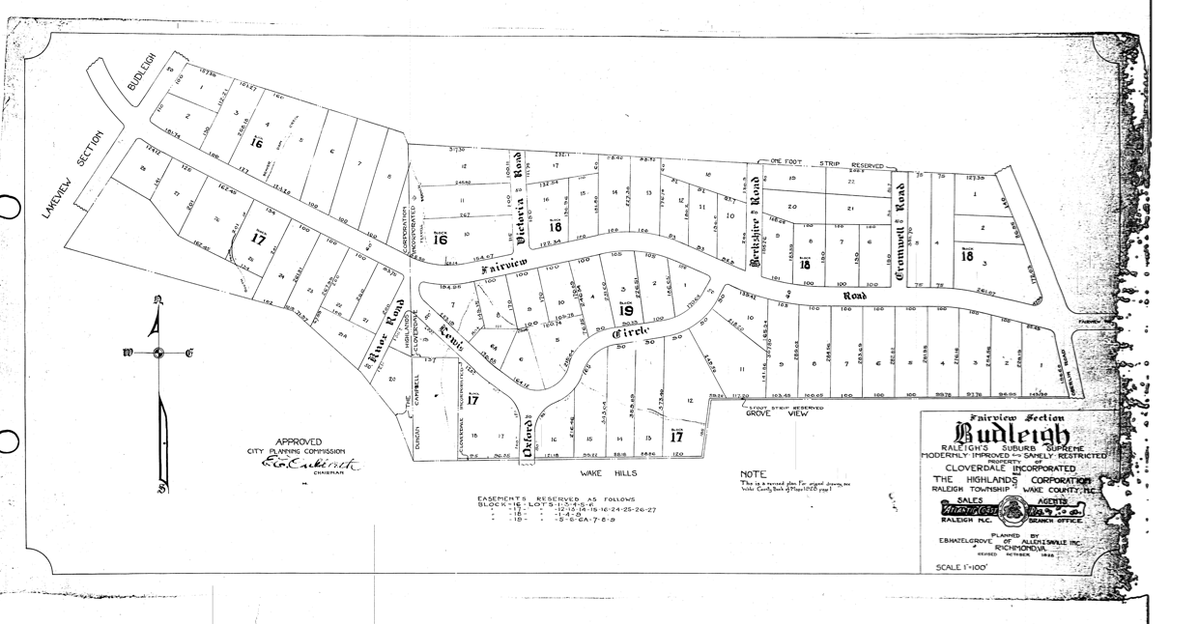
On its website, the public can now view the earliest recorded deed with such restrictions dating back to 1906. Typed in a font written with an old mechanical typewriter, it reads: The Glenwood Land Company to Annie M. Wiggins “hereby covenanted and expressly agreed” that the premises “shall not be occupied by negros or persons of negro blood,” except if the person is “employed for domestic purposes solely.”
Adding further insult, the deed also prohibits “pigs and hogs” from being on the property in the preceding line.
Organizers have provided access to data files containing all the covenants identified, including geospacial data, like coordinates and addresses.
In the coming months, they plan to release a searchable and interactive map.

“When you read what was written, you get a better perspective of what Raleigh was like then, and how it shaped what it is today,” Williams said.
Each deed reveals parts of a broader historical narrative, reflecting events such as the Great Depression, both World Wars and the growth of Raleigh, he said. They also offer clues into the “personalities, power structures and conflicts” that formed the city’s physical landscape.
“What we’re trying to show is that there’s a history behind this,” Williams said.
Historically restricted areas still struggle
Early results from analyzing map patterns reveal Wake County’s long-running racial disparities, said Tammy Brunner, Wake County Register of Deeds.
Areas historically restricted to Black people often align with present-day neighborhoods that struggle with lower income levels, limited access to services and fewer opportunities for generational wealth, she said.
“The underserved parts of Wake County then, are the exact same underserved parts of Wake County now,” she said. “It’s along racial lines. There’s just no denying it any longer. That’s what the map shows us.”
Research from such projects has led to legislation in other states. In Washington, the newly enacted Covenant Homeownership Account Act compensates victims of restrictive covenants. It can also lead to reforms that ensure fair housing practices and prevent similar discriminatory policies in the future, Brunner said.
“We’re not giving any direction on what you do with it. We just want this information out there,” she said. “It’s been hiding all this time. Somebody just needed to take the time to compile it, index it and give it to [the public].”
This new project follows the register’s Enslaved Persons Project, launched in 2021 with the help of Shaw University. That project served to unlock human stories of slavery through the register’s archives.
To learn more about both projects, Racially Restrictive Covenants and Enslaved Persons, go to www.wake.gov.
This story was originally published March 25, 2025 at 1:03 PM.