This dashboard may tell you everything you need to know about Wake County housing
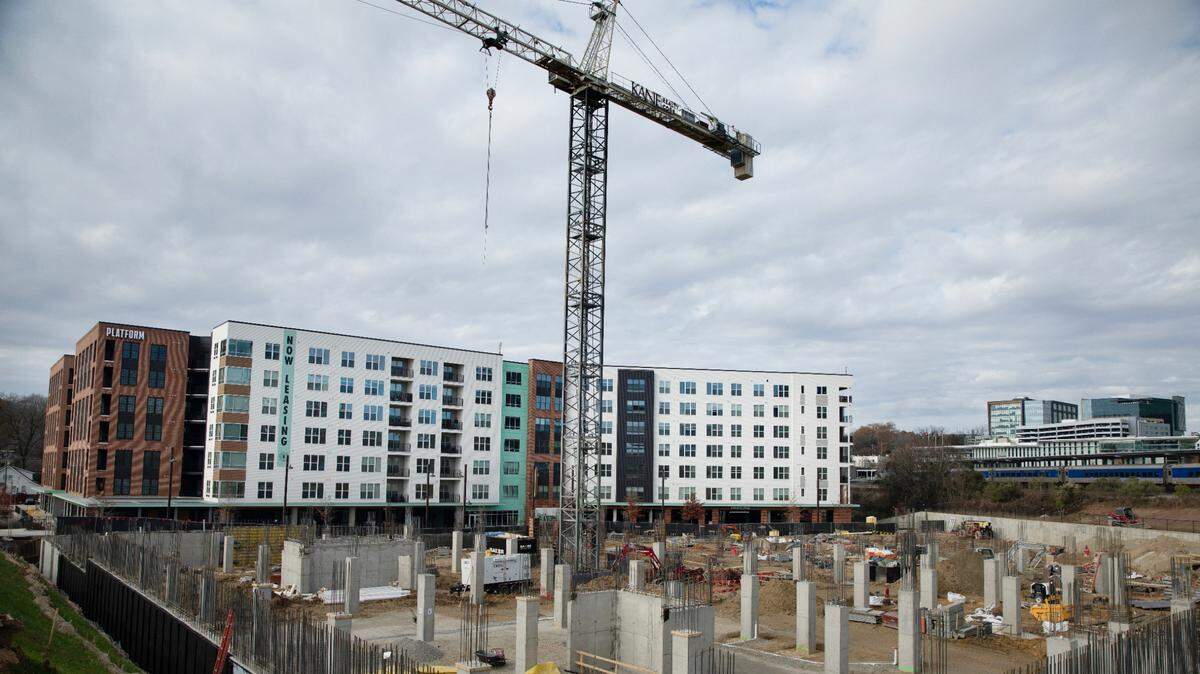
Buying a home in Wake County? Keen to compare metrics of supply and demand in Cary to, say, Wendell or Fuquay-Varina?
How about tracking hyper-local changes on a map?
Wake County, in partnership with HR&A Advisors Inc., went live this week with a new interactive housing dashboard, delivering real-time data for jurisdictions across the county.
The “one-stop hub” allows users to explore interactive charts and maps, and dig into trends across demographics, affordability and supply. Visitors can also export reports tailored to their communities.
By making this data accessible, the county says it’s fostering a more “coordinated, data-driven” response to the region’s growing housing crisis. (Wake’s official homeless population grew nearly 27% over last year.)
“This tool will help us all make informed decisions about how we grow, and where we invest,” said Susan Evans, a member of the county’s Board of Commissioners. “The more we understand the full picture, the more effectively we can address housing challenges and create opportunity for all.”

Wake County’s housing snapshot
The dashboard’s snapshot view shows that Wake County’s population has grown nearly 10% in the last decade — from 974,971 in 2013 to around 1.2 million in 2023, based on U.S. Census Bureau data.
In 2024 alone, more than 41,000 people moved in from other parts of the country, the county said.
That surge is driving up demand amid a long-running housing shortage. Coupled with recession fears and rising costs of construction materials, labor and land, the county admits it’s struggling.
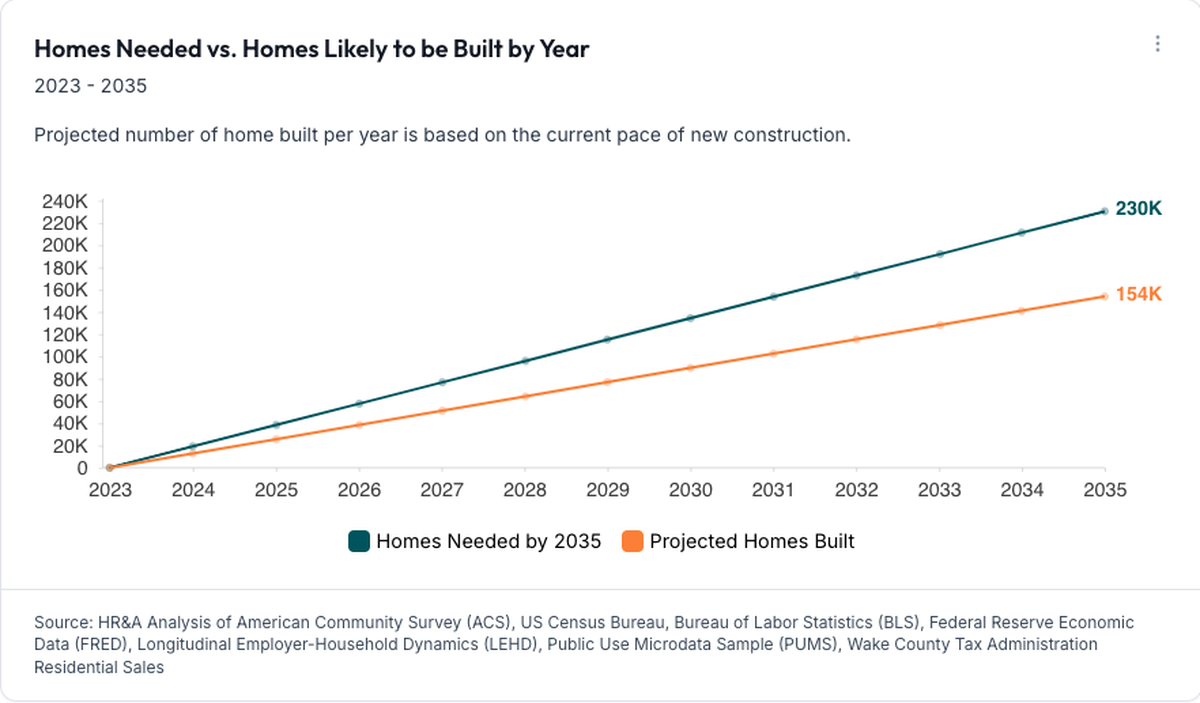
“At the current pace, housing development in Wake County is not on track to meet future demand,” the county said on the site.
The county estimates some 154,000 new homes are likely to be built by 2035. That’s far less than the “up to 230,000 homes” needed to accommodate the region’s projected growth.
If supply doesn’t catch up, it may put an additional burden on existing residents through “increased housing costs, higher rates of overcrowding and potential displacement,” the county said. It will also “limit opportunities for new residents to live and work in Wake County.”
Since 2018, the median rent rose by more than 26%, from $1,248 to $1,693 in 2023, the county said.
Nearly 61,000 renter households now spend more than 30% of their income on housing, which is considered “cost burdened.”
These forces are crushing home-ownership dreams for many first-time buyers across the Triangle, said Roberto Quercia, a professor at UNC-Chapel Hill’s department of city and regional planning.
“The supply of starter homes for sale is very limited,” Quercia said. ”Home prices are high relative to incomes, and affordable homes with desirable amenities are scarce.”