Why old hotels are becoming the Triangle’s hottest housing stock
AI-generated summary reviewed by our newsroom.
- Investors convert aging hotels into apartments to expand affordable housing.
- Raleigh and Durham added 700+ units in 2024 and hold 454 units in the pipeline.
For decades, SureStay Plus Hotel by Best Western stood on Raleigh’s Capital Boulevard, run-down and underused.
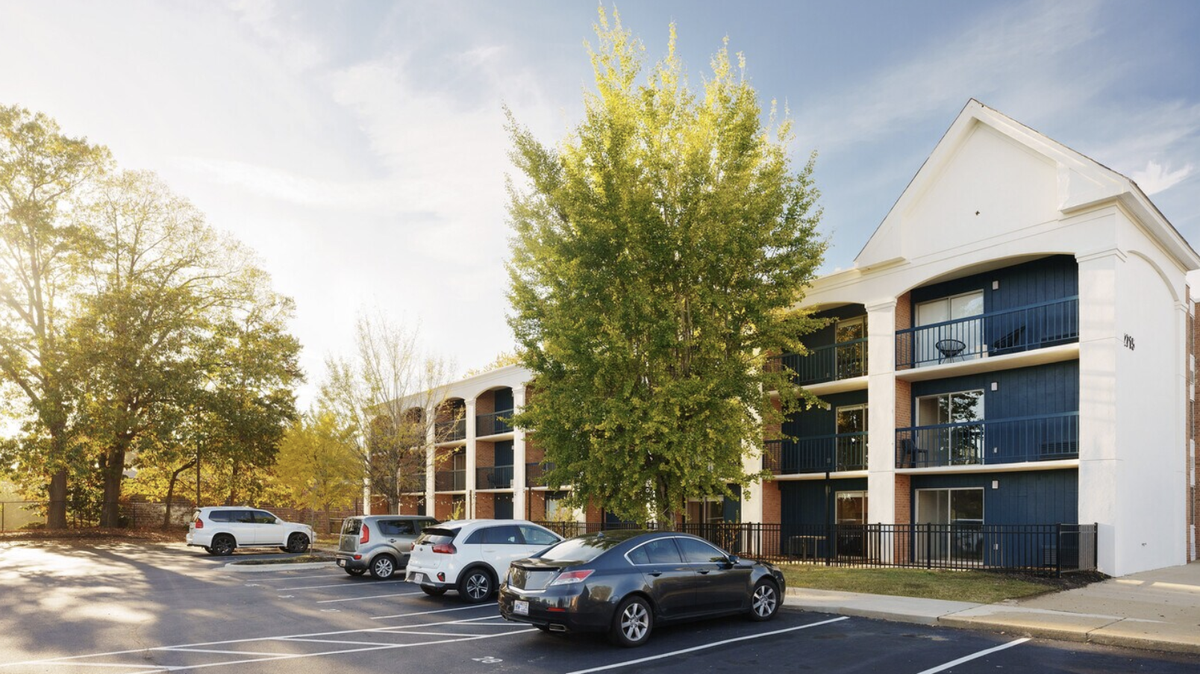
Then, in 2024, New York-based real estate investment Certes Partners converted the budget-friendly lodge into The Harrison, a 140-unit rental apartment complex.
Amid a chronic housing shortage and affordability crisis, it’s part of the region’s adaptive-reuse wave, transforming aging hotels into affordable housing.
In 2024 alone, Raleigh and Durham ranked among the nation’s most active cities for hotel-to-apartment conversions, together adding over 700 new units through adaptive reuse, according to a new RentCafe report, using apartment data provided by its sister company, Yardi Matrix.
The cities, which ranked fourth and sixth respectively, also have 454 new apartments in the adaptive-reuse pipeline, data showed.
The resurgence is driven by a host of issues: “squeezed profit margins, rising operating costs, uneven demand, a slowdown in the post-pandemic recovery, rising interest rates, and looming debt maturities,” the RentCafe report says, pushing many hotel owners to sell.
It also reflects a broader trend to meet the region’s growing demand.
In 2025, Raleigh — along with the broader Wake County region — is facing a housing deficit of over 110,000 units projected by 2029, spurred by rapid population growth, job expansion and lagging construction, according to recent analysis by Bowen National Research.
Lower rents, amenities
Hotel-to-housing conversions like The Harrison are often cheaper and faster than retro-fitting office buildings. They already have plumbing, individual rooms and layouts that adapt more readily to apartments.
They also expand affordable options where median rents are hovering close to $1,700 per month, according to Zumper.
But affordability comes with a tradeoff in square footage.
Built in 1983, The Harrison opened in July 2024 and features 120 studio and 20 one-bedroom “micro-units” from 239 to 354 square feet. Rents range from $853 to $1,399 per month, including utilities.
Amenities include a fitness center, a lounge, pool, private balconies and yards, co-working center and WiFi immediately upon move-in.
Other examples include REALM, a Nashville-based investment group, who partnered with Vivo Investment Group to turn three Extended Stay America hotels into affordable housing. Among them is Vivo Living Ivy Creek Apartments, built in 1997 at 1920 Ivy Creek Blvd., in Durham, which currently offers compact studio and one-bedroom units starting around $859 per month.
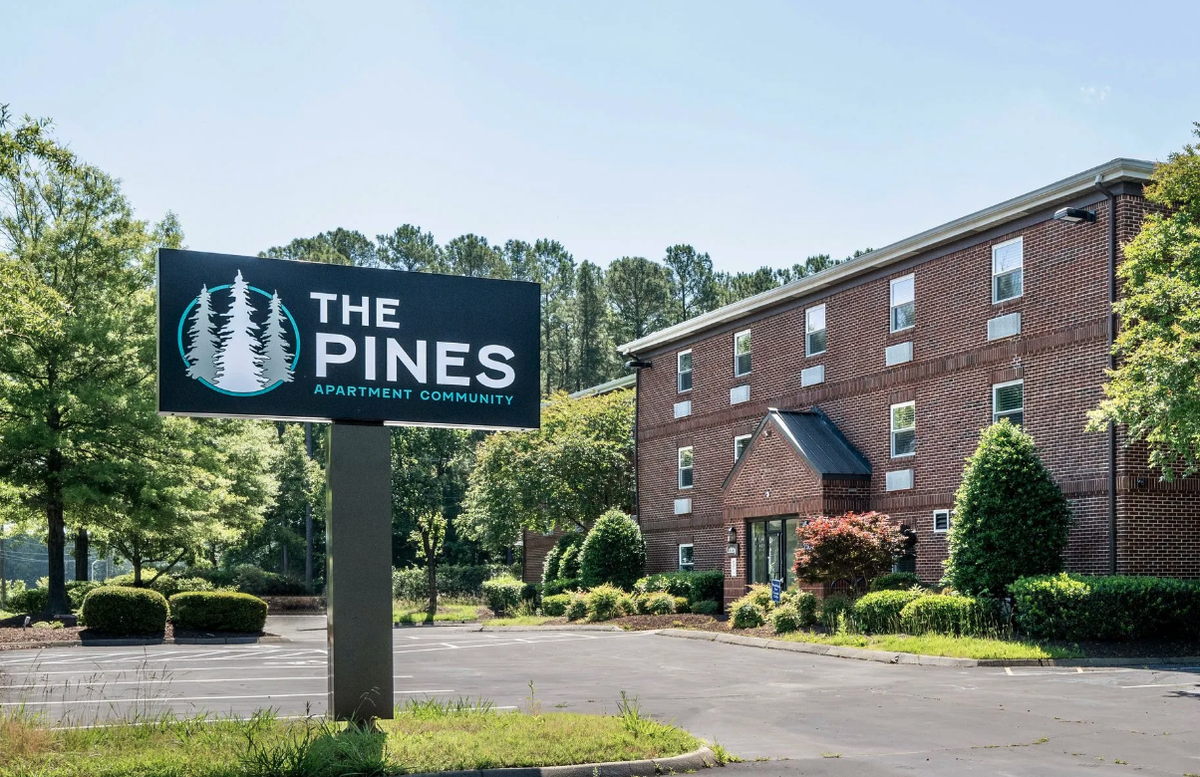
And this August, Durham-based nonprofit Reinvestment Partners transformed an old hotel into The Pines near Research Triangle Park. Built in 1996, the three-story brick building sits on a 2-acre lot off N.C. 55, offering 72 renovated studio apartments ranging from 313 to 420 square feet. Monthly rents are $950 to $1,100, including utilities.
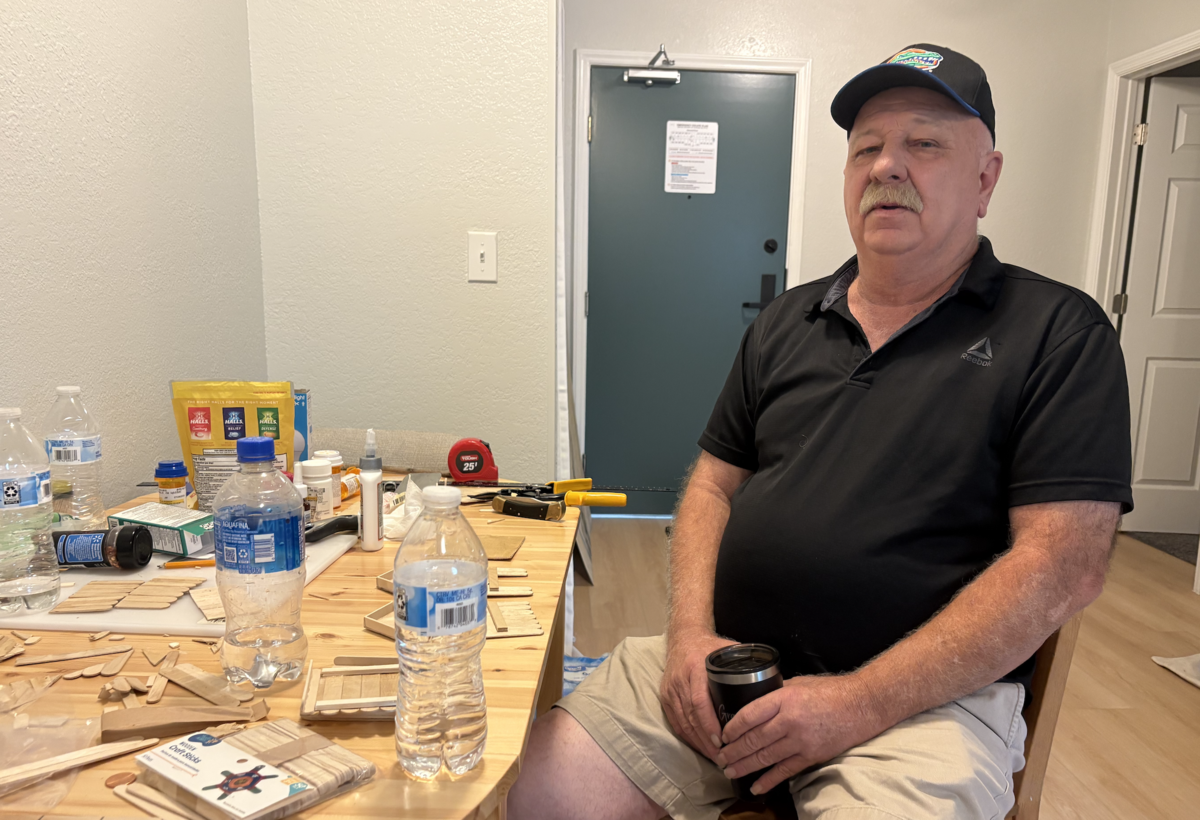
At 65, Teddy Pugh, a truck driver who works in Morrisville, was among its first residents, The N&O reported.
“The main thing is, it’s safe. It’s literally 10 minutes from work,” he said in August when he offered a peek inside his freshly painted 420-square-foot home on the building’s ground floor.
“And the price is right,” he said.
To date, no major office-to-apartment conversions has been completed in Raleigh or Durham. Though the idea is gaining traction, experts say developers face hurdles like high retrofit costs, zoning and code constraints and structural limitations.
The surge in adaptive reuse
Nationwide, close to 25,000 apartments were completed in 2024 from adaptive reuse projects across the U.S.
That’s a whopping 50% more than the year before and double the units in 2022.
Hotel-to-apartment conversions make up nearly 37% of all adaptive reuse projects, followed by office spaces with almost 24%, industrial buildings with roughly 20% and schools with 8%, RentCafe found.
This story was originally published November 11, 2025 at 7:00 AM.