What Raleigh’s Midtown boom means for the immigrant enclave tucked behind it
AI-generated summary reviewed by our newsroom.
- The Pointe at Midtown will be cleared for Kane Realty’s 28-acre expansion.
- Many residents must leave by March, and many will move farther from the city center.
- Residents depend heavily on construction work, local networks and services.
At the far end of Navaho Drive in Raleigh’s North Hills, where the road dead-ends inside The Pointe at Midtown apartment complex, residents of “Los Navaho” drift home in the late-day light.
Construction workers pull into parking spaces still in dusty boots. Children play on the sidewalks. Neighbors gather in stairwells to chat.
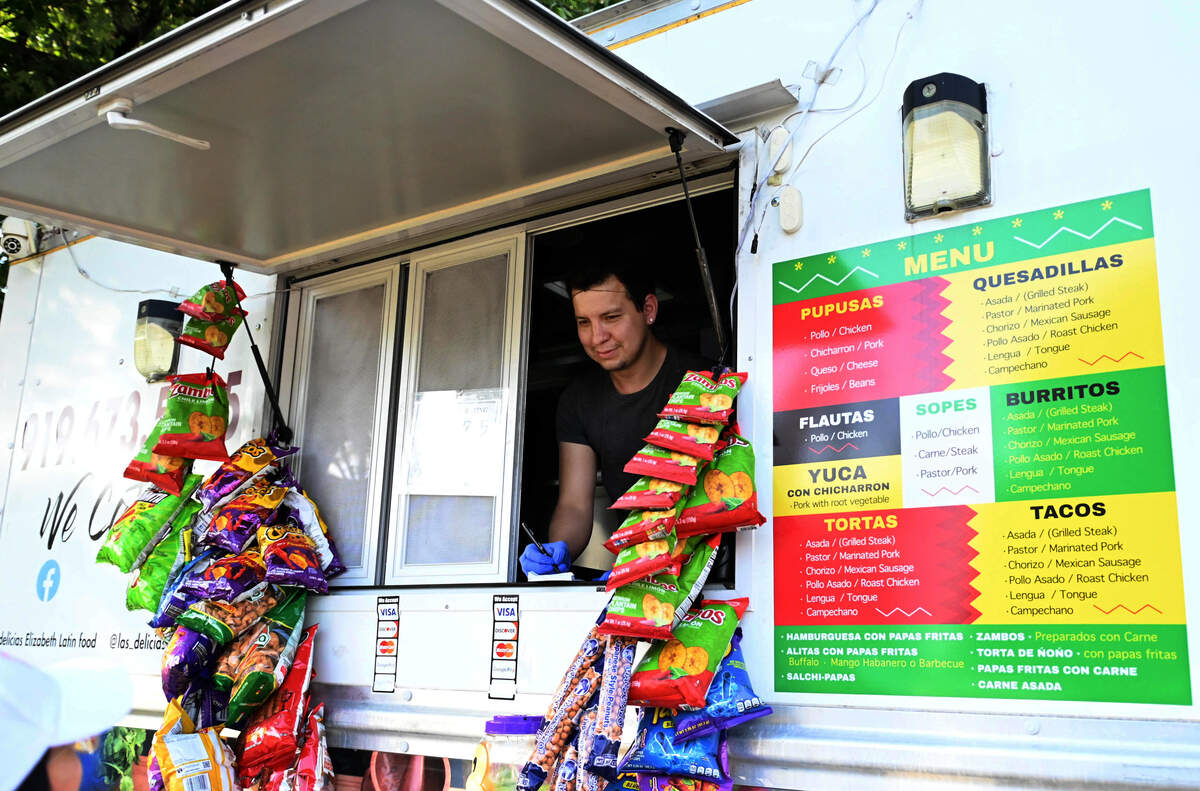
Around 5 p.m., many end up at “Las Delicias,” a Latin food truck parked near the end. From behind the register, José Rutilo Bautista Hernández, 30, watches the neighborhood where he also lives come together. When the phone rings, he rarely needs to ask who is ordering.
“Just by hearing someone’s voice, I already know who it is,” he says in Spanish.
“It’s a nice place,” he adds. “Everything is close by. Nobody bothers us here.”
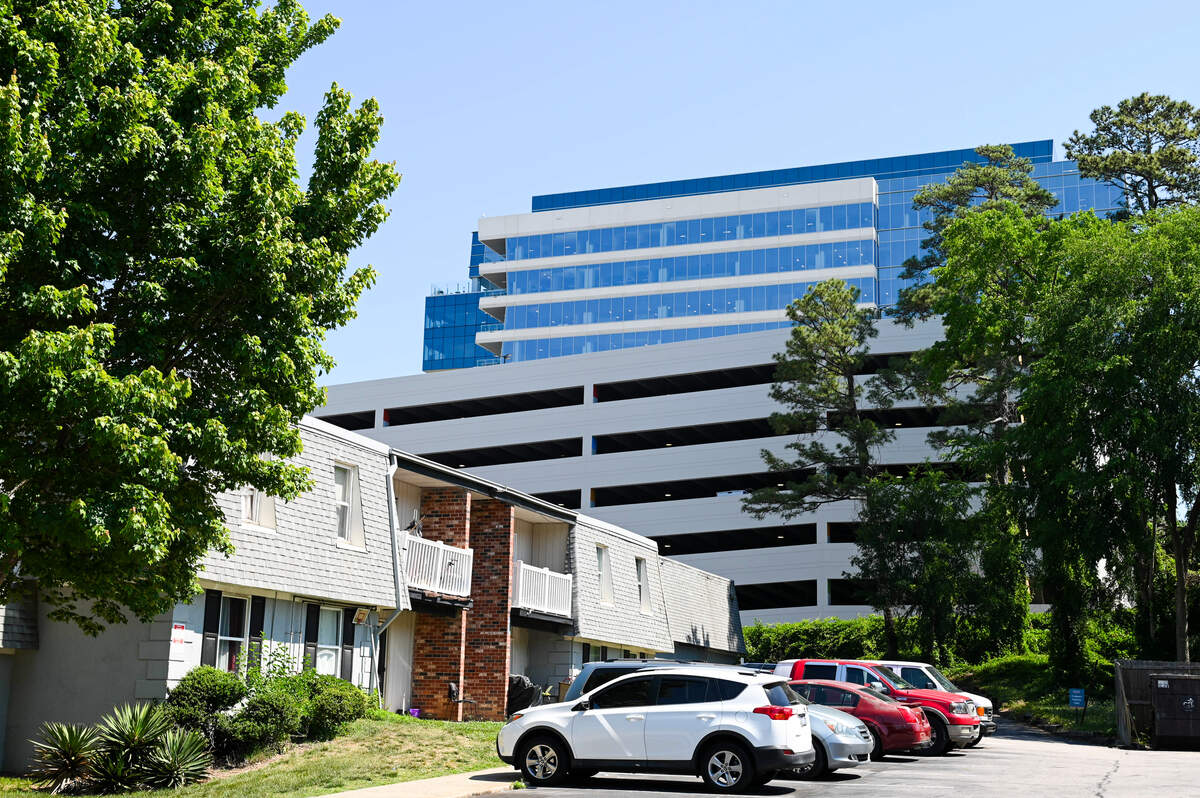
Los Navaho has long been a first stop — and a rare community — for immigrant families along Navaho Drive. But the 365-unit complex, one of Midtown’s last pockets of low‑cost housing, is set to be cleared for Kane Realty’s 28‑acre expansion that will bring more than 1,200 homes, offices, trails and retail to the North Hills Innovation District. As redevelopment advances, the neighborhood’s daily rhythms — and the community that holds it together — will disappear.
Bautista Hernández has worked in the food truck since before it moved to Navaho Drive three years ago. Originally from Mexico, he has lived in the complex for about a decade. But he knows time is running out.
By March, residents must leave the complex, and many of those familiar voices will scatter. Some have told him they plan to move to Casa de Luna, a nearby apartment complex. Others are searching for trailer parks or apartments near Buffaloe Road and Capital Boulevard. Most will end up farther from the city center and from one another.
Some customers have already stopped by to say goodbye. Many, Bautista Hernández said, tell him the same thing: “Wherever you go, we’ll go buy from you.”
‘Home away from home’
Many residents of Los Navaho emigrated from Mexico, Honduras, Guatemala and other Latin American countries in search of work and opportunity. Though their journeys differed, many arrived through family connections, friendships and word of mouth.
A 40-year-old Guatemalan resident, who asked not to be named due to immigration status concerns, arrived in North Carolina at age 14. His parents remain in Guatemala, and while he speaks of one day returning, that day remains undefined.
“We all come with a dream of wanting to do something and going back home after a while,” he said in Spanish. “But with time, you get used to being here. You never really make the decision to go back.”
Like many of his neighbors, he built a life in Raleigh while maintaining ties to family back home. He works in construction, painting and remodeling homes, a job he has had for seven years.
“Almost all of us work in construction,” he said. “Some do only painting, others do framing, others do flooring. Each one finds their role.”
The apartments themselves were never the reason people stayed. Many residents describe aging buildings, recurring maintenance issues and long-running pest concerns.
The Guatemalan man has moved between three different units since 2012, always searching for better living conditions. Still, he never left Los Navaho.
The neighborhood worked then for the same reason it does now, he said. Work, groceries and friends were close by, and the price was within reach. Rents at The Pointe typically range from the low $900s for a one-bedroom to the mid-$1,500s for a three-bedroom — well below today’s market and firmly in the category of “naturally occurring affordable housing,” or NOAH.
Several residents said neighbors often keep to themselves, focused on work and family obligations during the day. But it’s also a close-knit community where residents often stop to greet, chat with or check in on a neighbor.
That informal network became a lifeline last November, when Border Patrol agents swept through the complex as part of Operation Charlotte’s Web.
“We thought that kind of thing only happened at the border,” said the Guatemalan man. “We had never seen it around here.”
Several residents said neighbors relied on one another and a WhatsApp group that shared live updates from different areas of the complex. Many stayed indoors for at least two weeks after receiving alerts.
“No matter what country we come from,” the resident said, “we’re all friends and neighbors.”
Things are already changing
Alicia Hernandez, 33, came from Mexico and has lived in Los Navaho for nearly four years. Her apartment sits near the edge of the complex. It’s among the first buildings slated to be demolished.
In recent weeks, her daughters’ school bus stop, once steps from her door, was moved to the entrance of Navaho Drive, just outside the complex, a small sign that change is already underway.
Hernandez first moved to the complex because of work. At the time, she was commuting about 20 minutes each way to her job at Las Delicias food truck before a coworker helped her apply for an apartment.
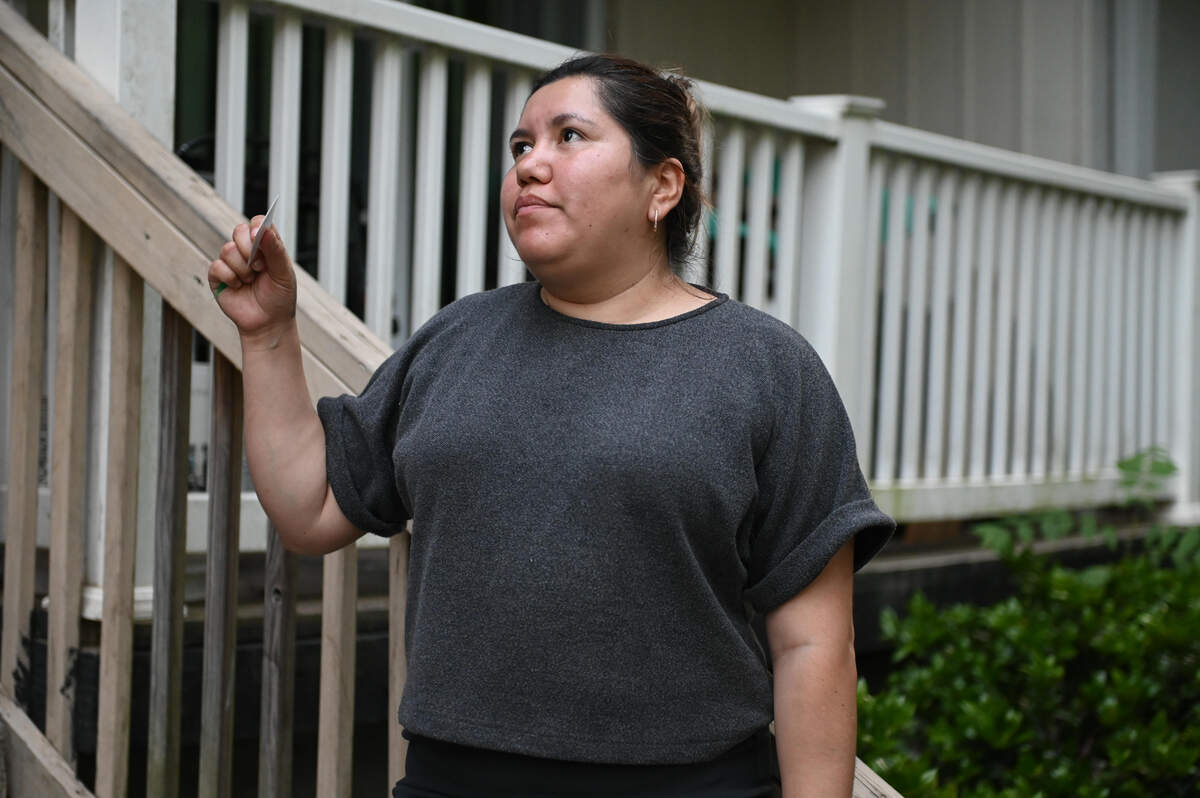
Now, Hernandez runs her own business, also selling food. As families have begun moving out, she said, her sales have already declined.
“When I move, I’ll have to start from zero, find new customers. And there are areas where they don’t give you permission,” she said. “That is a little worrying.”
She still does not know where she will move. Rising rents, large deposits and documentation requirements have narrowed her options. The combination of affordability, location and the network that made Los Navaho work will be difficult to find elsewhere.
“To find something more affordable,” she said, “we’ll probably have to move farther away.”
BEHIND THE STORY
MOREThis story is part of a reporting partnership between The News & Observer and Enlace Latino NC to better cover the displacement of Latino and immigrant residents in Raleigh. Enlace Latino NC’s deep relationships in Spanish‑speaking communities, combined with the N&O’s housing and development reporting, allowed us to spend time inside “Los Navaho,” speak with residents in their preferred language, and document the human impact of redevelopment with greater care and accuracy. The collaboration ensured that residents’ voices — often overlooked in major land‑use decisions — shaped the story from the ground up.