Restaurants, bars struggle with ‘social distance’ due to coronavirus crisis
Friday and Saturday nights were busy ones for The Parlour ice cream shop in downtown Durham, and normally that would be great news for owners Vanessa and Yoni Mazuz.
But in this time of COVID-19, a respiratory infection spread most commonly through direct contact, the crowds made the Mazuzes uncomfortable — so uncomfortable that they decided to remain closed on Sunday.
“We need a day to reflect, gather our thoughts, and make a plan about limiting our service or even closing,” they wrote on the shop’s Facebook page. “We’ll update ASAP.”
Keeping people apart and limiting direct contact has been a basic strategy to try to curb the spread of coronavirus, which as of Sunday morning had been found in more than 2,800 people nationwide and resulted in at least 59 deaths, according to The New York Times. People are working from home; schools and universities are closed; and concerts, sporting events and church services are canceled — all to reduce the personal encounters that could spread the virus.
Toward that end, Gov. Roy Cooper issued an executive order Saturday banning “mass gatherings,” defined as events that put more than 100 people in one place at a time. Violating the order is a Class 2 misdemeanor, and enforcement is up to local law enforcement and prosecutors, said Christine Mackey, spokeswoman for the state Department of Health and Human Services.
But the order makes exceptions for shopping malls, grocery stores and other retail establishments and for restaurants and bars, where close interactions are common. In those instances, Mackey said, the state is encouraging people to practice “social distancing” to increase physical space between themselves and others and reduce the frequency of contact.
Mackey said the DHHS has developed recommendations for bars and restaurants to help prevent spread of COVID-19, including limiting the number of customers, rearranging tables and other steps to keep people six feet apart, the distance recommended by the Centers for Disease Control and Prevention.
“That said,” Mackey added in an email, “this is a rapidly evolving situation, and if further actions are needed, the Governor has been clear that he will take them.”
James West, a server at the Outback Restaurant in Smithfield, wonders why restaurants are exempt from the order. West, 30, doesn’t worry for his own health but doesn’t want to carry a virus to his wife and parents, who have health problems that could make them more vulnerable.
“As a server that works in a middle to high-volume restaurant right off of I-95, I am at constant exposure. I have tables from out of state,” West wrote in an email. “The virus could have walked through the door two days ago, and we wouldn’t know.”
Some governments are starting to impose limits on bars and restaurants to restrictthe spread of coronavirus. The governor of Ohio ordered all bars and restaurants closed as of 9 p.m. Sunday, except for carry-out or delivery, while the governor of Illinois ordered the same for his state from end of business Monday through March 30.
The mayor of Washington, D.C., on Sunday ordered nightclubs closed and barred restaurants from seating more than six people at a table or offering bar seating or serving patrons who are standing. She also set a limit of 250 patrons in a restaurant at a time.
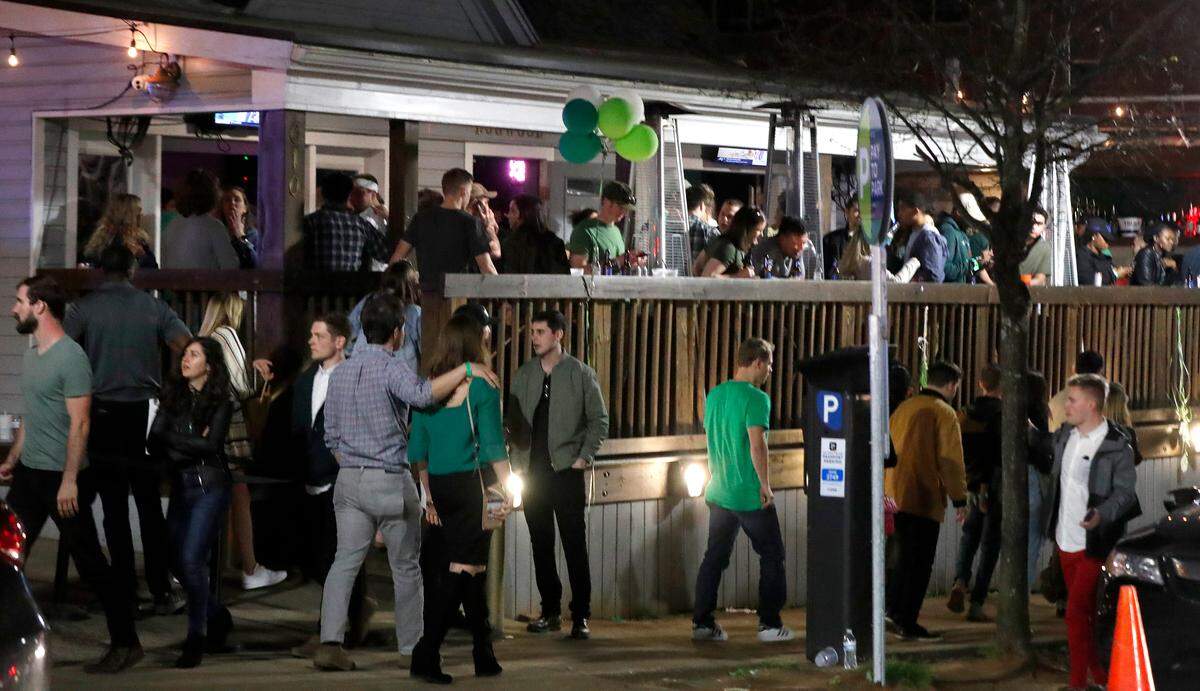
The fear of coronavirus has already helped reduce crowding in North Carolina bars and restaurants, as customers choose to stay home.
People are usually lined up out the door waiting for the biscuits and country breakfasts at the State Farmer’s Market Restaurant on a Sunday morning, but the tables were only about half full this weekend. The restaurant can seat about 250 and normally turns over five or six times on a typical Sunday, said manager Michelle Graves. By nearly noon Sunday, it hadn’t filled up yet, Graves said.
“We are definitely not seeing the rush we would normally see,” she said.
Managers considered closing off one side of the restaurant because of the drop in business, but after talking with health inspectors they decided to leave it open, to help with social distancing, Graves said. Unless the government says otherwise, the restaurant doesn’t plan to close its doors, she said.
Charlotte’s bars and restaurants aren’t as bustling as they usually are, said Erica Champion, who works in technology staffing sales and says part of her job is to take clients to dinner and drinks. Champion visited several bars and restaurants in recent days in Plaza Midwood, NoDa and Uptown and described them as “busy but not packed.”
More people seem to be sitting outside and more aware about not shaking hands, she said.
“Usually when you go out and drinking is involved, people are handsy,” she said. “But I didn’t notice anyone touching each other.”
Champion said she is concerned for her friends who work in the service and liquor industry, who might see their livelihood and tips vanish should North Carolina close bars and restaurants.
“I think that needs to happen in due time, but not right now,” she said. “I think we need to be cautious and wash our hands, but there’s no need to panic yet.”
Effect of gatherings ban spreads
Organizations and local governments are responding to the governor’s ban on mass gatherings. Durham County cited his proclamation when it announced Sunday that the county’s public libraries are closed until further notice, as did Cary when it shut down all town parks and recreation and cultural facilities.
Some events go on, though with changes. The Fuji BJJ jiu-jitsu competition took place at XL Sports World in Apex on Sunday. About half of the 200 people who registered backed out, but organizer Tim Morthland of Combat Sports Concepts in Illinois said he couldn’t afford to cancel.
“We looked at other dates further down the road, but the problem for us was the economic impact of it,” Morthland said. “Come Wednesday, we were already sitting in Raleigh with a 40-foot trailer. So before I’ve walked into an event, I’ve already spent about $5,000.”
Morthland said organizers changed the schedule to get competitors on and off the mats faster and reduce the number of people in the building at one time to under 100, including spectators. They urged participants to take health precautions and not show up if they weren’t feeling well.
“Generally jiu jutsu people have to be good at hygiene anyway, because we have to worry about staph infections, all these skin infections,” he said.
Like other restaurants, The Parlour took steps to improve hygiene, by washing hands and cleaning surfaces more thoroughly and frequently.
“We can’t control the crowd is the issue for us,” Vanessa Mazuz said. “And the lines do get long, and you see people standing right next to each other. It does induce anxiety.”
So the Mazuzes have decided to remain closed Monday and reopen Tuesday offering take-out only. That means no cones, but people can get half-pints and pints of ice cream, as well as baked goods and coffee drinks. The couple hopes income from take-out sales will help them pay their employees until things get back to normal.
“We’re going to do this thing that allows people to go out in public but doesn’t make our space a place where there are crowds,” Yoni Mazuz said.
Amanda Zhou of The Charlotte Observer contributed to this story.
This story was originally published March 15, 2020 at 5:33 PM.