Outdoor Torah lessons? Confessions by appointment? NC faith groups adapt to COVID-19
Churches, mosques, synagogues and other places of worship are making hard decisions to protect their congregations after Gov. Roy Cooper’s executive order and CDC recommendations to stop gathering in groups larger than 10.
Many are livestreaming services and other weekly rituals. Some are deciding whether to close their doors indefinitely.
Rabbi Eric Solomon of Beth Meyer Synagogue in Raleigh and Father Scott McCue of St. Thomas More Catholic Church in Chapel Hill said the coronavirus presents challenges they’ve never faced before.
“It’s all on the fly,” Solomon said.
The CEO of the Islamic Association of Raleigh (IAR), Mohamed Elgamal, called the situation “a trying time for everybody.”
‘Synagogue has gone essentially virtual’
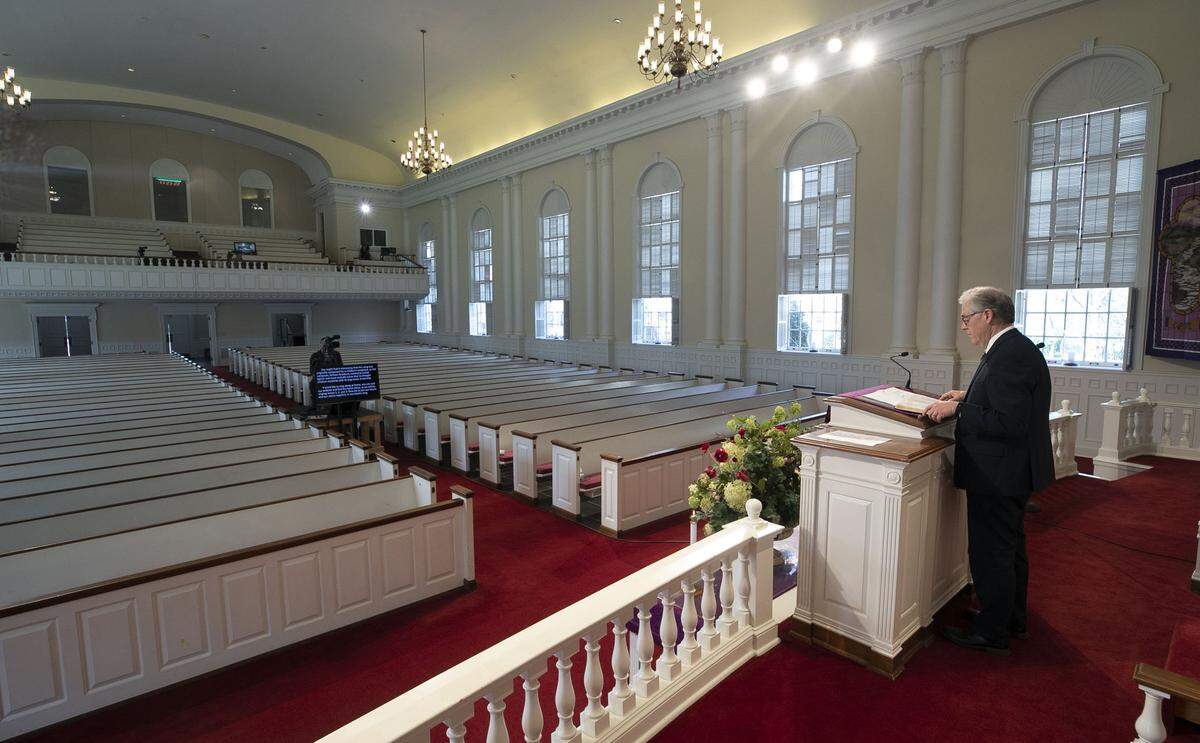
Solomon decided to lead a video Torah lesson from his porch last week.
He’s still learning how to livestream, setting up the camera just right to avoid glare, and thought it was going OK until a congregant reached out to him afterward.
One of his neighbors had been mowing their lawn during the lesson, and his viewers could barely hear him.
“They said, ‘Maybe next time do it inside,’” he said, laughing.
At Beth Meyer Synagogue, Solomon normally sees 100 or more people at sabbath services Friday night and Saturday morning, and many other people at prayer groups, children’s and religious school, and bar mitzvah lessons throughout the week. He also visits congregants in the hospital. But now all of that has gone virtual.
There are only a couple of ceremonies still being performed in person for his congregants. One is a circumcision, called brit milah in Jewish practice, which usually involves a crowd and the child being passed among numerous family members. Solomon says he’ll be at a distance and wearing a mask.
He’s also still hosting a bar mitzvah for just a few people so a dying grandmother can see her grandchild become an adult.
Rabbi Jen Feldman from Kehillah Synagogue in Chapel Hill said she, too, was hosting a bar mitzvah, but only for the immediate family. They marked lines on the floor to keep people six feet apart, and she wouldn’t be touching common surfaces. With no guests, the plan was to livestream the ceremony for others.
She and Solomon said it’s tough to be without community in Judaism, but their faith commands the sanctity and safety of lives.
“The highest value in Judaism is preservation of life,” Feldman said. “We have a tradition, ‘When you save a life, you save an entire world.’ We’re really sending a message that we’re still a community, even if we can’t physically meet together.”
In the past week, Solomon and his wife, Jenny, who is also a rabbi at Beth Meyer, have tried to move almost everything online. They’re even considering doing virtual funeral services and shiva for families — shiva involves family members and other congregants gathering to talk about their grief together.
He also said not all members of the synagogue have internet or are internet savvy, so they’re offering simple tutorials on how to use technology.
With Passover coming in just a few weeks, Solomon plans to set up a tripod in his dining room and invite anyone from the congregation to join them online for the major Jewish holiday.
But it’s difficult when he’s used to having a full sanctuary.
“It’s sad, you know, even for me,” he said. “My heart is lifted, my soul is lifted by being with others in prayer. But we’re just trying to give them a sense of normalcy.”
‘No one is there in the pews’
St. Thomas More has had to develop a plan B for Easter. Normally, there would be a Saturday night vigil before Sunday Mass, where children would be baptized after weeks of instruction and prayer.
McCue, the church’s pastor, said they now plan to livestream the Saturday vigil and Sunday Mass, and postpone the baptisms until Pentecost Saturday vigil on May 30.
But he said those plans could change, too.
The church held its first week of virtual services last week — two in English and two in Spanish. Over 4,000 people watched the Sunday livestreams, and many church members left comments under the video, affirming the message.
“There are obviously a lot of Mass livestream options right now,” McCue said. “But I think there’s something special about seeing your church. Like being beamed into your church home.”
David Hailey, the pastor of Hayes Barton Baptist Church in Raleigh, is also planning for an isolated Easter. He said his church has moved meetings and Sunday school classes to Zoom — a video conferencing application.
“Connecting, that’s the main thing,” Hailey said. “Because as we’re finding ourselves more isolated at home, we just don’t want members of our church — particularly those who live at home — to feel like they have been abandoned by their church.”
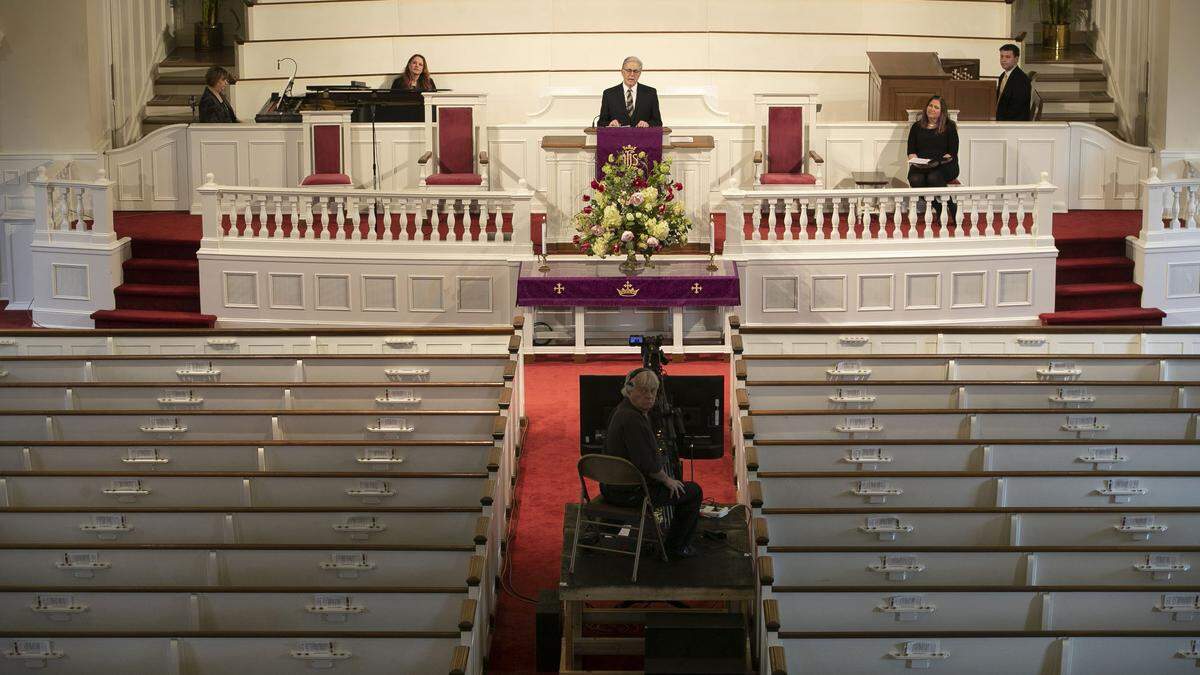
But it’s still a strange situation for church leaders. Instead of standing in front of a large crowd in the main chapel, McCue finds himself in front of a camera in St. Thomas More’s smaller weekday chapel. And the only other people in the room with him are a priest, deacon, reader, camera operator, and a few musicians — fewer than 10 total.
“It’s an odd feeling,” he said. “Walking into procession when the bell rings and no one is there in the pews.”
“But the Mass is Mass no matter if there’s a thousand people or one person.”
The church is still offering the Sacrament of Reconciliation, or confession, once a week but with more suggestions to keep people safe. As parishioners wait in line, they have to stand the recommended distance apart, and the church is recommending people use the wooden, confession privacy screen for extra protection between the person and the pastor.
The Rev. Chris VanHaight, pastor of Immaculate Conception Catholic Church in Durham, said they’re beginning to do confession by appointment, to keep people from standing in line. He said they’re planning to do them outside, maintaining a safe distance, when people start making appointments.
Both churches said they have also begun getting some employees, whose jobs are stalled for now, to call church parishioners and keep up with how they’re doing. McCue said staff is staying in regular contact with around 80 elderly members of the church to make sure they have everything they need.
St. Thomas More is also dealing with families having to postpone weddings and funeral services.
For most cases, they expect to open time slots for weddings later this year that they normally wouldn’t do, like Friday afternoons. The church does have one couple whose wedding is still going to happen, but only with required witnesses and a few other people.
In the case of funerals, he said those who are doing cremation can postpone, but there is a service planned for next week with under 10 people.
“We’re used to this place being so busy,” McCue said. “It’s just odd to be here and there’s no one here.”
McCue was the new pastor of the church in 2001, and remembers the church having an emergency night service on September 11. “In times of national emergency and crisis, we’re usually encouraged to increase services,” he said.
“This is a strange time... We can’t do what we normally want to do.”
Drastic measures to ‘save one soul’
Every Friday, normally around 2,500 people come together over the three shifts of prayers at the Islamic Association of Raleigh’s masjid, or mosque. They line up in densely packed rows on the floor, praying and listening to an imam giving a sermon, or Khutbah.
Now, there are none.
As soon as the coronavirus crisis began, Mohamed Elgamal said a task force was created — a handful of folks meeting almost daily to assess the situation and make recommendations for him. He also has the association’s team of lawyers in his ear and a few infectious disease experts.
He said their policy is: “If we save one soul, it’s as if we saved all the souls in humanity. And if we hurt one soul, it’s as if we hurt all the souls in humanity.”
The association has suspended school operations at its Islamic Center, transitioning to online courses. They’re keeping daily prayers in the center open for now, with more dispersed crowds than at Friday prayers, but anyone who comes must keep distance from others and sanitize their hands upon entering.
“We’ve gone over and above what the health department of Wake County and the governor have asked us to do,” he said.
They’ve also considered closing the center, which would have financial implications for the center and those who depend on it.
The IAR opens a food pantry once a month, supported through money and food donations, open to people in and outside of the Muslim community. It can sometimes bring together more than 150 people. But with restrictions on gatherings and the community not being able to donate as much as usual, it may not be able to operate.
Elgamal said for now, the plan for Ramadan — the Muslim celebration of the revelation of the Quran and the act of fasting from food and drink from sunrise to sunset — is the same as their Friday prayers. It’s common during Ramadan for the community to gather to break fast at the end of the day, but gatherings are canceled at the Islamic Center indefinitely. It begins on April 23 and lasts a month.
It’s a tough time, Elgamal said, but he has “confidence in our community, we have confidence in our creator. This too shall pass.”
“We pray that everybody, from all communities, is saved from this virus.”
This story was originally published March 22, 2020 at 4:11 PM.