Coronavirus closed NC schools and many daycares. Now parents must step up as teachers.
North Carolina parents are learning on the fly to become teachers as they deal with the likelihood that their children will not be back in school anytime soon due to the coronavirus threat.
The closure of all of North Carolina’s public schools through March 30 forced the parents of 1.5 million students to make new childcare arrangements. Now parents, many of whom have to work at home, must find ways to educate and entertain their children for an extended period.
“All we can do is stay positive and soldier on,” said Allie Potts, a North Raleigh mother of two elementary school students. “I’ve got to be strong for my kids.”
School districts are working on plans to provide students with some online instruction during the closures. But for now, many parents have researched how to keep their children learning.
“We’ve been trying to create some sort of routine going forward or else we’re not going to be able to function,” said Erin Wall, a Cary mother of three children. “We’re trying to explain to the boys that this is going to be the new normal for the next few weeks.
“Mom and dad are going to be home. You’re going to have school at home.”
Many childcare centers close
In addition to her son’s elementary school closing, Wall’s two youngest children are home after their church preschool closed.
Many childcare centers have closed as a precautionary measure even though it’s not required by the state. Some public schools may reopen as emergency childcare centers, but they’d be limited to serving children of “front line” workers like healthcare professionals.
Wall said she realizes she’s fortunate that her family’s nanny, a former preschool teacher, is handling the education of her children.
Potts isn’t as lucky. She went to a store that sells home-school supplies to stock up on materials. Homeschooling has been gaining in popularity in North Carolina, reaching 142,037 students last school year.
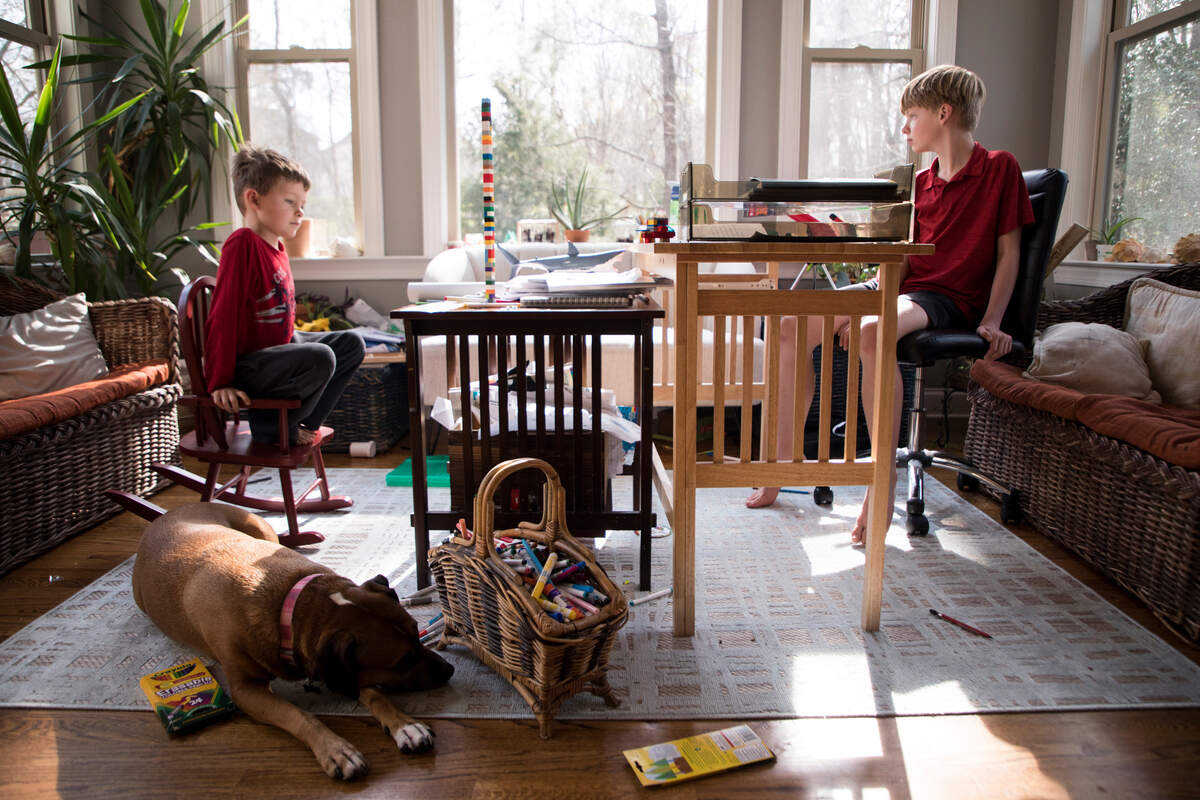
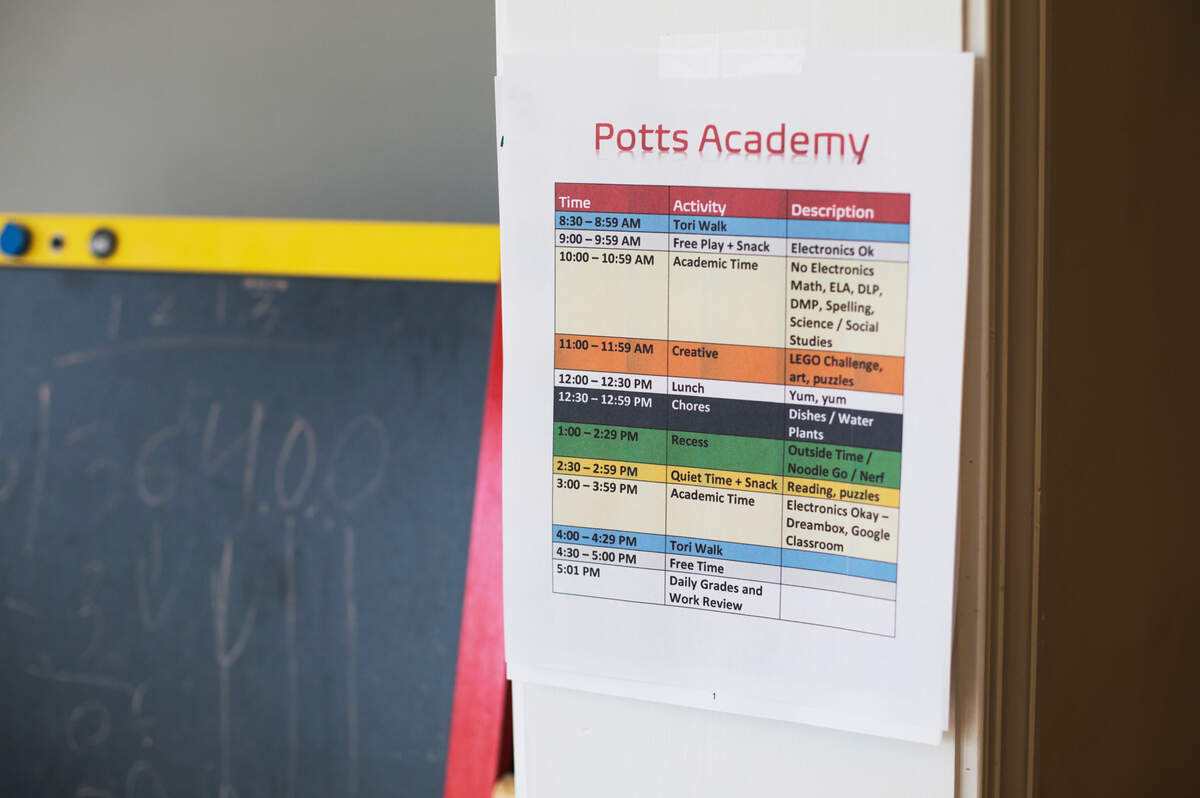
Now Potts has her sons, ages 11 and 8, working on a regular schedule written on a wall. Timers let them know when to change subjects and to take “brain breaks” in the unofficial classrooms in the house.
“We are absolutely living by timers and schedules at this point,” she said.
Students learn at home
Potts works from her home office but periodically walks out to check up on her kids. She grades the work as well, telling them to redo it when needed.
But Potts said it’s not the same as being in an actual school environment.
“They’re definitely missing out on getting to talk with their peers,” Potts said. “Both of my kids have said it’s easier for them to get the work done at home without the distractions. But they clearly need the social interaction.”
The unplanned break from school is causing children to wonder why they’re now spending so much more time with their parents.
Potts said she’s told her children that coronavirus is serious but she’s tried to downplay the risk they’ll get sick as long as they continue to practice good hygiene.
Before schools closed, Michelle Craig talked to her pre-K students at Briarcliff Elementary School in Cary about how germs can spread. Now the pre-K teacher is explaining the same things to her own children.
“My 9 year old seems to understand fairly well but it’s still hard,” Craig said. “My 5-year-old doesn’t understand at all. ‘There’s nobody on the playground and I promise I won’t get sick.’”
Craig said her 5-year-old broke into tears when she wouldn’t let him go on the playground. She had to explain to him how they didn’t want him to risk getting sick and infecting older relatives.
Parents prepare for long-term school closures
Craig’s background as a teacher has helped her to keep her children learning. But she’s also had to juggle her work responsibilities, which have required her to take online training at times before her kids wake up and after they’ve gone to bed.
“The key for all parents is for employees is to be flexible and recognize we’re not working a traditional work day,” Craig said.
“Employers are going to have to accept that productivity is going to change. Or we’re going to work before they get up or be creative.”
Craig has been keeping in touch with her parents, some of whom she said still think that schools might reopen after Gov. Roy Cooper’s executive order expires March 30. But Cooper warned Thursday that schools will likely be closed “for awhile.”
Deep down, Pots said she’s worried schools could be closed through the end of the school year. She’s worried that could mean that summer camps are closed too.
“I’m living on the whole hope springs eternal,” Potts said. “I’m braced for a month. But if it were to go out 20 weeks, I will absolutely need to enlist the help of a certified online teacher.”
This story was originally published March 20, 2020 at 2:29 PM.