Coronavirus poses a threat to a major NC food producer: the immigrant farmworker
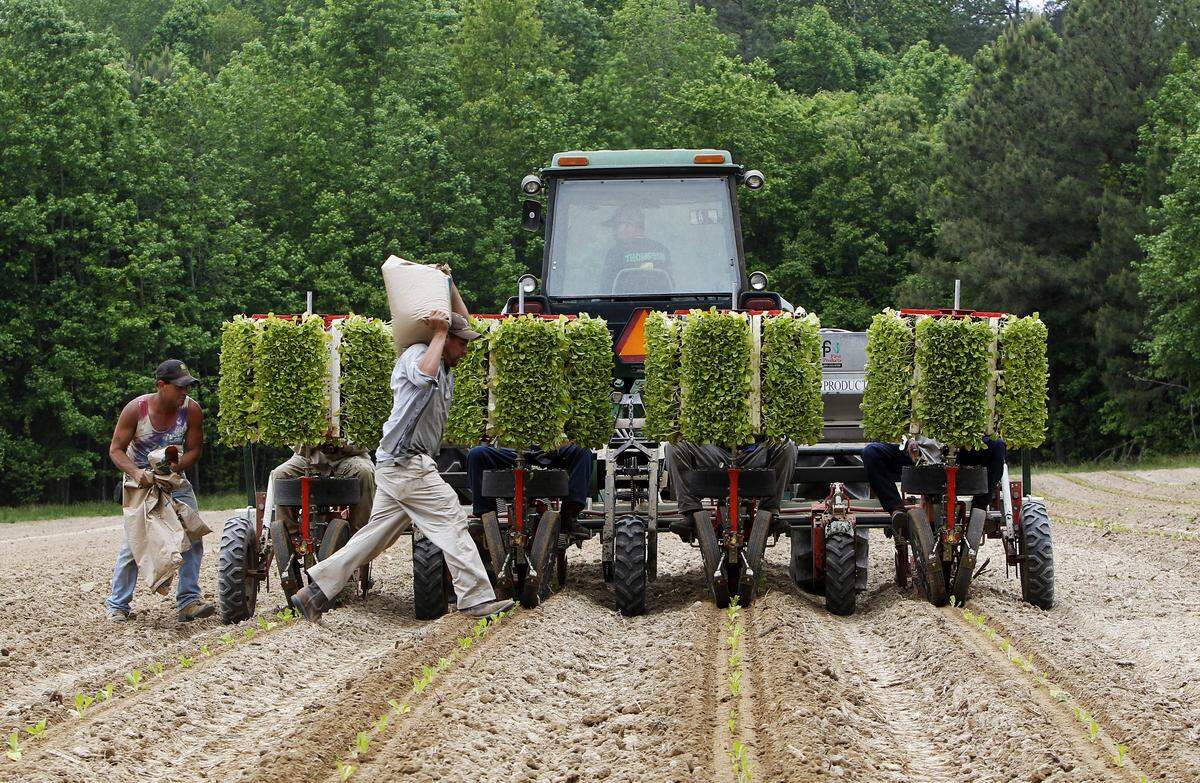
Every year, North Carolina’s farmers work to keep the state’s title as the nation’s leader in growing tobacco and sweet potatoes.
But this season, they’re battling the global coronavirus pandemic. The coronavirus is affecting not only farmers, but their most important asset: the seasonal workforce imported from Mexico and elsewhere in Latin America.
Read this story in Spanish at Enlace Latino. Lea este artículo en español en Enlacelatino.org.
Those migrant workers, according to advocates, are a vulnerable population who could feel compelled to work on North Carolina’s farms — whether or not their employers have taken steps to keep them safe.
As a major effort to reduce virus spread, the State Department had announced on March 17 that all routine visa processes in U.S. embassies in Mexico would be suspended, allowing H-2A visas only for returning farmworkers who were issued them last year.
This prompted local and federal lawmakers nationwide to speak out against the expected labor shortage to national agriculture from the absence of new, first-time workers. The State Department rescinded their decision on March 27 to allow for more non-U.S. farmworkers to work American fields.
While this helps the state and rest of the nation to avoid interruptions to food supply chains, the tens of thousands of seasonal farmworkers who will work Carolinian fields this season are at risk of exposure to COVID-19.
The health risk for farmworkers
“The guidance for the general public right now is to use social distancing and keeping distance from everybody, and so, for the case of farmworkers residing in labor camps, that’s basically impossible,” said Elizabeth Freeman Lambar of the North Carolina Farmworker Health Program within the state’s Department of Health and Human Services.
The vast majority of H-2A farmworkers share sleeping quarters, kitchens and bathrooms in barracks, old farmhouses and trailers provided to them by growers.
Those who are U.S. residents and follow seasons around different states, known specifically as “migrant” farmworkers, often live with their families.
“The ability to minimize the risk of exposure is really difficult for farmworkers. We’re also concerned about farmworkers getting good information about COVID-19,” said Freeman Lambar.
“The heart of our program is visiting workers, building trust, conducting face-to-face health assessments, either providing services right on site or linking them with with services that often involve transporting patients to appointments,” Freeman Lambar said.
The challenge of the NCFHP is to train local health outreach agencies to conduct virtual health assessments and case management with farmworkers by phone, sharing information in Spanish from the Centers for Disease Control and Prevention.
“If there is a suspected or confirmed COVID-19 case in the labor camp, that would involve isolating that worker in a separate location as well as quarantining the remainder of the workers,” Freeman Lambar added. “We recognize that that is going to be a challenge for the farmers to do. That is something that we’re trying to talk about now, to see if there’s a way to be prepared.
They’re currently in touch with the North Carolina Agromedicine Institute to reach farmers directly, because farmers are likely to first to notice when workers are sick or injured on the job.
Can workers be protected?
The N.C. Growers Association in charge of bringing thousands of workers from Mexico told The News & Observer they’re abiding by DHHS guidelines which instruct farmers to quarantine sick workers and let them rest until they recover.
Lee Wicker, deputy director for the association, said he’s optimistic about the measures that will be taken to guard workers’ health and in turn, guard the flow of agricultural labor.
He said he believes the workers are less likely than other people in the U.S. to get sick. “This is a very safe population, because these are not world travelers,” said Wicker in an interview with The News & Observer. “These guys have not been in China or Italy.”
The Mexican government’s response to the coronavirus, however, has been one of the poorest in the world, according to reports in The New York Times and various other media.
Wicker said the measures include ensuring that only two buses full of workers — carrying 40 workers each — arrive at processing offices at a time. There would also be no more than 50 people be together in the offices at once, although there would be no social distancing.
Wicker added that the association was “was being “proactive about proper spacing” on the bus. When asked if the association took each worker’s temperature upon arrival, Wicker said no.
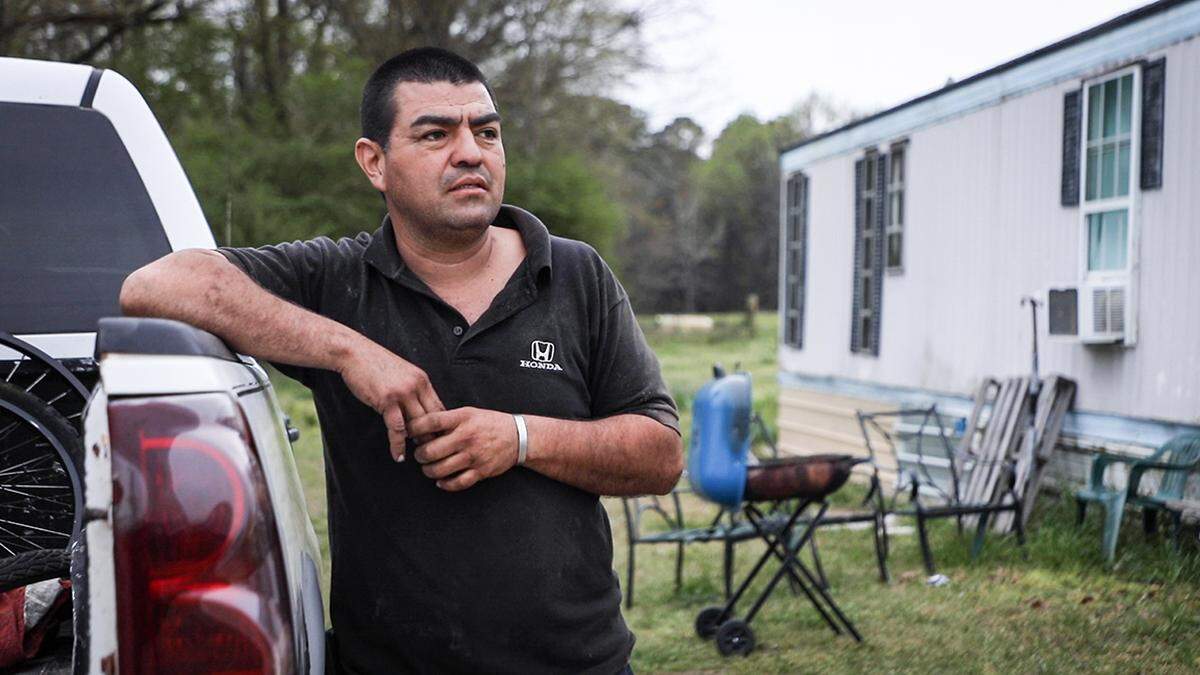
Leonardo Galván, a health outreach coordinator at the N.C. Farmworkers’ Project (NCFWP) in Johnston County, disagrees.
“Farmworkers cross the border and from then on are stopping at restaurants, rest stops, bathrooms and picking things up,” said Galván, formerly a seasonal farmworker. “They’re healthy before they cross the border. You can imagine all of them riding in a bus, sneezing, coughing...it affects all of them.”
Farmworker advocates say that workers already live in unsanitary and unsafe conditions, which is only heightened by the new coronavirus pandemic.
“[Farmworkers] share bathrooms with five toilets and no dividers,” said NCFWP outreach coordinator Janeth Tapia. “The growers don’t have anywhere to house someone in quarantine [if necessary].”
Wicker of the N.C. Growers’ Association said that it was up to each individual farmer to provide adequate housing and alternatives if quarantine is necessary.
“If the grower has sufficient housing to isolate that individual with his housing, then we’ll do that,” he said. “If not we’ll have to look at hotels or other housing.”
He said the association would pay for that housing.
Asked about a health protocol in the wake of the evolving pandemic, Wicker said he Association didn’t have one that he could share.
Seasonal labor’s existing problems
In Mexico, advocates point to a lack of transparency in the official information given to farmworkers, from the previous visa restrictions to health and safety protocols.
The binational organization Centro de Derechos del Migrante assists migrant workers with legal services and resources on before and after they’ve crossed the U.S.-Mexico border.
Speaking in an interview from Mexico, CDM’s communications director Evy Peña says that the current issue is systemic.
“Industry concerns are put above health concerns and above the lives of migrant workers,” she said in Spanish. “That’s worrisome because, at the end of the day, [the workers] are sustaining the food industry without any protection for themselves.”
Peña said this year’s confusion about visa restrictions created an uptick in fraudulent recruitment from Mexico. Workers looking for contracts get scammed out of thousands of dollars or, worse, indebted to sham recruiters making false promises of jobs or visas that don’t exist.
“This health crisis requires all of us to examine a vulnerable population and see the system’s failures that have already existed,” Peña said.
While Wicker said farmworkers should report symptoms, despite not having a plan for healthcare, and there’s “nothing to be afraid of,” advocates like Peña believe the system is set up without any protections, health or otherwise.
For farmworkers, Peña said, “Your only work opportunity depends on one person. If you get sick and get fired, you end up blacklisted and won’t be contracted again, on top of being indebted to the recruiter.”
This story was produced in collaboration with Enlace Latino NC.
EDITOR’S NOTE: A previous version of this story incorrectly stated the title of Elizabeth Freeman Lambar. Freeman Lambar holds MPH and MSW titles.
This story was originally published March 30, 2020 at 6:00 AM.