A look inside the week that changed Triangle restaurants, and what they need to survive
It’s been more than a week since the bartenders at the underground bourbon bar Foundation have poured a drink.
A few nights ago, they took the 40 open whiskey bottles off the shelves and dumped them all in one wood-lined vat, called a “squarrel,” for square barrel. Top shelf and bottom shelf, wheat, corn and rye, all mixed together to make a quarantine blend destined for a future toast in better times.
In every way, it is a barrel of hope.
“We’re looking forward to the day we can crack it open and enjoy it with everyone,” Foundation owner Will Alphin said. “It’s a little time capsule to document this moment.”
In the span of a few days, everything changed for restaurants across the country, a change likely to play out for months as businesses and diners navigate a new normal.
In an effort to stem the threat of the coronavirus outbreak, North Carolina Gov. Roy Cooper issued an executive order March 17 to close all bars and restaurants until further notice, allowing only for takeout, drive-through and delivery. On March 27, he issued a stay-at-home order, which still considers those restaurants essential businesses, but sets limits to where the state’s residents go.
Chef Cheetie Kumar, of the downtown Raleigh restaurant Garland, was among the first restaurants to close up in the day before Cooper’s first order.
“It became one of those gut feelings you never anticipated having to make,” Kumar said. “It’s so counter-intuitive. ... At the end of the day, the most important thing is people’s safety. It was unwavering, this nagging question of what if someone’s contagious?”
Restaurants open and close, but never before has the very thing that restaurants offer been impossible — a space of pleasure and comfort beyond food on a plate.
Along with the order closing restaurants, Cooper expanded unemployment benefits, anticipating a spike in new claims as virtually every restaurant in the state made deep cuts to its staff. The North Carolina Restaurant and Lodging Association estimates that 75 percent of the state’s restaurants workers have been laid off, accounting for roughly 361,425 jobs.
In 10 days, North Carolina saw 200,000 new unemployment filings, part of 3.3 million new claims nationwide, according to data released Thursday.
Restaurateurs lobby for relief
James Beard winning Raleigh chef Ashley Christensen and AC Restaurants executive director Kait Goalen helped create the Independent Restaurant Coalition, a national group of restaurant owners, including celebrity chefs Tom Colicchio and Andrew Zimmern. They have been lobbying for relief and benefits to help restaurants make it to the other side of the shutdown.
The group pushed for unemployment benefits and assistance in this week’s stimulus package, arguing that 7 million restaurant workers have been affected by the closings and that without legislative intervention, an industry could collapse.
“The asks for our industry are all about stretching the timeline out a little bit,” Goalen said. “We knew that one of the most important things we could do was figure out how to be part of a bigger solution. There’s no solving this without a government solution. There’s no version of AC Restaurants that can come back after months with zero opportunities for revenue.”
With the restaurants closed, Christensen said their suppliers are also suffering, the farmers and fishermen, along with the wine distributors and brewers, along with the non-profits counting on the money raised by fundraising dinners.
“We’re at the front lines; this is hitting everyone now,” Goalen said.
Kumar and a number of other Triangle chefs and restaurants were part of that lobbying effort. She said one added vulnerability for restaurants is there’s no pandemic insurance. Restaurants are built to expect fires and other disasters, but there’s nothing that currently exists to answer the question of what happens when customers can’t walk through the door.
“We think about fires, and hurricanes and floods and tornadoes,” Kumar said. “The pandemic is the exception.”
The North Carolina Restaurant and Lodging Association launched the NC Restaurant Workers Relief Fund last week to help workers across the state with immediate cash grants of up to $500. It builds on and consolidates money raised through the Triangle Restaurant Workers Relief Fund that Christensen had organized with the Frankie Lemmon Foundation.
Restaurants change operations
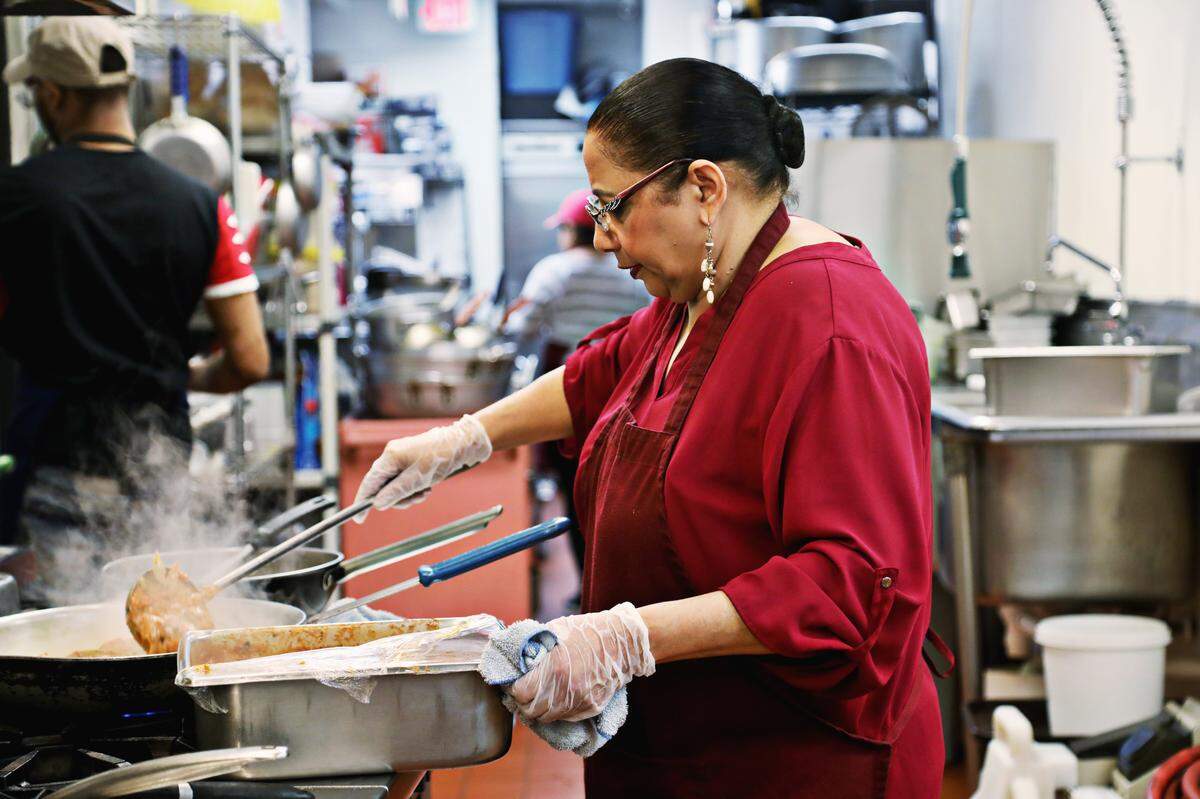
For the last week, restaurants have had to reinvent the way they get that food to customers. Everything from McDonald’s to fine dining started selling takeout.
Like most restaurants, Raleigh chef Scott Crawford said he furloughed hourly workers, keeping only four employees and himself around to run a small takeout operation out of his Crawford & Son restaurant on Person Street. Though he’s known for intricate and visually striking dishes, Crawford said the moment called for making comfort food.
“In times like these, chicken pot pie and meatloaf help me forget about things for a few minutes,” Crawford said. “We’re doing dishes that travel well and make sense for this takeout concept. This is what we do. This is in our DNA, this is part of us. As long as people are needing food and needing nourishment, we’ll continue providing that.”
For others, business models and plans were tossed out the window, and many shifted to helping others in the restaurant community. The new Glenwood restaurant Lady Luck held its soft opening one weekend, and then the next, pivoted to feeding laid-off industry workers for free.
Chef Jake Wood was in the middle of building his first restaurant, Lawrence BBQ, and is now smoking briskets and ribs in a parking lot, then delivering orders to homes and feeding industry workers. Fundraisers like the Triangle Restaurant Workers fund was created to collect money for those laid off or seeing their hours cut.
“We want to feed the service industry folks, that was a no-brainer,” Wood said. “That’s something you can take off the plate. You start thinking about, if you lose income, how am I going to do this, how am I going to do that? If you’ve got some meals covered throughout the week that’s a certain amount of stress lifted off.”
Some have remade their businesses completely, with bars and restaurants like ko.an in Cary and Dram & Draught in Raleigh operating like grocery stores, selling items like toilet paper and wine that they have in stock. Postmaster, in downtown Cary, didn’t try to translate itself into takeout. They reinvented themselves as a burger-only spot called Gov’t Cheeseburger.
Takeout works for some concepts. The pizzerias have been boxing up pizzas long before the pandemic and haven’t missed a beat. Bagel shops like Benchwarmers in Raleigh and Big Dom’s in Cary routinely sell out for the day. Christensen offered takeout from Poole’s Diner and Poole’side for a few days, but after seeing groups of customers coming and going, concluded its success was putting her workers at risk.
As downtown offices are mostly closed and people work from home, not to mention conferences, the popular Fayetteville Street lunch spot Plaza Cafe watched its customers disappear overnight. Owner Darvir Ahluwalia said he’s now competing with every open restaurant in the Triangle for precious takeout dollars. He was doing 20 to 30 orders a day before he suspended service this week, Ahluwalia said, when he was used to 300.
“It’s pretty bleak,” Ahluwalia said. “There’s nobody in downtown, virtually. So it’s bleak because of that. I think this would hold true for pretty much all of the downtown restaurants.”
He said landlords and credit card companies have been willing to work with him, and he hopes to try reopening in the next month.
“For us, for everyone, we just have to survive this,” Ahluwalia said. “Once we get the surviving done, we can get to the part of thriving.”
What’s at stake for restaurants
For who knows how long, the Triangle will experience life without its restaurants, at least as we’ve known it. Chef Ricky Moore of the Durham fried seafood restaurant Saltbox Seafood Shack said a lot can be lost when we stop dining out.
“We’re losing cultures, we’re losing community, that social component that everyone enjoys,” Moore said. “We’re missing this cultural activity that was universal.”
This spring, there won’t be any public graduations, or proms, which means there won’t be any post-graduation brunches or late night trips to Waffle House. There are no church suppers or larege weddings, and anniversaries and birthdays will be spent at home.
For Kumar, restaurants are where downtown workers meet for lunch, where offices hold Christmas parties and politicians raise money. They’re where funeral mourners gather for a toast and how artists and musicians put themselves through school.
“It’s my number one source of pride, inspiration, community, camaraderie,” Kumar said. “What’s left if it’s not our food community? There’s art, but restaurants are at the heart and soul of everything. Without its restaurants Raleigh, is black and white.”
This story was originally published March 28, 2020 at 1:53 PM.