Blood is needed, but is the donation process safe? We checked out a drive in Raleigh.
Right now almost everything is closed and everyone is staying home to help reduce the spread of COVID-19, which is great for flattening the curve, but not so great for centers devoted to collecting blood donations.
A blood shortage jeopardizes those undergoing surgeries, and victims of accidents and other emergencies.
The Blood Connection, a company that collects donations in North and South Carolina, started feeling the shortage around March 8, said Allie Van Dyke, the company’s partnership and media coordinator, and for a period of time after that, they were only hitting about 50 percent of their goals. That meant the 80 hospitals the company services were also feeling the pinch.
So what to do when you want to keep your distance but also help your fellow man?
Taking part in a blood drive is one way — and blood drives and blood donation centers are more intent than ever on building in even more safety precautions to protect donors and technicians.
I checked out Thursday’s Emergency Blood Connection blood drive at PNC Arena in Raleigh (and donated), to give a picture of what it’s like for those a little nervous about the process. Even though this particular drive, which was sponsored by The Blood Connection, WakeMed and UNC Health, ended Thursday evening, there are other blood drives and donation centers all over. More on that at the end of this story.
Making a safe blood drive even safer
First off, all Blood Connection workers I encountered were wearing gloves and masks.
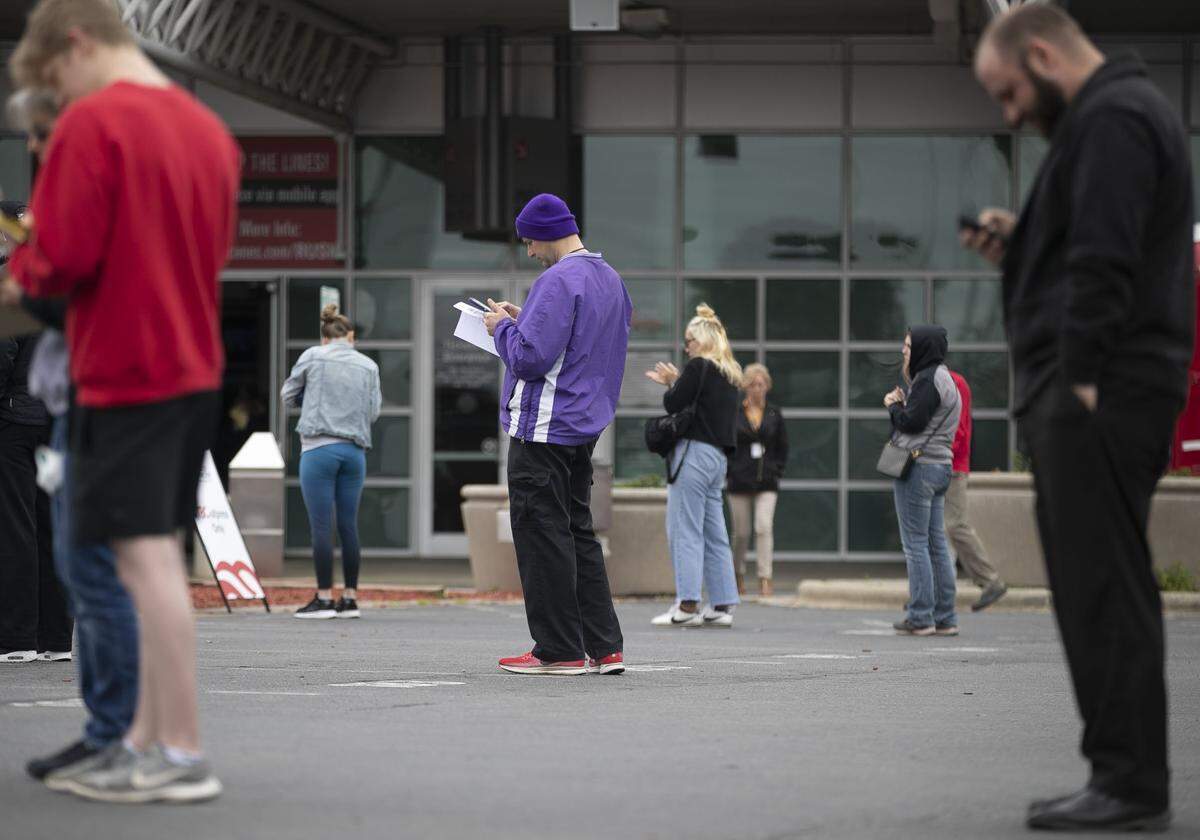
My appointment was in the morning, so the crowd was light. There were chalk lines drawn six feet apart showing people how to line up near the check-in tables without getting too close.
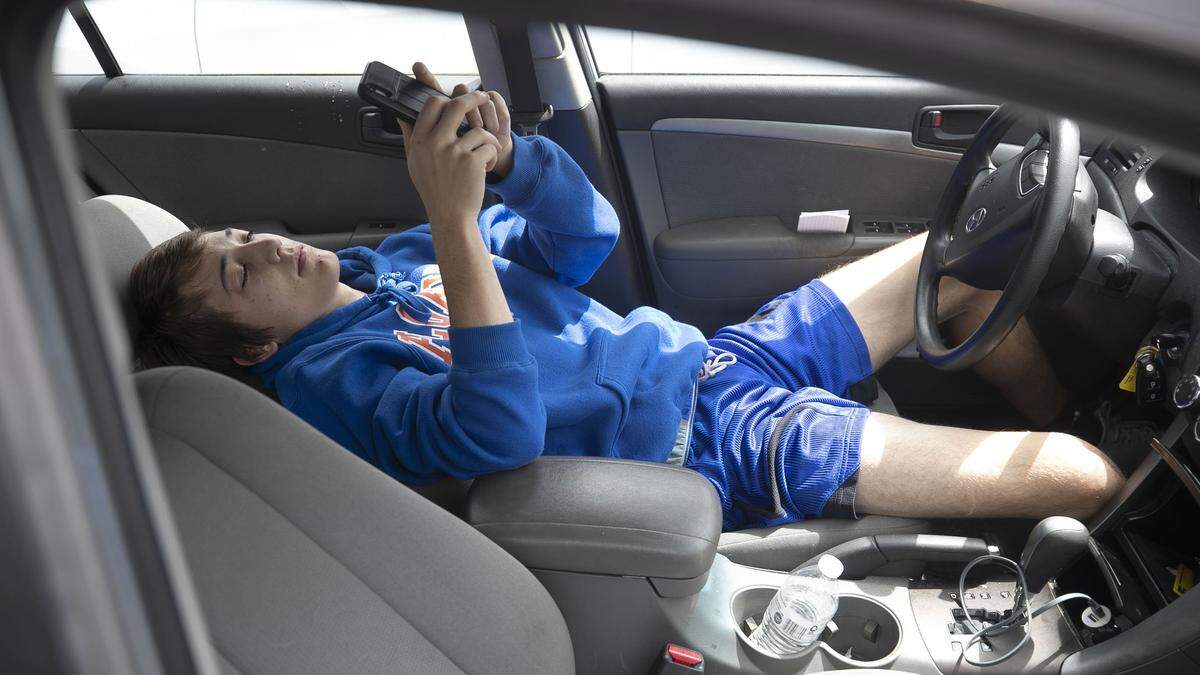
Heather Moulder, the director of marketing and public relations for The Blood Connection, told us that when crowds got a little denser around midday, they were asking donors to wait in their cars after checking in; they were called or texted when it was their time to give.
I filled out the questionnaire at home before heading out, but I still had to use a clipboard and ink pen to fill out a short form that let them know I was there, and I had to hand them my photo ID. (I did not see pens or clipboards being sanitized, but Moulder said they were being wiped down and a Blood Connection official later told our photographer that donors were being told to keep the pens.)
Lesson here (and everywhere, all the time): take some hand sanitizer with you (if you have it) whenever you go out.
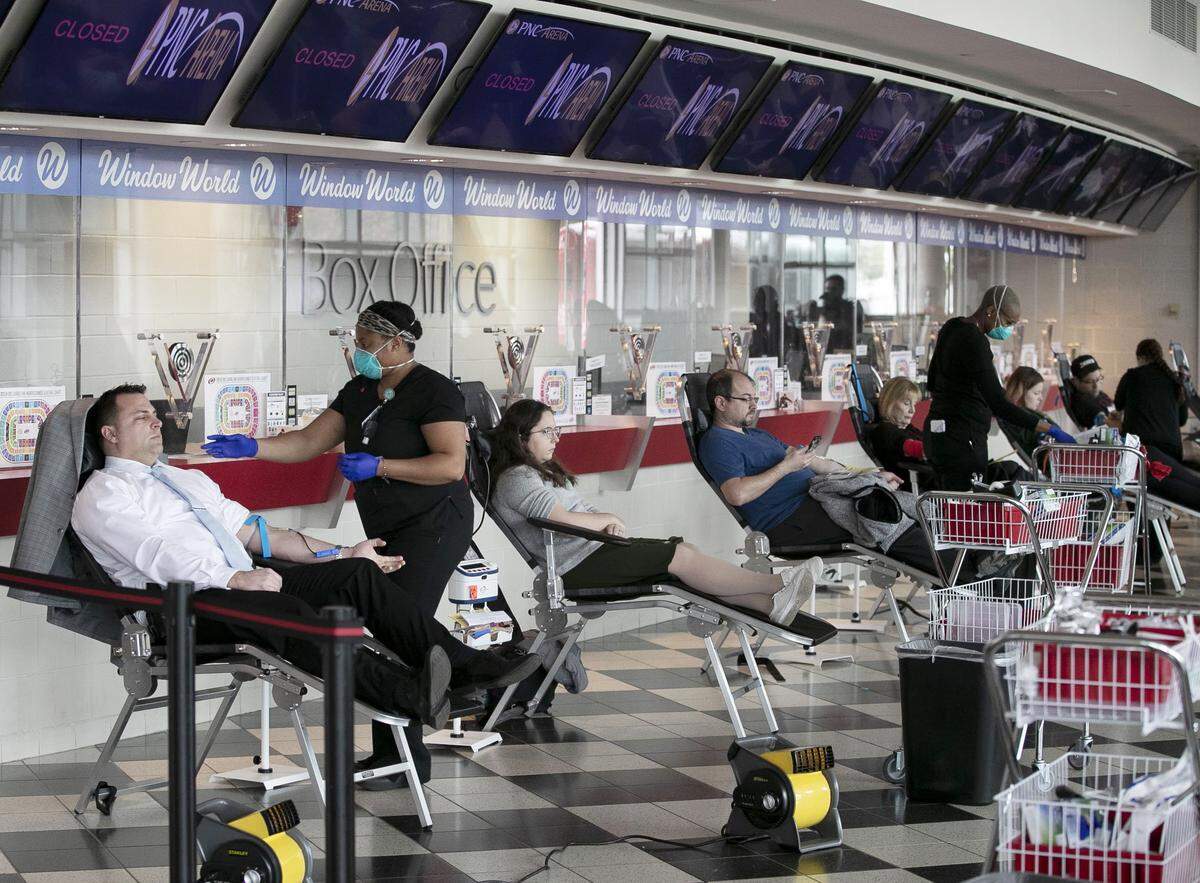
The Blood Connection had 10 mobile donation units at PNC — they look like giant RVs — plus 20 beds inside the arena lobby. The mobile units usually accommodate six donors at a time, plus technicians, but their new rules allow for four donors at a time. Moulder said the drive was able to process up to 60 donations at one time.
Moulder also assured us that all donors are kept six feet apart during the blood draw.
She said more than 1,000 people had registered to donate and they would do their best to accommodate drop-ins.
You’ll definitely be in close quarters for your screening process — it’s a tight space, and they have to take your blood pressure and temperature, plus a finger prick to test your iron. But the screener wears a mask and gloves the whole time. And of course, so do the people taking your blood.
Moulder said that snacks — and we all want that post-blood donation snack — are not sanitized, but they are taken “fresh out of the box” and handed to you by a worker wearing gloves, and donors are not allowed to reach in and grab their own. (I’ll note that my screener offered me a soda before my donation because I had to wait a long time due to internet issues — yes, the internet went down, backing things up a bit — and she swabbed the top of it with a tiny alcohol wipe. The gesture melted my heart.)
The snack/recovery areas were spacious, with plenty of room for people to rest and refuel without breathing on their neighbor.
Why risk it?
Teacher Lauren Martin — her 900+ students at Fuquay-Varina Elementary School know her as Miss Music Martin — said she was out there because she knows her donation may save someone’s life.
“I’m 29, young and healthy,” she said. “If I can do this and save someone, it’s worth it. It could be one of my students or their family, and if I can help, I just want to help.”
Jonathon Walston, who works as the controller at St. David’s School in Raleigh, said he regularly donates with The Blood Connection and their usual school drive was canceled when coronavirus closed schools. (Both interviewees were randomly selected, but this kind of proves that educators rule.)
He wasn’t worried about being out at PNC on Thursday to give blood, he said.
“I don’t really have any concerns,” Walston said. “I try my best to stay aware of what’s going on around me. I’m social distancing, I wash my hands and use hand sanitizer. I’m doing what I can and I trust everyone here is doing the same.
“And it’s exciting to see so many people out here,” he said.
If you are able to give blood
You can donate blood a number of ways, either by finding a blood drive near you or by visiting a donation office. The Blood Connection’s Allie Van Dyke reminds us there is a continuous need for blood, which has a 45-day shelf life, and that donors are encouraged to give every 56 days if they are healthy.
Here are few options for giving.
The American Red Cross: Visit their website and enter your zip code to find the nearest blood drive - redcrossblood.org/give.html/find-drive.
The Blood Connection: Visit their website to find scheduled blood drives and donation centers (the Raleigh center is located at 5925 Glenwood Ave.) - thebloodconnection.org
This story was originally published March 26, 2020 at 4:50 PM.