Wake students can get free food during pandemic. Officials don’t want it to go to waste.
The Wake County school system is serving more than 20,000 meals a day to families while schools are closed, but some food is being thrown away because of lack of demand.
Wake County and other school districts across the state moved to quickly set up feeding programs for students when schools were ordered closed in mid-March to try to slow the spread of COVID-19, the disease caused by the coronavirus.
School officials say they’ve distributed most of the meals that have been made. But some food that isn’t being served is being thrown away for safety reasons.
“Our food waste is primarily hot/cold food items that can’t be reused, once it has been prepared or transported for distribution,” Heather Lawing, a Wake school spokeswoman, said in an email. “Following commercial food operation best practices, food should be consumed while it is kept within safe food temperature parameters.
“After an extended amount of time, it’s no longer within those safe food temperature parameters, so we discard it.”
The thought of food going to waste during this emergency is causing some groups to urge people to show up at Wake’s feeding sites. Parents don’t have to bring identification or their kids when they show up at a site asking for food for their children.
“Some sites are having to throw away food because not enough people are coming to get food,” the PTA at Washington Elementary School in Raleigh posted Tuesday on Facebook. “If you know any families with food insecurity, please encourage them to use the food pickup options offered by Wake County Public School System!”
Wake sets up school feeding sites
The Wake County school system has posted information on where families can get free food at www.wcpss.net/food. The district is offering curbside pickup on weekdays from 11 a.m. to 1 p.m. at more than 30 sites.
Wake also began this week driving school buses to locations around the county to distribute the hot lunches and cold breakfasts.
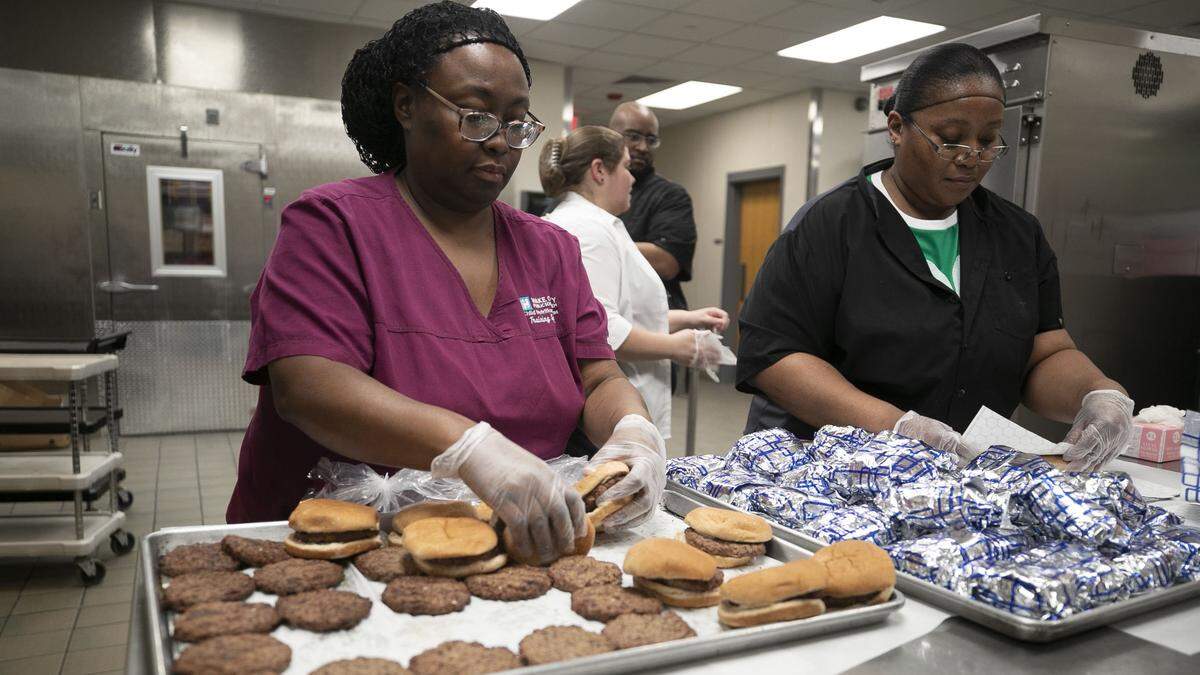
Wake served 4,899 meals on the first day on March 17. The number served has increased each weekday, reaching 20,177 meals distributed on Monday. A total of 125,019 meals were served between March 17-30.
Lawing said Wake’s waste percentage is 5.6% for hot lunch service.
“Our goal is to feed as many students as possible, while minimizing food waste,” Lawing said. “We use data to estimate/predict the demand for food at sites in order to minimize food waste.”
The percentage of food waste is higher the first few days after a new site opens because they don’t have data to accurately predict how many families will come, according to Lawing. She said the district reviews data daily to decide how much food to prepare at individual sites.
But Lawing said they don’t automatically discard the entire meal when they have food waste. She says items such as milk, juice, fruit and raw vegetables that have been kept within safe temperature ranges are saved for future use.
This story was originally published April 1, 2020 at 10:46 AM.