In a pandemic, North Carolinians know what they want: Chicken. In bulk.
Chicken is a big deal in North Carolina.
The Tar Heel State is one of the nation’s largest poultry producers. Every corner stakes its claim on the best fried chicken and biscuits — from Price’s Chicken Coop in Charlotte to Sunrise Biscuit Kitchen in Chapel Hill. It’s the birthplace of Bojangles’, fried chicken royalty among fast food chains.
But when the coronavirus hit, shuttering restaurants and disrupting the supply chain, chicken farmers were faced with a decision: throw away the excess or sell direct to the consumer.
Some chose the latter — and a run on bulk chicken sales in North Carolina was born.
House of Raeford, a chicken farm in Eastern North Carolina, brought a refrigerated truck full of frozen poultry to the State Farmer’s Market on April 16. Before noon, it had sold more than 1,000 cases to customers arriving by car for curbside pickup, The News & Observer reported.
A minimum order was 40 pounds and all sales were cash only, ranging in price from $40 to $60, according to The N&O.
Demand from food service customers at restaurants and colleges has fallen since COVID-19 forced most to shut their doors, Robert Handfield, a professor of supply chain management at N.C. State University, told McClatchy News.
But grocery stores are ordering more. What’s normally a 50-50 split in demand between stores and restaurants for poultry farmers has suddenly changed to 60-40, Handfield said.
There isn’t an immediate conversion when that happens, he said, pointing to different packaging requirements and food standards. KFC, for example, buys smaller chickens than what grocery stores stock, Handfield said.
“You can’t suddenly start shipping it over to the retail sector,” he explained.
But farmers can break even by bringing it to the market quickly for consumers.
On Tuesday, House of Raeford brought another 320,000 pounds of frozen poultry to the South Carolina state farmer’s market, backing up traffic in both directions on U.S. 321 — also known as Charleston Highway — in West Columbia, The State reported.
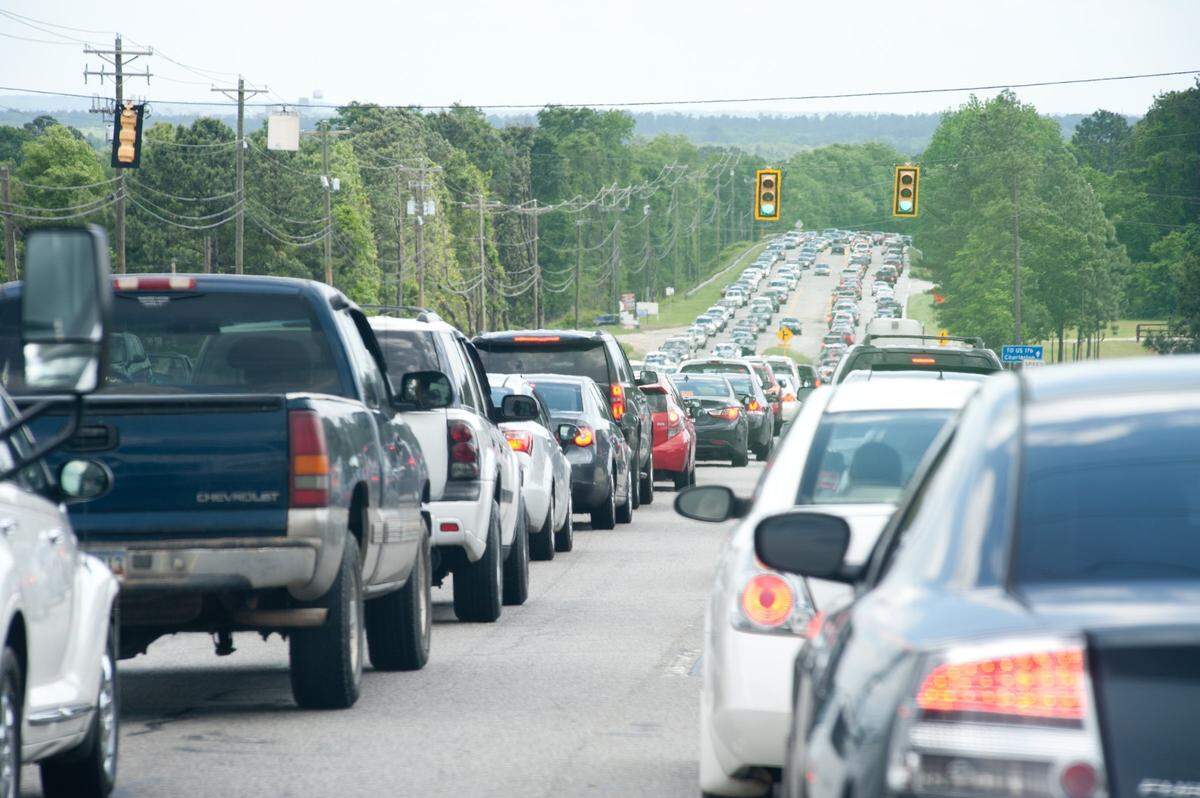
Back in North Carolina, people were sleeping in their cars the night before House of Raeford opened its “bulk chicken drive-thru” this week in Knightdale, a suburb of Raleigh.
It’s not the only supplier capitalizing on the demand.
Mountaire Farms is selling frozen chicken at a cash-only drive-thru in Siler City until Saturday, according to its Facebook page, and N.C. State has launched a platform for locating farms in the area where meat can be purchased in bulk.
It’s called MeatSuite, and it was started in New York by Cornell Cooperative Extension Agriculture Educators.
The website for North Carolina wasn’t supposed to launch until July, but an “increase (in) demand for meat and the postponement of opening day for farmers markets” during the coronavirus pandemic prompted an earlier roll-out, Spectrum Local News reported.
Now at least 80 farms producing anything from chicken to rabbit are listing their products for sale in North Carolina.
Prices for chicken at local grocers hasn’t gone up. “It’s just they’re not being processed as quickly,” Handfield told McClatchy.
He points to the bottleneck at meat processing plants — like the Smithfield Foods pork plant in Tar Heel, North Carolina, where an employee has tested positive for COVID-19 in recent days, McClatchy News reported.
At least three Smithfield Foods meatpacking plants — in South Dakota, Missouri and Wisconsin — closed after outbreaks were reported.
Between the bottleneck and people hoarding food, Handfield said some grocery stores were experiencing shortages. Certain cuts of meat or preferred brands are missing, prompting a “huge pent-up demand” from shoppers.
“Never underestimate the demand for chicken in North Carolina — people love their chicken,” he said.
That’s where the excess supply from local farmers unable to sell to retailers comes in.
A lot of people are out of work and looking for ways to cut costs, Handfield said, making bulk chicken sales at less than $1 a pound enticing for consumers during the pandemic.
“It’s cheap chicken,” he said.
This story was originally published April 22, 2020 at 3:46 PM with the headline "In a pandemic, North Carolinians know what they want: Chicken. In bulk.."