As NC prepares to possibly reopen, new policy affects school start date, DMV deadlines
As he signed into law two bills Monday allocating $1.57 billion in federal aid, Gov. Roy Cooper expressed hope the state can soon enter its first phase of easing stay-at-home orders designed to slow the spread of the coronavirus.
Cooper and other state leaders spoke at a news conference about the emergency funding from the federal CARES Act and about the subtle ways life for North Carolinians can change after May 8, if the state is able to enter Phase 1 of the three-phase reopening plan.
Entering Phase 1 depends on the state making progress in a number of metrics, including testing, tracing and a downward slope in related trends, including daily case counts and hospitalizations.
The Department of Health and Human Services reported on Monday that the number of coronavirus cases continues rising, but the number of people hospitalized with COVID-19 has been falling.
According to a Monday morning update, North Carolina had 11,848 coronavirus cases and 430 deaths. That was an increase of 184 cases since Sunday, according to the DHHS data.
The News & Observer is also keeping its own tally, based on data collected from state and county heatlh departments. On Monday morning, those records showed 11,972 cases in 99 counties and 442 deaths.
There have been 146,439 tests completed, or about 1% of the state’s 10.5 million people, according to the DHHS.
Aid comes amid record high unemployment
The bills Cooper signed were passed unanimously by the General Assembly on Saturday and include millions of dollars for personal protective equipment, university research, testing, contact tracing, small business loans and food banks.
Policy in the relief package includes starting the next school year a week earlier, on Aug. 17, and waiving end-of-grade testing.
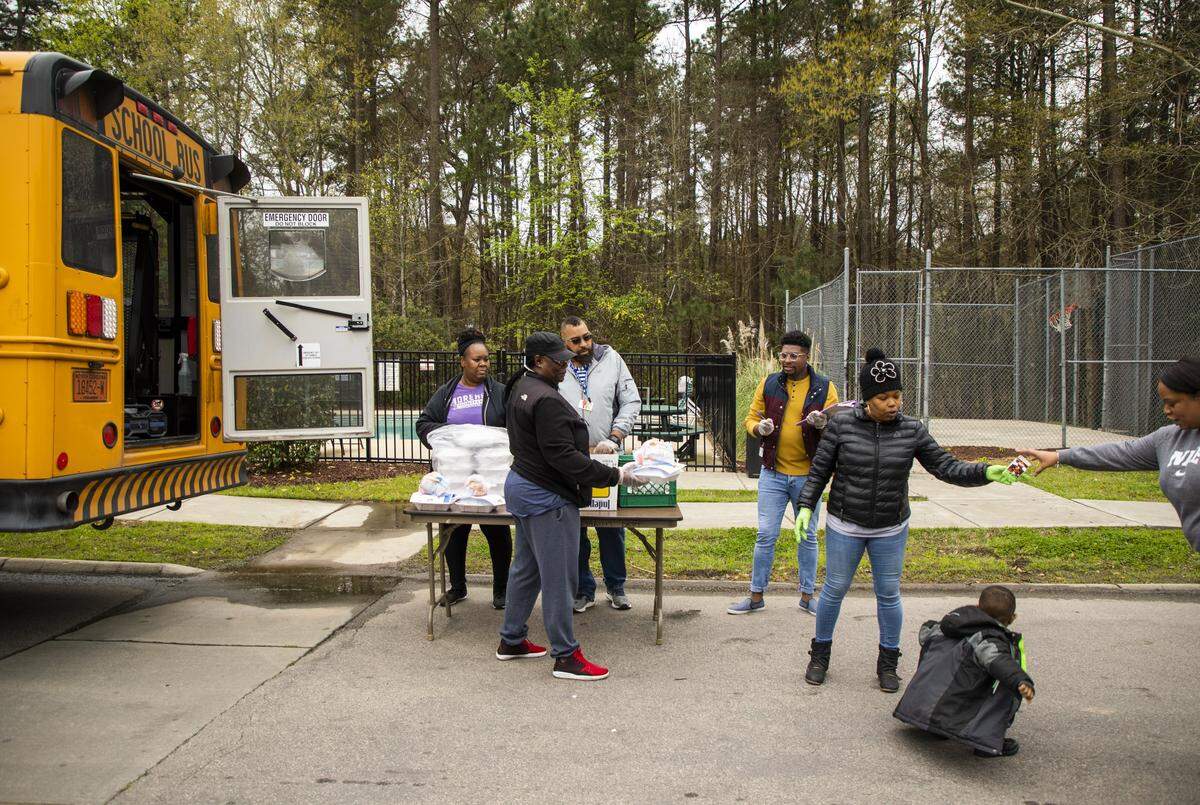
Some other education policies, like waiving K-3 class size reduction plans for a year, will be taken up in the second round of coronavirus legislation, lawmakers said.
The bill also extends the period for license and vehicle registrations, adding five months to the expiration date of any license, permit, registration or other credential issued by DMV, and waives all fees, fines or penalties for not complying with the old date. Motor vehicle tax payments and inspection deadlines are also delayed to match the new expiration dates.
Both the House and Senate proposed six-month extensions last week, then settled on five months over the weekend.
Other items that didn’t make it in the final legislation would have allowed restaurants to sell take-out mixed drinks and increased maximum unemployment payments from $350 to $400 a week.
The $1.57 billion package is part of $3.5 billion in federal coronavirus money the state receives from the CARES Act.
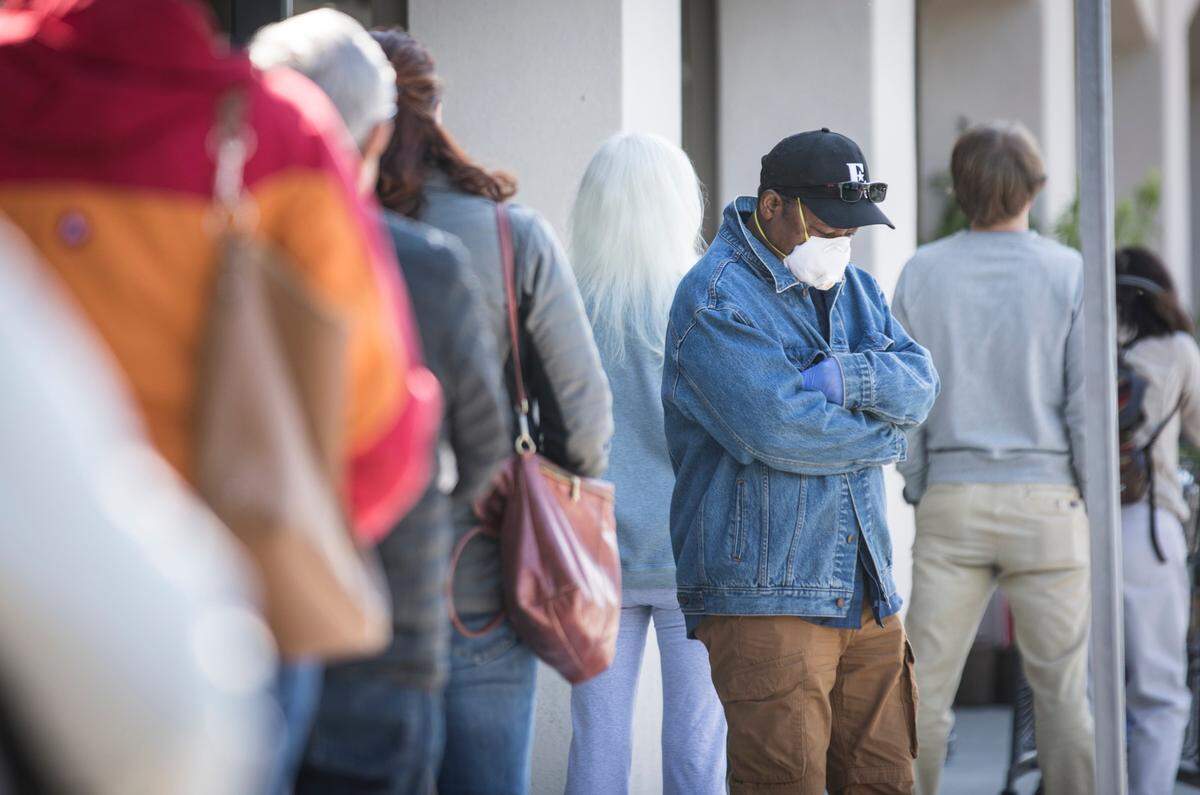
The funding comes as the state reports that more than 1 million North Carolinians have filed for unemployment benefits since mid-March, when coronavirus-related closures started going into place.
That means more than one in every five people in the entire state labor force have lost their jobs in the last six weeks.
Lockhart Taylor, the head of the state unemployment agency, said North Carolina had around 100,000 new jobless claims a month at the height of the Great Recession a decade ago. Now it has had 10 times that many, in under two months.
General Electric announced plans on Monday to eliminate a quarter of the jobs in its jet engine segment, a move that could affect hundreds of employees in North Carolina.
In a letter to its employees, GE Aviation said the company planned to lay off 25% of its 52,000 employees — around 13,000 people — because of the devastation COVID-19 has laid on the airline industry.
Meanwhile, a recent survey of Triangle farms showed roughly 35% had lost over $1,000 a week to COVID-19 shutdowns, according to the Carolina Farm Stewardship Association — huge losses for farms with $50,000 to $100,000 in sales a year.
What Phase 1 could look like
The state’s current stay-at-home order ends Friday. Cooper could then extend it further, based on coronavirus numbers, or he could move into “Phase 1” of his reopening plan.
That first phase would keep the same restrictions on bars, restaurants and mass gatherings, as well as on facilities like nursing homes. But it would reopen parks and let some currently closed businesses reopen, The News & Observer reported.
More specifics on what exactly may happen in Phase 1 will come in the next day or two, Cooper said in Monday’s news conference, adding that the administration is getting advice from business leaders on the best way to ease restrictions.
DHHS Secretary Mandy Cohen said even when restrictions are eased, residents should remain physically distant (by six feet or more) from others as much as possible, wear a face covering in public or when around others, and wash hands frequently.
As far as public activities allowed, Cohen said those considered lower risk — activities during which people are in contact with someone for less than 10 minutes at a time — will be allowed first.
Bars and restaurants are part of Phase 2, which means barring any spikes or setbacks in North Carolina’s coronavirus numbers, those businesses could reopen by the end of May — but only at limited capacity. Phase 2 won’t start until at least two or three weeks after Phase 1 begins. North Carolina’s bars and restaurants have been closed since March 17.
Hair and nail salons are included in the group of businesses, along with restaurants, that can start to reopen during Phase 2, with reduced capacity and special social distancing measures.
Gatherings at houses of worship can also resume in Phase 2, but with limited capacity.
No go on free Mako Medical state prison tests
On Monday, State Treasurer Dale Folwell pulled the plug on free COVID-19 tests he and the State Health Plan wanted to make available to all state prison and probation employees. He said in a news release that the state Department of Public Safety had “logistical and personnel concerns” that prevented the testing.
“We’re disappointed that we could not work out the details on how to go directly to the facilities outside of the fence to test,” Folwell said in a news release. “However, we fully understand the dilemma of the Division of Adult Correction and Juvenile Justice.”
Folwell had announced on April 22 that he had secured a commitment for 20,000 tests from Mako Medical Laboratories, a Raleigh-based company with a lab in Henderson. He said Monday that other companies could also have provided the tests.
State prison spokesman John Bull said DPS appreciated Folwell’s understanding of the “complexities and challenges” of onsite testing.
“We remain committed to working with the State Health Plan to quickly secure an alternative means for testing, specifically the possibility of a test that can be mailed to our employees’ homes,” he said. “This method would allow a secure and confidential means for our employees to test, and provide rapid access to testing to all 20,000-plus Adult Correction and Juvenile Justice employees without the delays of going site to site to the more than 50 Prisons and more than 300 offices throughout the state.”
But Ardis Watkins, executive director for the State Employees Association of North Carolina, was also disappointed the tests couldn’t be conducted.
She said that in phone conversations between her association, DPS and State Health Plan officials, DPS officials worried how the prisons would function if such mass testing resulted in a large percentage of prison workers testing positive.
“There was a lot of concern from the Department of Public Safety about the fact that they are already shortstaffed, and a number of positive tests would put them in an even worse situation that they deemed more perilous for the employees,” she said.
Avoiding testing wasn’t likely to remedy the situation, she said, because if the virus has gotten into more prisons staff are going to get sick.
“We pray that the department doesn’t end up in a situation where they are incredibly shortstaffed anyway, but due to illness,” she said. “Because we’re hearing reports of a lot of staff illness out there. All we ever wanted was for employees to know the situation they were working in.”
Two prisons — Neuse Correctional Institution in Goldsboro and the N.C. Correctional Institution for Women in Raleigh — have had major outbreaks in the past few weeks.
Lawsuit wants to loosen voting laws
A group of voters backed by Democratic legal groups sued North Carolina on Monday seeking to loosen rules around absentee mail-in ballots amid predictions that the coronavirus pandemic will make voting by mail a widespread practice.
The group wants the state to provide prepaid postage on all absentee ballots, change a requirement for two witnesses to sign a ballot, extend the deadline for receipt of ballots until nine days after Election Day and give voters a chance to fix signature discrepancies before election officials reject those ballots.
North Carolina’s state board of elections endorsed the first two provisions in a proposed list of election changes released in March.
The new lawsuit was filed in Wake County Superior Court with support from the Right to Vote Foundation and the National Redistricting Foundation, which is affiliated with the National Democratic Redistricting Committee led by former U.S. Attorney General Eric Holder.
President Donald Trump has come out strongly against mail-in ballots even during the pandemic. Trump, who voted by mail in Florida, said voting by mail was a “terrible thing.”
Staff writers Dan Kane, Dawn Baumgartner Vaughan, Brian Murphy, Richard Stradling, Zachary Eanes and Tammy Grubb contributed to this report.
This story was originally published May 4, 2020 at 11:18 AM.