Durham County passes 1,000 confirmed COVID-19 cases
Durham County now has more than 1,000 laboratory-confirmed cases of coronavirus, giving the county the third most cases in North Carolina, according to data released Monday by the county and N.C. Department of Health and Human Services.
The county, the sixth most populous in the state, had 1,040 cases and 39 deaths as of Monday night, according to the county’s website.
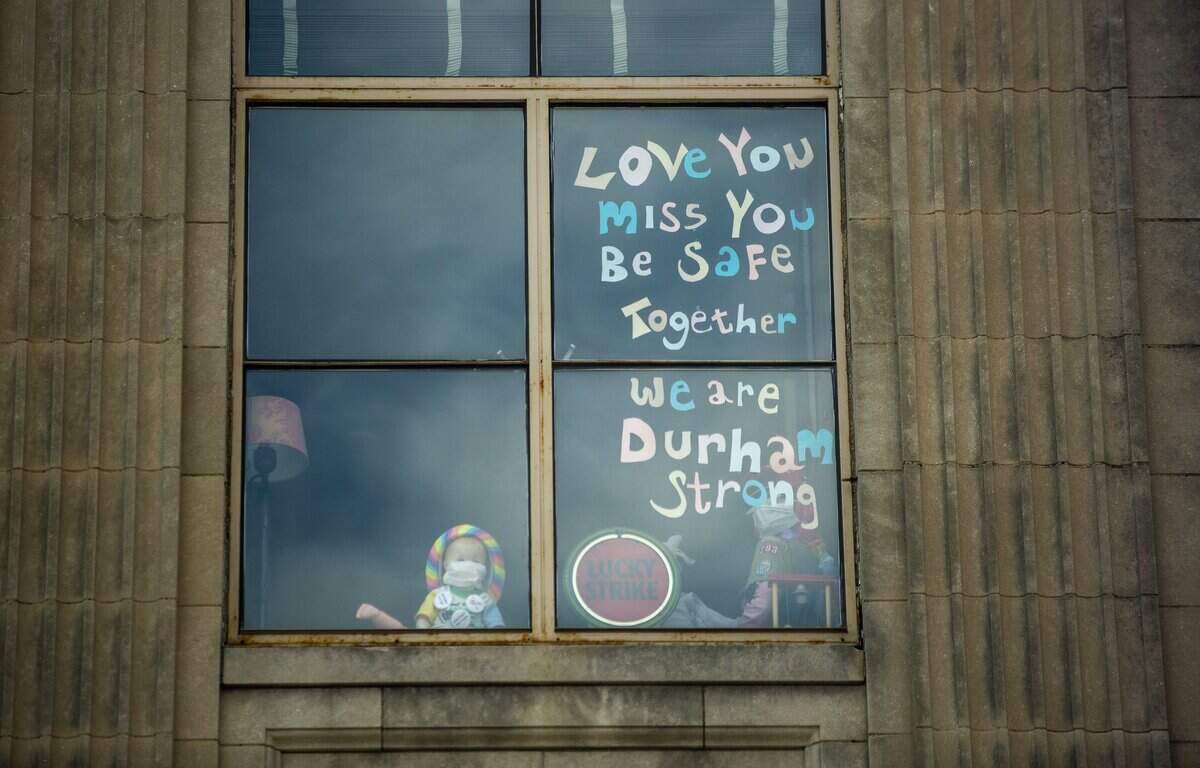
Durham has the third most reported deaths in the state, including more than Wake County, which has nearly four times as many people. It also has a stay-at-home order that is stricter than the state’s, requiring residents to wear masks in public and limiting the number of people allowed at funerals — 25, compared to the state’s 50 maximum.
The county of 317,700 people reported its first confirmed case around March 9, and its first death related to the virus April 4.
The first confirmed cases included 15 Duke University MBA students who had traveled overseas.
Soon, dozens, then hundreds of elderly residents and staff members tested positive in four nursing-home outbreaks in the county. Thirty-five of the county’s deaths are associated with long-term care facilities, according to the Durham County Department of Public Health.
Eight detention officers at the Durham County jail tested positive, and one died.
The death toll has climbed: among the dozens, a banker, a nurse’s aide, a truck driver, a restaurant bus boy, a candy-factory worker, a construction worker, according to a News & Observer review of death certificates from March through May.
The city of Durham was one of the first local governments in North Carolina to enact a stay-at-home order, which soon was implemented countywide.
The order was updated Friday and will remain in effect indefinitely. It requires people to wear masks in public and businesses to screen and take employees’ temperatures each day, among other provisions. The county cannot have stricter rules for retail businesses than the state order, which now lets most businesses open at 50% of a store’s capacity.
The city and county have also created a Recovery and Renewal Task Force which met for the first time Friday, to advise elected leaders on how and when to safely reopen the community. The task force will serve 100 days.
Demographics of Durham cases
In recent meetings, Durham County Public Health Director Rodney Jenkins has outlined how the cases have spread and the steps that officials have taken to track, trace and test for the virus.
In March, the initial cases linked to college students’ travel skewed the demographics younger, he said.
But as the virus spread, the makeup of those infected “truly started to reflect the demographics of Durham,” he said.
Last Tuesday, Jenkins told elected officials from the city, county and Durham Public Schools that 14% — roughly 1 in 7 — of the county’s confirmed coronavirus cases are connected to facilities with outbreaks.
The average of age of people who have tested positive for COVID-19 in Durham County is now 45, or 10 years older than the average age in the county overall, according to the health department website.
Nearly 40% of those infected are black and 20% are white. Nearly 14% are classified as “other,” and 24% are unknown.
By comparison, the Durham County population overall is roughly 54% white, 37% black and nearly 14% Hispanic or Latino, according to U.S. Census Bureau estimates. Hispanic people may be of any race.
Jenkins said a number of deaths among black community members in nursing and rehabilitation homes led the county to work with Duke University and create a strike force to help those facilities adopt best practices to slow the spread.
Cases among Latinos
Jenkins said he’s concerned about “a strong uptick” in cases in the Latino population. County officials are working with Duke and El Centro Hispano to promote more awareness about COVID-19 and precautions people should take, he said.
“To understand that COVID-19 is nothing to run away or be ashamed of,” Jenkins said. “We want them to seek care.”
Pilar Rocha-Goldberg, president and chief executive officer of advocacy organization El Centro Hispano, said some community members have reported a need for more personal protective equipment. El Centro is exploring options for getting equipment to those employers, employees and others, she said.
They are also exploring ways to emphasize the importance of social distancing and using the equipment properly, she said.
“It doesn’t matter if it’s my family member or my close friend, because I know them, I can trust them,” Rocha-Goldberg said. “It is not about a trust issue. It is more about the way the virus gets to you.”
How did the virus spread
As of May 12 in Durham County, 26 people were hospitalized and 451 people with confirmed cases were considered recovered. Current information is not available, as of May 18.
But out of the 897 cases reported May 12:
▪ 13% were associated with travel.
▪ 70% had close contact with a confirmed case.
▪ 17% were associated with community spread. About 20% of community-spread cases had something to do with health-care workers or work in a health-care facility.
▪ 1% remained under investigation.
Testing
The state is monitoring seven benchmarks as it reopens North Carolina in planned phases. They include seeing declines over time in emergency-room visits, hospitalizations and positive tests as a percentage of tests taken.
To meet a state goal of testing 5% of the population in 30 days, Durham County would need to aim for about 540 tests per day, Jenkins said.
Durham County has a daily testing capacity of more than 1,700 due to Duke University Medical Center (up to 1,500 per day), Lincoln Community Health Center (up to 60 per day), and a drive-through at Walgreens on Guess Road (up to 160 per day).
At the end of the month, Durham County will be able to do up 200 in-house tests per day. Jenkins said officials are working with Duke and others to better track and report the number of tests being done.
The News & Observer and The Herald-Sun requested the number of tests being done daily now. Health Department spokesperson Alecia Smith wrote the information isn’t available.
“We will continue to update you all via our daily news releases as new information becomes available to share,” Smith wrote.
Contact tracing
The county has about 20 staff members working to identify and monitor individuals exposed to COVID-19. In addition, 13 Duke physician assistant students have been trained and are helping.
Since March 9, the team has made “well over 1,600 contacts,” Jenkins said.
The county has also secured 25 additional tracers through a state partnership with Community Care of North Carolina. Five of the contact tracers speak Spanish.
Durham County has been providing COVID-19 information, including cases broken down by ZIP codes, through a data hub. County officials are working with Duke to create a dashboard similar to the state’s.
Staff writers Lynn Bonner and Mark Schultz contributed to this story.
This story was originally published May 18, 2020 at 1:09 PM.