Nanowire filter in masks could zap germs dead, study says. Can it work for COVID-19?
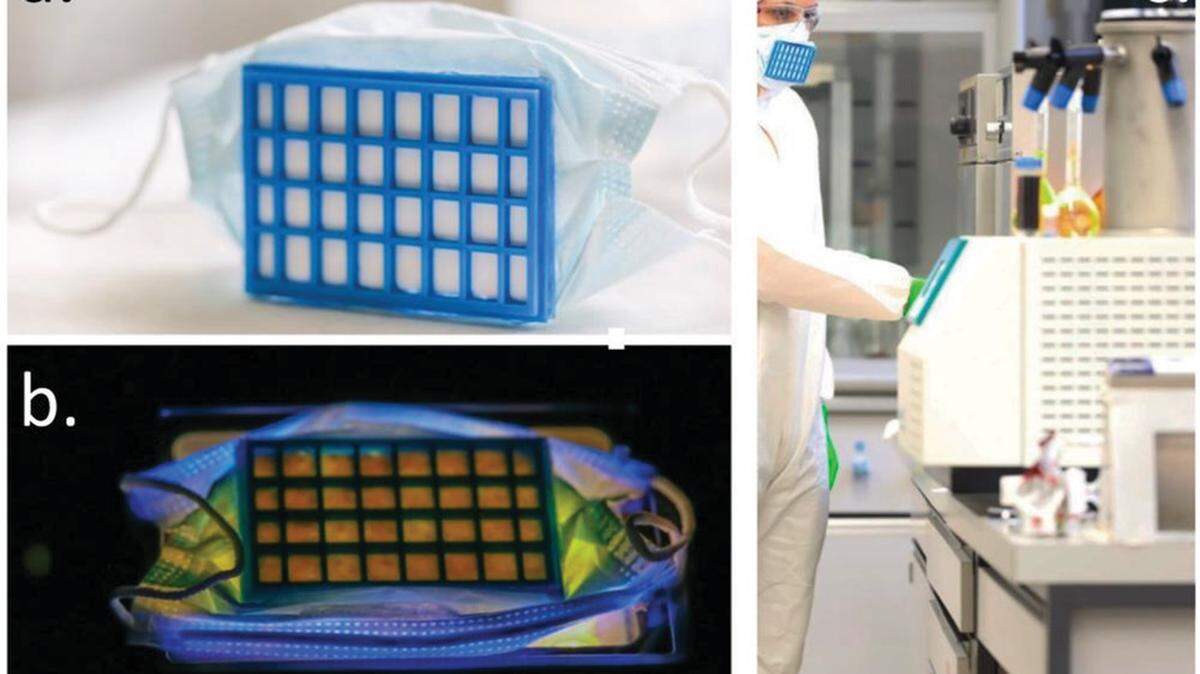
Wearing a face mask to avoid spreading the novel coronavirus can make your covering soggy after hours of use, but what if a filter in the material could capture that moisture and use it to your benefit?
Researchers from Switzerland set out to do just that with their titanium oxide nanowire mask. The new prototype consists of a “filter paper” embedded in a 3D-printed plastic frame that you attach to a surgical mask.
Instead of just trapping viruses and bacteria like commonly used face coverings, the masks could destroy pathogens once sterilized with ultraviolet light.
What’s more, they can be reused more than 1,000 times, according to a news release.
Although the team did not test the filter’s ability to kill SARS-CoV-2 specifically, they said they are confident the technology could apply to a wide range of pathogens including the one driving the pandemic. The design could not only reduce waste, but also protect people from less common modes of virus transmission.
“In a hospital setting, these masks are placed in special bins and handled appropriately,” László Forró, head of the Swiss Federal Institute of Technology Lausanne’s Laboratory of Physics of Complex Matter in Switzerland, said in the release. “However, their use in the wider world — where they are tossed into open waste bins and even left on the street — can turn them into new sources of contamination.”
“Since our filter is exceptionally good at absorbing moisture, it can trap droplets that carry viruses and bacteria,” Forró said. “This creates a favorable environment for the oxidation process, which is triggered by light.”
A study of the prototype was published in August in the journal Advanced Functional Materials.
How does the nanowire mask work?
The mask’s material is made of titanium oxide nanowires. When exposed to UV radiation, a chemical reaction takes place that allows the nanowire fibers to absorb and convert moisture that potentially contains virus particles from the mask into an oxidizing agent capable of killing germs.
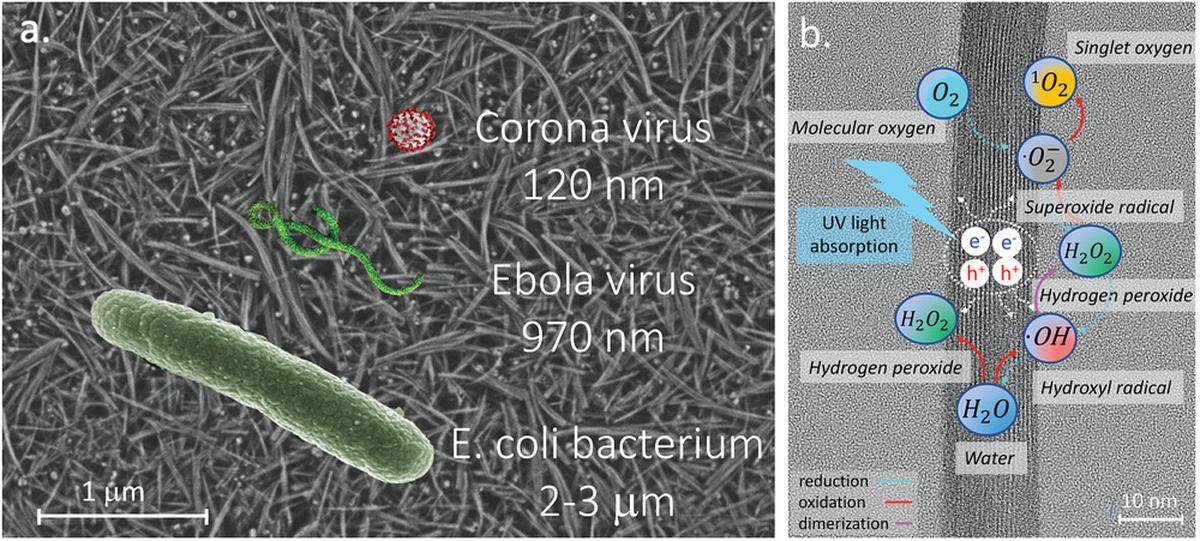
In the lab, the researchers experimented with E. coli, a type of bacteria that lives in intestines and can cause diarrhea and abdominal pain. “In a matter of seconds” the masks were able to kill the bacteria after UV exposure.
“Based on these results, the researchers assert — although this remains to be demonstrated experimentally — that the process would be equally successful on a wide range of viruses, including SARS-CoV-2,” the release said.
Researchers say their equipment alone could produce up to 80,000 nanowire masks per month. A Swiss startup called Swoxid that is tied to the same lab is preparing to take the product to the market, according to the researchers.
“The membranes could also be used in air treatment applications such as ventilation and air conditioning systems as well as in personal protective equipment,” Endre Horváth, study lead author and co-founder of Swoxid, said in the release.
This story was originally published August 21, 2020 at 3:16 PM with the headline "Nanowire filter in masks could zap germs dead, study says. Can it work for COVID-19?."