North Carolina has just blown past 200,000 coronavirus cases. How did we get here?
Nearly seven months into quarantines, face masks, flatten-the-curve efforts and virtual learning, North Carolina is marking a grim milestone: surpassing 200,000 confirmed cases of the coronavirus.
The state blew past the number Friday with the addition of new testing data, which caused a spike of more than 6,000 cases from the day before. The sudden surge is attributed to health officials now reporting the results of antigen tests that backdate to May 20 — based on updated guidelines from the U.S. Centers for Disease Control and Prevention.
It took about four and a half months for North Carolina to reach 100,000 cases but just over two months to reach 200,000, highlighting a rough summer with record-breaking numbers of cases, hospitalizations and deaths.
We took a month-by-month look at how we got here — from inadequate testing early on to the virus’ disproportionate impact on Black and Latino residents to a glimmer of hope as the percentage of positive tests trends downward.
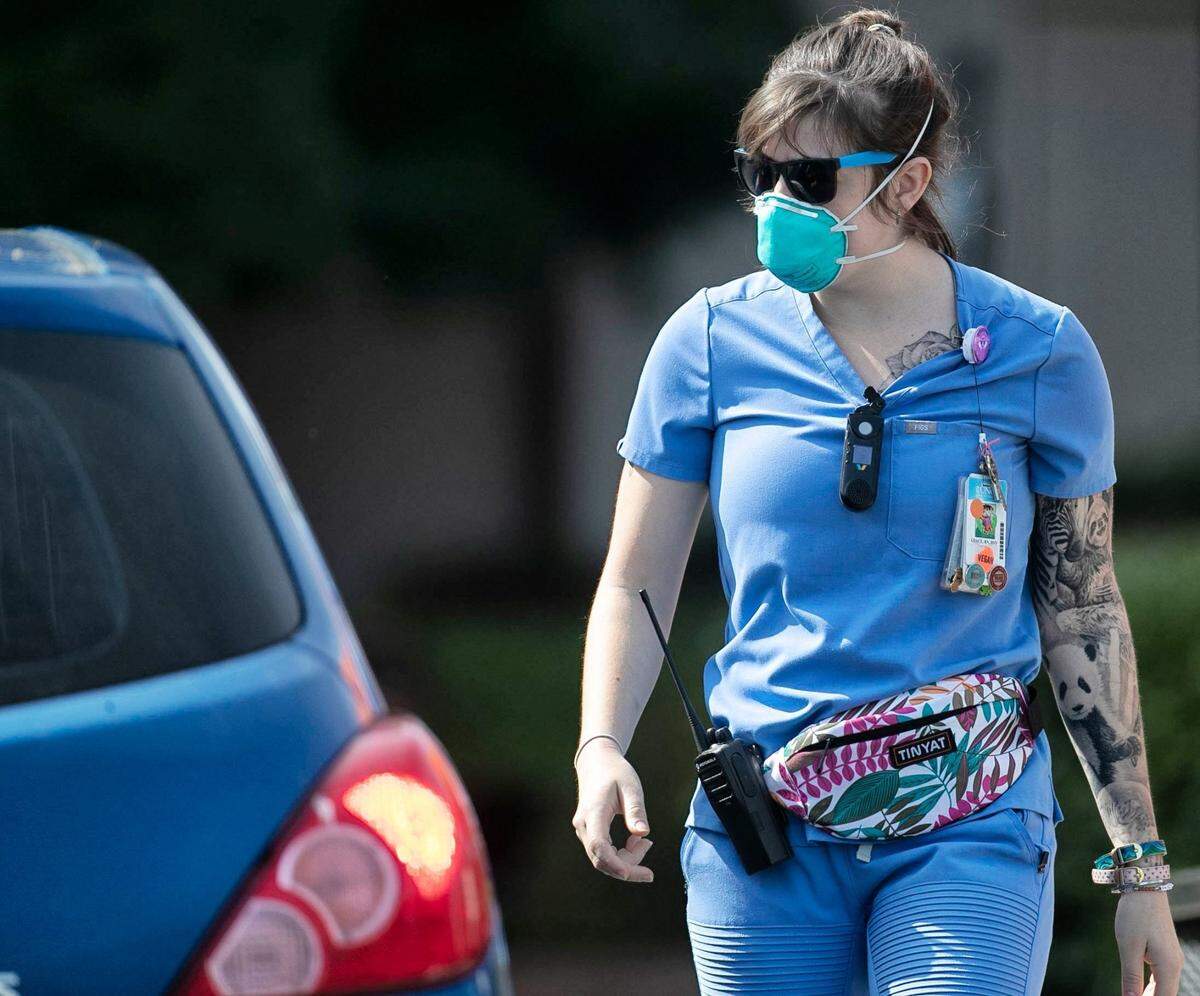
March
Shutdowns, online school, concerns about testing
North Carolina reported its first case of the coronavirus on March 3, more than a month after the first U.S. case was diagnosed in Washington state. At the time, North Carolina health officials considered it “an isolated case.”
But the number quickly ballooned, prompting Gov. Roy Cooper to tighten restrictions intended to quell the spread of the virus. Gyms, movie theaters and salons were ordered to close, gatherings were limited and restaurant dining rooms went dark.
Students in North Carolina’s public schools transitioned to online learning after Cooper shut down schools, sending families into a tailspin as parents juggled jobs and their children’s education.
The state was averaging 48 new cases a day by the end of March, and Cooper subsequently issued a statewide stay-at-home order that went into effect March 30 and shuttered all non-essential businesses.
There were concerns early on about the state not having enough coronavirus tests. Sen. Thom Tillis and Reps. David Price and Richard Hudson said in a March 11 letter to Vice President Mike Pence that “North Carolina’s Department of Health and Human Services has made us aware that supplies for test kits are not yet adequate for the expected demand.”
April
Shutdowns, racial disparities
Daily cases and hospitalizations lingered at a contained rate as pre-pandemic life ground to a halt in early April.
Still, the cumulative number of coronavirus cases climbed past 10,000, and the death toll reached 372, according to data compiled by The News & Observer.
The numbers also began to reflect the virus’ disproportionate impact on Black and Latino residents in North Carolina.
Statewide, Black residents accounted for about 39% of North Carolina’s coronavirus cases on April 10, but they make up only 22% of the state’s population. More recent data shows Black people now account for 31% of COVID-19 deaths.
White people make up 60% of the deaths but represent 70% of the population.
Similarly unsettling data shows the same story playing out across North Carolina’s Latino communities. Latinos accounted for roughly 44% of the state’s coronavirus cases in mid-June, but they make up 9.3% of the population.
Dr. Mandy Cohen, N.C. secretary of health and human services, explained it in two words: “Structural racism.”
“Health disparities in our country are historic and persistent, and when we have a crisis like this, I think it shines a light on health disparities that, frankly, I’ve been working on for 3 1/2 years,” Cohen told The N&O.
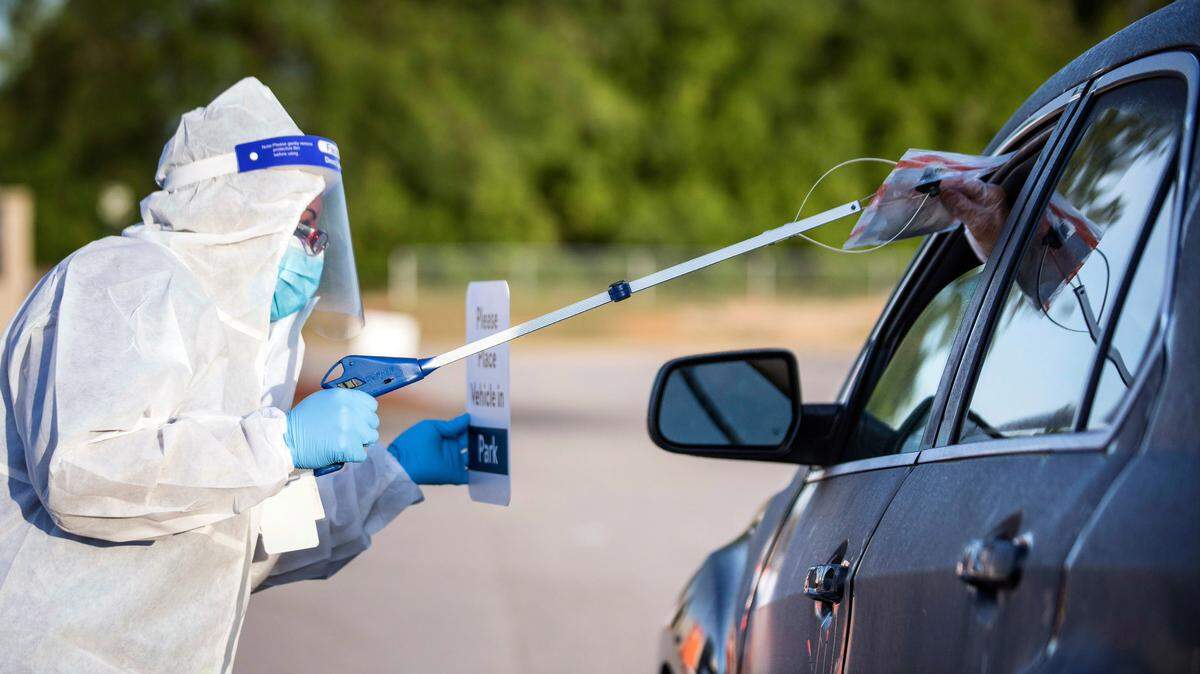
May
More tests, more reported cases
Bolstered by data indicating North Carolina had, to some extent, successfully flattened the curve, Cooper began peeling back the first layer of restrictions in early May.
Daily hospitalizations hovered at 638 in May, up from 546 in April. The state’s rate of positive test results was holding steady at 8%, according to data compiled by The N&O.
Health officials attributed the state’s rising case numbers — which reached almost 28,000 in May — partly to an increase in testing, which Cohen said had doubled in a matter of weeks.
Data show the state tested nearly 400,000 people in May, up from 146,000 in April.
North Carolina also reported its first case of a child with a mysterious illness associated with COVID-19 known as multisystem inflammatory syndrome in children, or MIS-C. The syndrome is rare but can be serious and sometimes fatal in children and teenagers.
The state has reported a total of 40 MIS-C cases since May — including a record high of seven cases the week of Sept. 12, according to the N.C. Department of Health and Human Services.
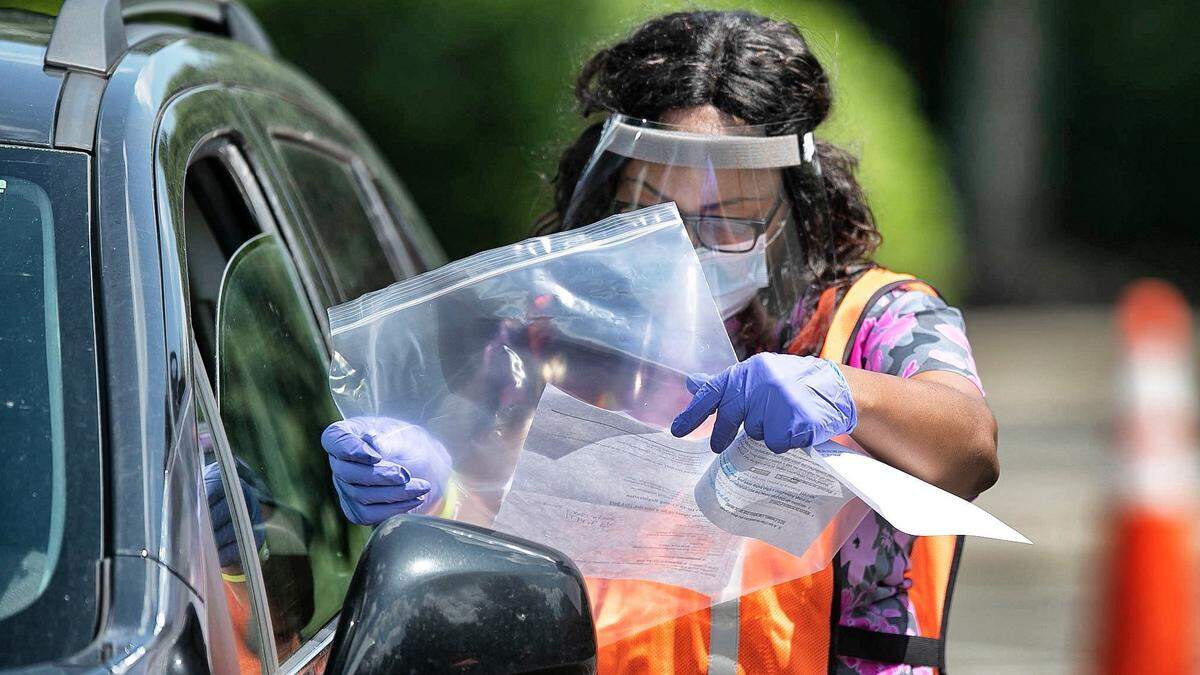
June
Looser restrictions, spike in cases
Cooper lifted the stay-at-home order, and North Carolina moved into a “modest Phase 2” of reopening.
Case numbers spiked almost immediately, and the state’s positive coronavirus test rate hovering near 10% was among the highest in the country. Data show average new cases nearly tripled from May, daily hospitalizations climbed past 900 and deaths from the coronavirus broke 1,300.
Many of the state’s cases were reported in prisons, nursing homes, long-term care facilities and among workers at meatpacking plants or farms.
Cohen attributed the spike in part to an increase in testing. But she also said community spread played a role.
“That timing is very much linked to the last two to three weeks,” Cohen said during a news conference at the time. “It’s very much linked to when we started reopening.”
Bars weren’t allowed to open, but that didn’t stop some in Raleigh’s Glenwood South nightlife district from bringing in customers. North Carolina’s Alcohol Law Enforcement agents shut seven of the bars down for violating Cooper’s Phase Two executive order.
In an effort to curb community spread, Cooper issued a statewide mask mandate on June 26.
July
‘Uncontrolled spread’
Widespread testing in North Carolina was an uphill battle, and a testing supply shortage in early July didn’t help.
But the state’s testing levels started to more closely align with the national average as officials eased access to tests. By mid-July, The Charlotte Observer reported an increase in local COVID-19 cases was “tracking closely with the increased number of tests administered.”
Still, the data was worrying.
North Carolina passed its first major milestone of 100,000 cases on July 20, and a map created by public health and crisis experts showed the state’s numbers were indicative of an “uncontrolled spread.”
Hospitalizations were on the rise, hitting a record high of more than 1,200 at the end of July, although the number of seriously ill coronavirus patients had remained steady.
“We’re seeing more patients in the hospital but less of them needing that highest level of severe care that we would see in hospitals,” Cohen said at the time. “That is a good thing.”
August
Deaths peak, college students return
Some of the most worrisome metrics were dropping off, including the percentage of positive tests, the daily average new cases and the number of hospitalizations.
But the number of deaths didn’t reach its highest point until August.
State health officials recorded 789 coronavirus-related deaths that month, up from 560 in July.
Most of the state’s K-12 public schools opted to start the school year remotely, pitting parents struggling to make it work at home against teachers fearful of reopening too soon.
An influx of college students, meanwhile, moved back to campus — creating what UNC-Chapel Hill’s student newspaper would dub a “clusterf**k” after just one week of classes.
State health officials reported more than 2,000 new coronavirus cases in a single day as the number of campus clusters ballooned to 11 at UNC-Chapel Hill and 24 at N.C. State University. Both schools opted within two weeks of classes starting to switch to remote learning and ordered students to move out of their dorms.
The state’s positive test rate, meanwhile, lingered at 8%.
North Carolina came within 1% of its goal earlier in the month with a positivity rate of 6%, resulting in a monthly average of 6.7%.
September
Rise in cases among young people
The “crisis moment” that forced institutions such as UNC-Chapel Hill, N.C. State and East Carolina University to reassess reopening hasn’t reached other schools in the 17-campus university system, which have remained open with some in-person instruction.
It also hasn’t impacted the number of hospitalizations or reversed a decline in the number of new cases statewide.
But the number of coronavirus cases among young people in North Carolina has risen considerably, with DHHS data showing cases in people ages 18 to 24 have nearly doubled from 9% early in the pandemic to 16% this month.
A more promising metric has been the percentage of positive test results, which was 5.1% as of Monday, the latest day for which data is available. Daily case counts fluctuate between 800 and 1,500, and hospitalizations are hovering around 900, data show.
The numbers appear — for the time being — to be holding strong, prompting Cooper to announce last week that elementary schools could reopen.
“We’re able to open this option because most North Carolinians have doubled down on our safety and prevention measures and stabilized our numbers,” he said in making the announcement.
For more data go to our COVID-19 tracking page.
This story was originally published September 25, 2020 at 11:43 AM.