Before she died, NC teacher said a student gave her COVID-19. What really happened?
It was April 20, 1999, and Julie Richardson was cradling her infant daughter, Leanna, in her arms when she heard the horrible news that a pair of teenage gunmen had shown up at Columbine High School in Colorado and unleashed a hail of bullets, leaving 13 people dead and 24 others wounded.
In that moment, she realized she needed to leave her job in accounting. She realized — not just for her daughter, but for the sake of other children as well — that she needed to become a teacher.
“She felt in her heart,” says Leanna Richardson, now 22, “that she could impact students and prevent more (tragedies) like that happening.”
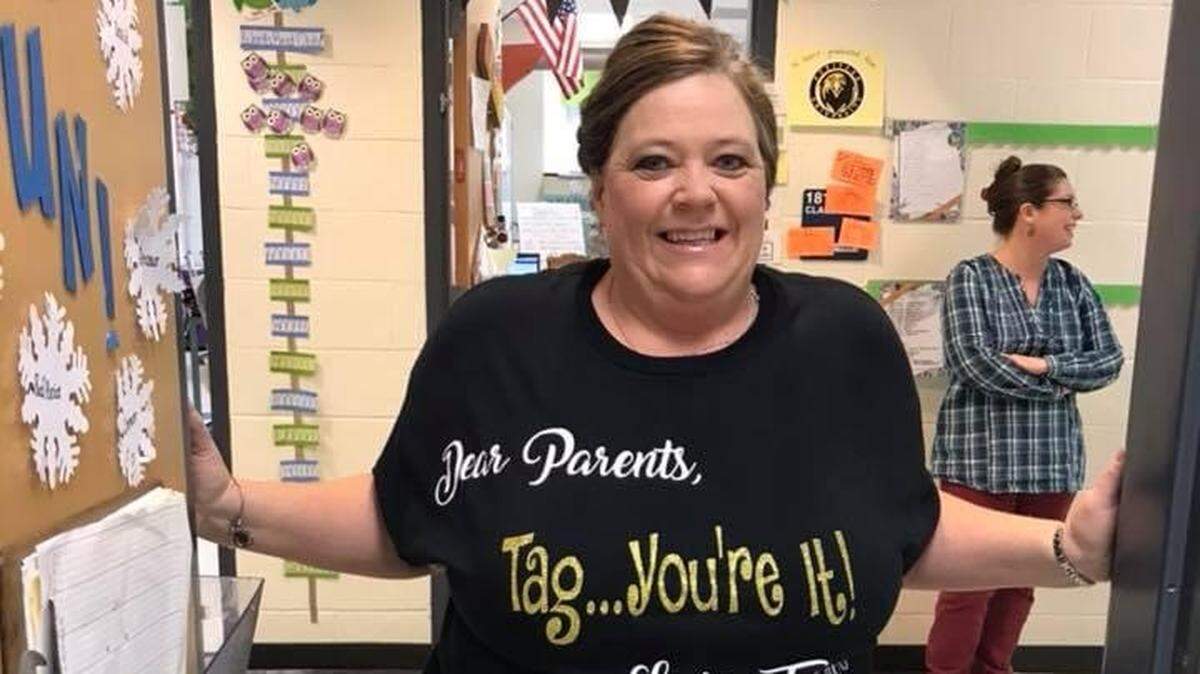
Over a career that spanned more than 17 years, Julie Davis (who changed her name after remarrying in 2008) would touch the lives of hundreds of third- and fourth-graders, first at Page Street Elementary School in the Montgomery County town of Troy, N.C., and since 2019 at Norwood Elementary School in Stanly County.
She died early Sunday morning, after a battle against COVID-19 that lasted less than 10 days, at the age of 49.
Based on social media posts and comments from current and former colleagues, students and parents of students, and in interviews with family members, as well as the official statement from Stanly County Schools, there is a clear consensus: Davis was extraordinarily passionate about teaching and tirelessly dedicated to her students.
What there is not agreement on, meanwhile, is how she contracted the virus in the first place.
The school district and the county health department are adamant that Davis didn’t get it from work, and have left no room for speculation. So why is it that her brother doesn’t believe them?
Above and beyond as a teacher
Julie Andrews (whose name, yes, was inspired by “The Sound of Music”) was born on Dec. 11, 1970, in Mount Gilead, to a father who was a farmer and a mother who was a home health aide. She grew up in that tiny town about 50 miles east of Charlotte with three siblings, including older brother Perry, younger sister Laura, and Stan, the baby, who was six years younger than Julie.
Her mother, in particular, set an example that Julie would be keen to follow. “Mama always doing something for somebody,” says Stan, now 42.
“We grew up poor,” he says, “but we always helped anybody that needed it. I mean, one time one of our distant family members got burned out of their house, and Mama decided we needed to furnish their whole house with furniture out of ours. And Julie was just like Mama.”
After graduating from West Montgomery High School in 1989, Julie went on to get a degree in accounting and business, eventually settling into a job in the accounting office at Standard Packaging & Printing, right in her hometown. She married Phillip Richardson in 1994, then gave birth to Leanna in 1998. And then the Columbine massacre happened and changed the course of her life.
Fueled by her epiphany, Julie went on to earn a bachelor’s degree in elementary education from Pfeiffer University and a master’s degree in English from UNC-Pembroke. As she worked her way through school, she and Phillip also gave birth to a son, Nathan, before the couple divorced.
Julie was hired in 2003 at Page Street Elementary, and Leanna attended the Montgomery County school when she was old enough.
Last summer, after 16 years in Troy, she brought that caring spirit with her when she came over to Norwood Elementary to teach third grade.
“Everyone loved her,” Leanna says. “Everyone loved her. People would come back years and years later and talk about how they never forgot her. And if you were a child in need, she would do everything she could to help. She would donate things, she would show up for extracurricular activities to support her kids — she would do anything she could to nourish every child she met.”
And even after the pandemic upended school in March, she stayed focused on her kids. And even though she was anxious about returning in August — when Stanly County Schools opted to reopen under a plan that saw elementary students back full-time — she was resolute.
“She was nervous,” says her brother, Stan Andrews. “But it was her job, and she was gonna do it.”
A careful approach to COVID-19
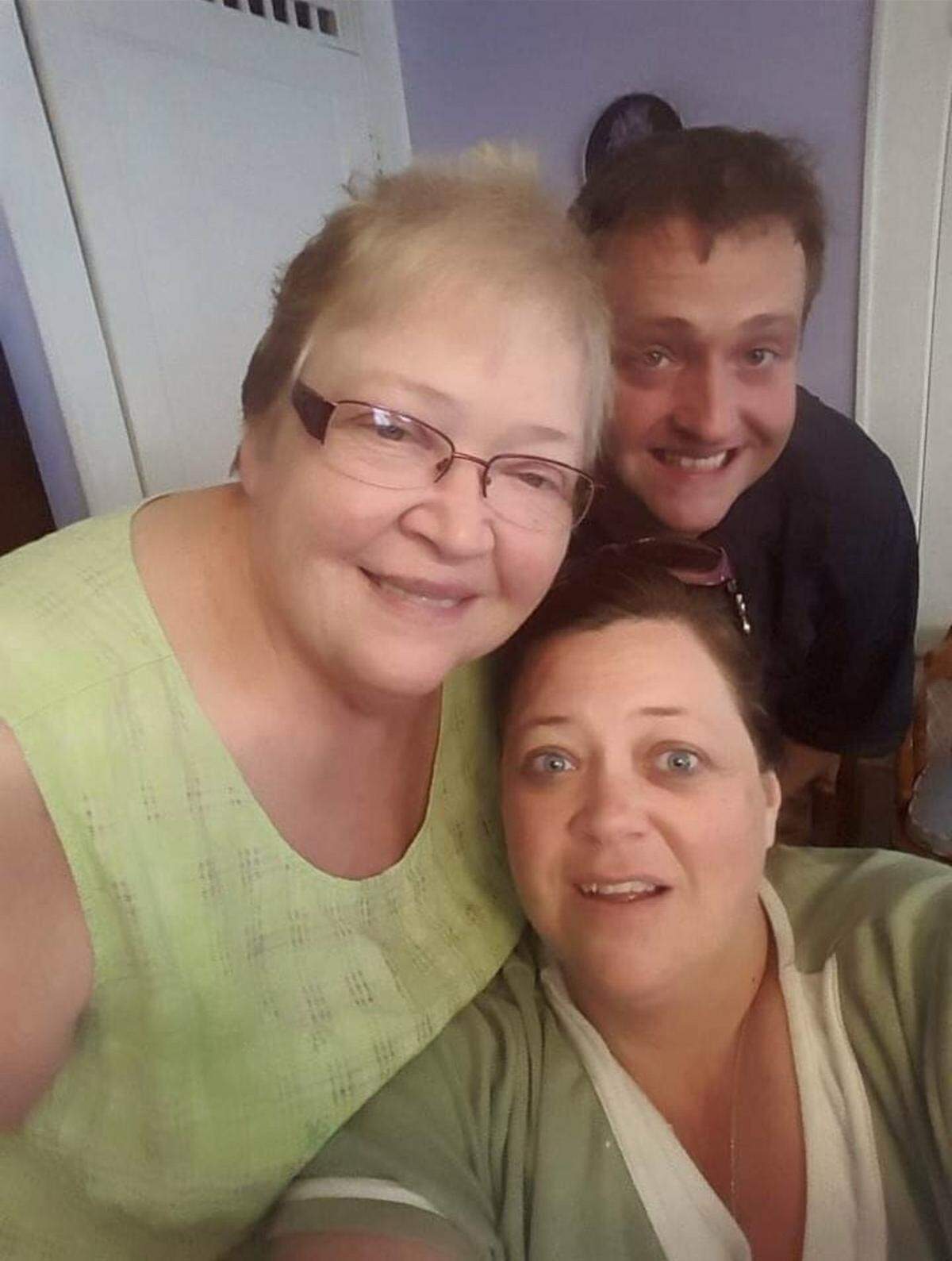
Davis had been exceedingly vigilant, her family says, about keeping herself safe during the pandemic.
Her husband, Donnie Davis (whom she married in 2008), works in a shop as a transportation technician for Moore County Schools, which has a hybrid of in-person and remote learning, and is running buses four days a week.
Leanna Richardson — who lives just two miles from them, with her 2-year-old son, Eli — says her mother wore a mask whenever she was out of the house.
That said, Andrews says his sister didn’t actually go very many places, except to Walmart to pick up groceries (curbside only), to the pharmacy to pick up medicines (drive-through only), and to visit their mother, Ann, and father, Grant, (now divorced) at their respective homes in Mount Gilead. He says part of the reason she was so careful is because both parents are 74 and in deteriorating health, and she was afraid of putting them at risk.
So the start of school would be a big change, with some elevated risks, Davis thought.
But she put her faith in the system. And as Stanly County neared the first day of school, Aug. 17, interim superintendent Vicki Calvert told The Stanly News & Press that while preparing for the upcoming year is like “standing on shifting sand” with all the many guidelines and regulations, “we’re making every effort to prepare for every scenario.”
It took just a couple of weeks for the first scenario to present itself. On Sept. 3, the district announced that a student in another grade — not third, which is what Davis taught — had begun quarantining “due to a close contact in the community” with a COVID-19-positive individual, according to an email Calvert sent to the Observer on Monday evening.
The email said the student later developed symptoms and tested positive, becoming Norwood Elementary’s first COVID-19 case involving an employee or student. That student did not return to school before testing negative.
“Mrs. Davis and this particular student never had close contact at school with each other,” Calvert’s email states. “In fact, they were in separate buildings.”
Three weeks after that student began quarantining, on the evening of Thursday, Sept. 24, Julie Davis started feeling sick.
How the virus overtook her
The following is her family’s account of Davis’s decline:
On Friday morning, she woke up with a splitting headache, so she went to the doctor and got tested.
On Saturday, she started vomiting.
On Sunday evening, Sept. 27, she texted Andrews and told him she had gotten the results of her COVID-19 test, and that it was positive.
By Monday, she hadn’t showered in days because she just couldn’t drag herself out of bed to do so, and she was at the point where anytime she tried to eat or drink anything — even just water — she wasn’t able to hold it down.
On Tuesday, paramedics were called to the house, but they couldn’t get an IV started because she was so dehydrated. (Donnie Davis, her husband, and her son Nathan both got tested that day. The results came back negative. They continue to quarantine themselves. Donnie Davis declined through a family friend to be interviewed.)
On Wednesday morning, Davis’s fever spiked, and she was taken to FirstHealth Moore Regional Hospital in Pinehurst, where doctors were able to get her fever down, get her vomiting under control, get fluids into her, and get her on two different kinds of medicines to help treat her COVID-19.
“We felt like, ‘It’s OK, you’ve got this, you’ll get through it. We thought she was gonna make it,” says her daughter, Leanna, weeping softly over the phone.
(Later that same day, Stanly County Schools announced it was quarantining all third-grade students at Norwood through Oct. 9.)
But on Wednesday night, Davis started coughing, and by Thursday, Oct. 1, she was on a BiPAP machine because she was beginning to have trouble breathing normally.
“I texted with her every day she was in the hospital,” Andrews says, “though ... she wasn’t really able to do a lot of texting, but she would say, ‘I love you,’ or something like that. And I would text her and tell her I was praying for her and thinking about her and try to give her some encouraging words.
“Then on Saturday, I only got a heart emoji from her. And something just told me that that was all she was able to do,” he says, his voice breaking.
He says their sister, Laura Britt, turned 46 on Saturday. “Julie held on,” Andrews says, as he lets out a long, deep sigh, “because she didn’t want it to be on Laura’s birthday. I just know it.”
Around 1 a.m. on Sunday, Davis was put on a ventilator and doctors began trying to resuscitate her.
Two hours later, the beloved third-grade teacher — who her brother says was overweight but otherwise had no known underlying conditions — was gone.
So where did Julie Davis get it?
Initially, some news outlets stated that Davis had contracted the virus from a student who had tested positive. Stanly County Schools and the county health department worked swiftly to make it clear that that was not their assertion.
“There has been misinformation reported in the timeline and contact tracing data concerning the details involving the death of Mrs. Julie Davis,” Calvert’s email to the Observer states. (The Observer was not one of the outlets that reported she had got COVID-19 from the student.)
“To be clear, there is no information from the local health department indicating Mrs. Davis contracted the COVID-19 virus from any staff member or student on campus.”
When asked how the health department came to that conclusion, Stanly County Health and Human Services director David Jenkins said: “Data gathered from case investigation, contact tracing, and COVID testing is how we make our best determinations on when and where someone contracted this virus.”
When then asked where it was that she did contract the virus, Jenkins referred the Observer to the health department in Montgomery County, “since she was a resident of that county.”
Montgomery County Health director Mary Perez tells the Observer by email that an investigation was conducted with Davis on Sept. 28, following her positive test result. Perez said Davis “denied contact with anyone who was confirmed positive for COVID-19 or symptomatic.”
But while it officially remains a mystery — and although no other students or employees at Norwood are known to have tested positive since — Stan Andrews feels that how his sister got sick is abundantly clear.
“I said to her, ‘Julie, where did you get it?’” he says. “She said, ‘I got it at school. There was a student that had it.’ ...”
He says she told him the student was not in her class, but he doesn’t think that matters. “The children are around each other, they spread it. ... I mean third-graders, you can imagine how touchy and everything they are.”
Andrews says he firmly believes his sister would still be alive if her school hadn’t opened, and that “she died in vain.”
There’s another way to look at it, too, though.
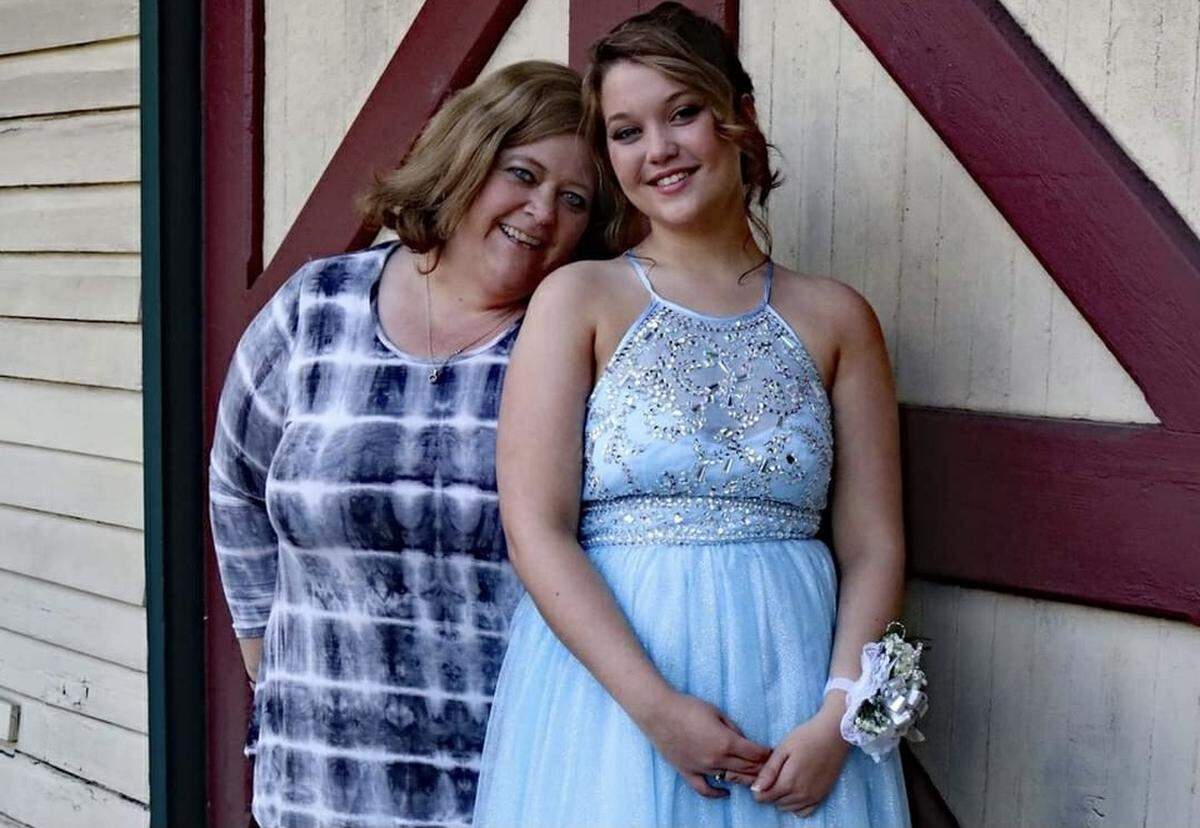
And it’s safe to look at it this way no matter how you believe she came to fall ill: The bottom line, says Leanna, is that her mom is a hero.
“She was determined, when she went back this year,” says her daughter, as she fights back tears again, “that she was gonna do all she could to keep the children in her classroom safe.”
This story was originally published October 6, 2020 at 3:23 PM with the headline "Before she died, NC teacher said a student gave her COVID-19. What really happened?."