
NC expects supply of COVID-19 vaccine to surge by early April. Here’s the plan for it.
North Carolina health officials expect the state to receive as many as 400,000 first doses of vaccine per week by the beginning of April, a jump of 175,000 doses made possible in large part by the start of production of the Johnson & Johnson one-shot vaccine.
Kody Kinsley, a DHHS deputy secretary who is leading the department’s COVID-19 operations, said the state’s weekly allocation of Moderna and Pfizer-BioNTech doses will likely gradually increase throughout March. Then, at the end of this month or beginning of April, North Carolina could start to receive as many as 160,000 doses of the Johnson & Johnson vaccine each week.
North Carolina is well situated for a supply increase, Kinsley said, noting that state officials divvied up 223,120 first doses among 529 providers this week. Those providers have a total reported capacity of about 560,000 first doses per week, more than double the current allocation.
Beyond that, there are more than 570 additional providers who have signed on with DHHS to administer the vaccine but are not yet receiving an allocation because of the limited supply.
“We want our capacity to be far ahead of our supply,” Kinsley said. “So that way, as it ramps up over the coming weeks and months, we’ll be ready.”
DHHS may also soon shift the way it allocates vaccine doses, Kinsley said, with the main factor shifting from a county’s population to the number of adults who have not yet received the COVID-19 vaccine. The change could come this month, Kinsley said, and would allow the state to better account for people who are receiving vaccine from federal programs or by crossing county lines.
County officials, Kinsley said, “want their fair share because they want their county to get vaccinated at the fastest possible rate, as equitably as possible, which is our goal. And so looking at all the sources to understand, ‘What’s the number of unvaccinated people?’ is where our eye is turning as we think about how we continue to improve our allocation process.”
Offering the vaccine
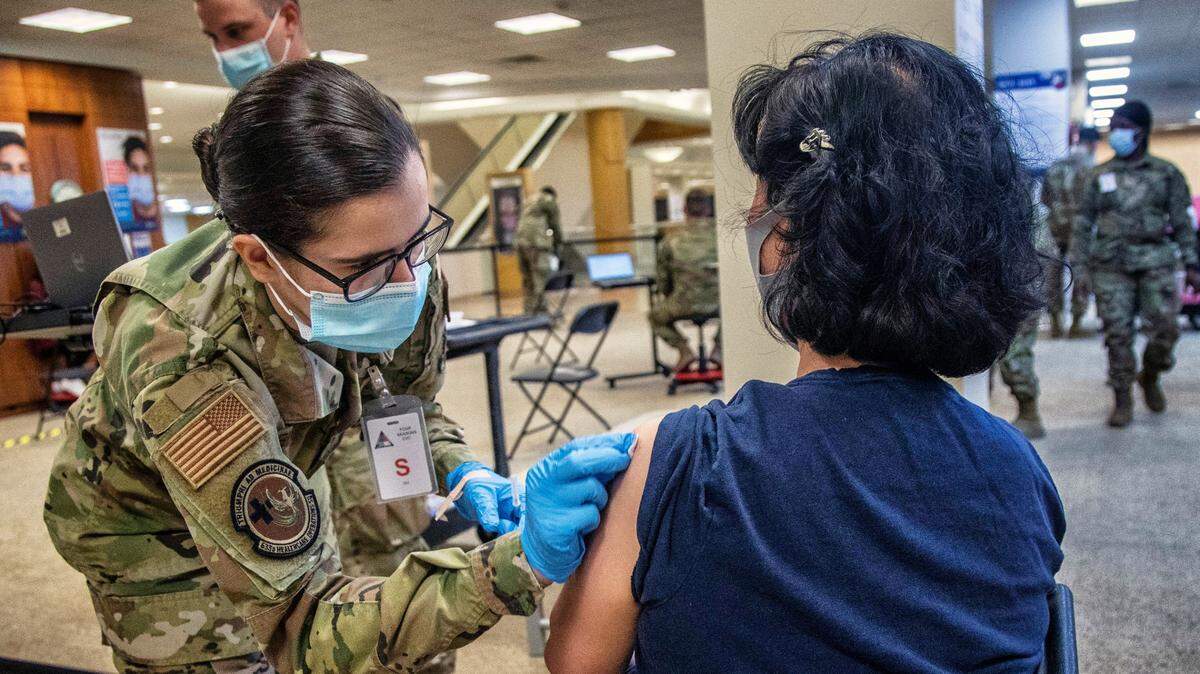
DHHS authorizes new vaccine providers when officials notice that the number of doses they are sending to a county is getting close to the total capacity of current providers. At that point, officials will start to look for new places to offer the shots. That often means turning toward existing health care infrastructure, be it a pharmacy, a federally qualified health clinic or a physician’s office.
Moving forward, Kinsley said, the state could look to health systems’ mobile operations to offer the vaccine in places with limited health care infrastructure. Another option is to authorize companies that already offer COVID-19 tests to also offer the COVID-19 vaccine, a strategy DHHS is piloting with Optum in Durham.
While large providers made sense for the initial vaccination because they are more likely to serve the whole community and to have the freezers necessary to store the Pfizer and Moderna vaccines, the Johnson & Johnson vaccine’s ability to be stored in a refrigerator offers the possibility of wider access.
Julie Swann, the head of N.C. State’s Fitts Department of Environmental and Systems Engineering, said, “Eventually, I think it would be great if it becomes part of our everyday health care delivery process and is in pharmacies’ offices and physicians’ offices and community clinics around the state.”
Wake County Public Health started testing such a program last Friday, largely using Johnson & Johnson doses. The county distributed 4,200 J&J and 250 Moderna doses to 30 providers in the community, including primary care offices, pharmacies and urgent care locations.
“Once we move into Groups 4 and 5, it’s really going to be all hands on deck, and this is just sort of getting our beak wet,” Jason Wittes, Wake County’s pharmacy director, told The News & Observer.
When will there be enough shots?
Once supply increases, Swann said, officials could face challenges with ensuring equitable access to the vaccine and with convincing those who remain skeptical to take the shot, something scientists have pointed to as an important step in controlling the continued mutation of the coronavirus that causes COVID-19.
“As you bring a group up to 50% vaccination, maybe, now you need to vaccinate the people who are not the ones fighting to get an appointment for hours and hours and hours,” Swann said.
Kinsley believes North Carolina will be able to sway those who may be less eager to take the vaccine by expanding the number of places where the vaccine is available and by putting it in the hands of providers they trust.
A vaccine strategy released by DHHS last Friday says the state will look to long-term care pharmacies, community health centers, rural health centers and “some primary care practices,” while also prioritizing community vaccination events that target underserved groups.
“The key issue that folks face for getting vaccinated is really access points. You need to make this easy for people,” Kinsley said. He added that where some are more comfortable with mass vaccination events at a sporting arena, others may only take the shot from their own doctor or in another manner.
So when does DHHS expect vaccines to swing from a problem where there is not enough supply to one where they are trying to find people to take the shots?
DHHS officials estimate there are as many as 4.1 million people in Group 4, the broad category that includes essential workers. Some in that group, including those who have not previously been eligible but have a medical condition leaving them at high risk from COVID-19 and those in congregate living settings, will become eligible on March 17. The rest of the group will be eligible on April 7.
“We anticipate a large portion of that group to very quickly navigate and to exhibit their demand for vaccine,” Kinsley said.
Kinsley believes the heightened demand will likely last through April, tapering off in mid to late May — around the time that the federal government hopes manufacturers will have made enough doses for every adult in the country.
“Giving folks multiple bites of the apple,” Kinsley said, “and then ideally with folks they trust and know is how you’re going to get folks to say yes.”
This story was originally published March 12, 2021 at 6:00 AM.