As COVID infections rise in NC, high rates found among kids and college-aged adults
As children and college-age adults are preparing to return to school, coronavirus infections and hospitalizations are plaguing much younger North Carolinians compared to earlier in the pandemic.
In the past six weeks, 18- to 24-year-olds have been infected at rates higher than any other age group, and children 17 or younger are seeing a surge in cases not seen since the virus’ winter peak.
The rising cases and low vaccination rates are leading to more severe cases of COVID-19, too. More younger people are being hospitalized, compared to earlier in the pandemic, though 50- to 59-year-olds make up 20% of all those hospitalized since June 21 — more than any other age group.
The climbing cases and hospitalization rates, driven largely by the highly infectious COVID-19 delta variant, signal that the pandemic is far from over. With a mostly in-person school year fast approaching, young people who don’t get vaccinated or are ineligible to do so are at risk of catching, and spreading, the virus, experts say.
Experts say the current infection and hospitalization rates are likely much higher than what’s being reported and predict the current case and hospitalization rates will only grow once school starts.
“We’re pretty close to that January surge, and it’s going to get worse,” said Julie Swann, an N.C. State University professor who has worked with the federal Centers for Disease Control and Prevention.
In a model published last week, Swann and a team of experts projected in one scenario that, in an elementary school setting that doesn’t require masks, 75% of students could be infected with the virus within two months.
“As many people above 12 that we can get vaccinated is still really important because that will help protect our kids, too,” said Susan Kansagra, the section chief of chronic disease and injury for the North Carolina Division of Public Health. “Protecting our kids requires all of us to get vaccinated.”
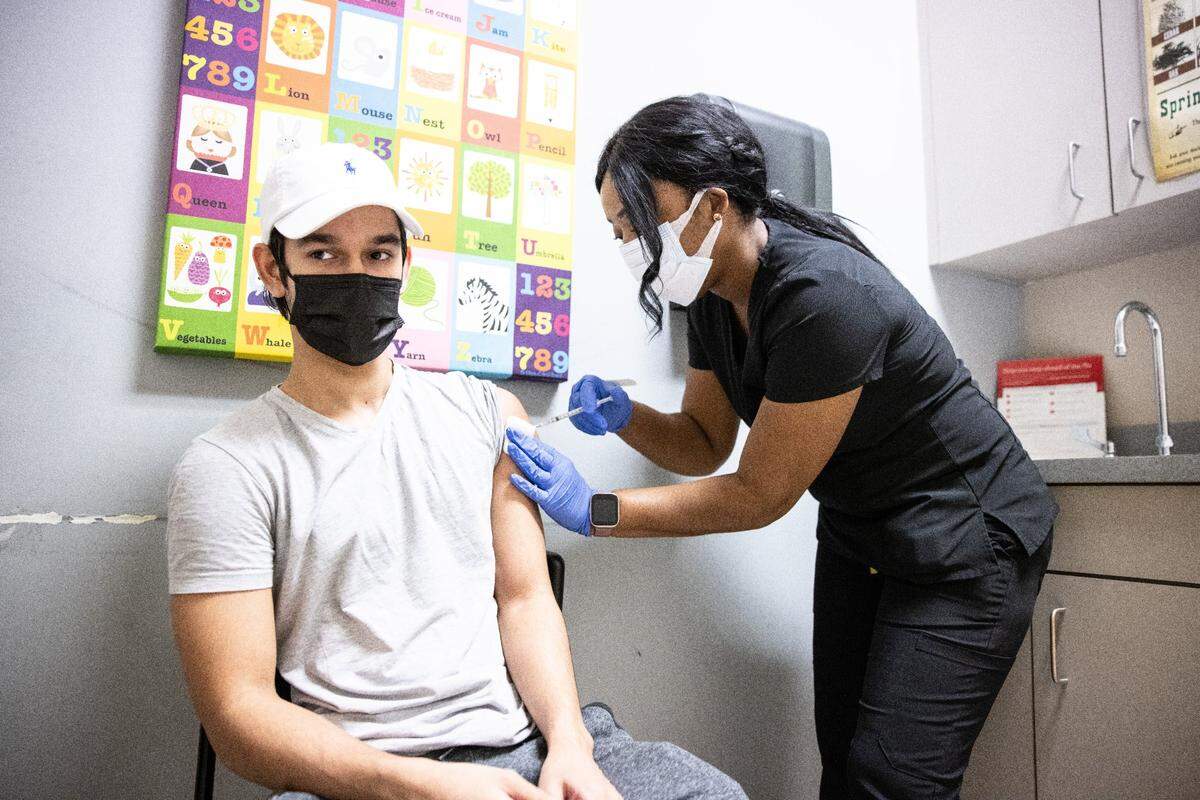
Younger populations less likely to get vaccinated
One reason for the surge in cases is because North Carolina, much like the rest of the country, is far from reaching herd immunity, which experts say is when a large portion of a population is vaccinated or immune to the disease. Around 84% of North Carolina residents older than 65 are fully vaccinated, nearly double the vaccination rate of the state’s total population.
The percentage of the population vaccinated declines with age, with 55% of those 12 and older fully vaccinated. Some 58% of those 18 years and older are fully vaccinated.
Coronavirus infection data follows a similar trend. Those 75 and older, who are more likely to be vaccinated, have had the lowest reported case rates in North Carolina in recent weeks, though North Carolina’s Department of Health and Human Services has not publicly released numbers on breakthrough cases. Breakthrough infections occur among people who are fully vaccinated, The News & Observer reported.
Without that data, it’s hard to say for sure whether the spike is occurring in vaccinated or unvaccinated people in other age groups, though data in other states show the majority of cases are occurring in the unvaccinated.
Young adults aged 18 to 24 have the highest case rate of any age group, with more than 1,000 cases per 100,000 people in the last six weeks, and 25-to 49-year-olds come in at a close second, with nearly 1,000 cases per 100,000.
Children have the third highest infection rate according to the state’s health department. Nearly 700 of every 100,000 kids younger than 18 have tested positive in the last six weeks. In the winter, the state saw high rates of infection among children, too.
A year-and-half into the pandemic, with K-12 schools and universities preparing to reopen at full capacity, the risks of the virus have hardly abated, with just over a majority of people over 18 vaccinated.
Because the vaccine is only available to children 12 and older, the state is recommending that school districts require masks. As of Aug. 6, at least 43 of 115 districts are requiring the face coverings, The News & Observer reports, while 54 are making them optional. Some school districts have not yet decided.
Swann said experts aren’t sure whether masks are enough to stop the spread of the virus in schools, but along with requiring them, schools could implement frequent testing and ensure buildings have quality air filtration.
“The first few weeks of school will be really telling,” Swann said.
Hospitalizations trending younger
One bright spot in the latest case trends is that young people are less likely to have severe cases of the virus that lead to hospitalization or death.
Fifty-somethings in North Carolina are currently being hit the hardest by severe coronavirus cases, making up more than 20% of all those hospitalized with the virus in the past six weeks, according to state data.
That’s vastly different from the large number of older populations hospitalized earlier in the pandemic, who are higher risk for severe or deadly cases but have largely opted to get vaccinated.
Age is still a factor in who is at the greatest risk for severe cases, but unvaccinated people are also more likely to experience hospitalization or death from the virus.
“Risk of hospitalization is probably greater for someone who is unvaccinated and 30 compared to someone who is vaccinated who is 65,” Swann said. “It’s true that vaccination does not protect against disease, but it is intended to protect against severe disease and death.”
Those aged 60 to 69 make up for more than 18% of hospitalizations, according to North Carolina health department data, and 70- to 79-year-olds make up for nearly 16%. Children, by contrast, account for just 2% of those hospitalized in the last six weeks.
Its unclear how much the start of the school year will impact case and hospitalization rates among both children, young adults and the greater population, but public health officials continue to encourage both that the general public to get vaccinated to protect those who can’t be and that schools require masks.
This story was originally published August 10, 2021 at 8:00 AM.
CORRECTION: This story has been updated to reflect that people who are 25 to 49 have the second highest coronavirus case rate of any age group, with nearly 1,000 cases per 100,000, not per capita.