Coronavirus omicron updates: Here’s what to know in North Carolina on Feb. 11
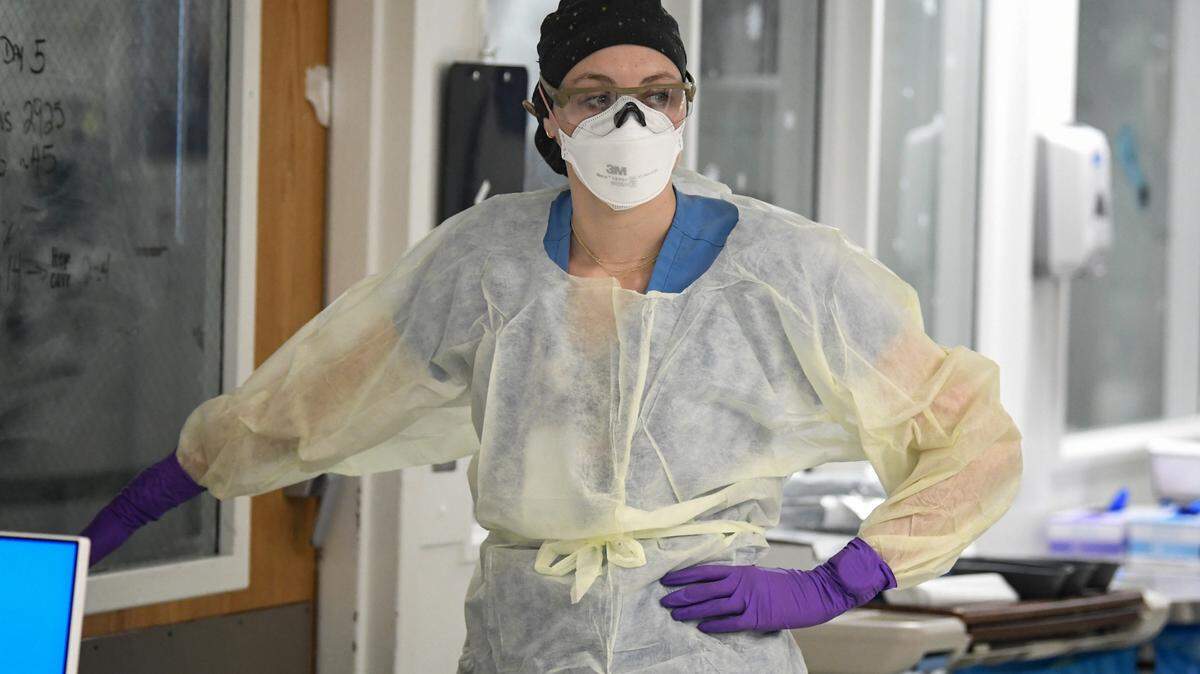
We’re tracking the most up-to-date information about the coronavirus and vaccines in North Carolina. Check back for updates.
85 additional deaths reported
At least 2,525,734 coronavirus cases have been reported in North Carolina, and at least 21,665 people have died since March 2020, according to state health officials.
The N.C. Department of Health and Human Services on Friday, Feb. 11, reported 7,539 new COVID-19 cases, down from 8,725 the day before. An additional 85 coronavirus-related deaths were added.
At least 3,556 people were reported hospitalized with COVID-19 on Feb. 11, including 655 adults being treated in intensive care units. The total patient count was down from 3,699 the previous day, according to state health officials.
As of Feb. 9, the latest date with available information, 15.4% of coronavirus tests were reported positive. Health officials say 5% or lower is the target rate to slow the spread of the virus.
Roughly 75% of adults in North Carolina have received at least one dose of a coronavirus vaccine, and about 71% are fully vaccinated. Of the state’s total population, about 61% are fully vaccinated and about 65% have received at least one dose. State officials round vaccination numbers to the nearest whole number.
More than 3 million ”additional/booster” doses have been administered in North Carolina as of Feb. 11, the health department said. Health officials have urged those who are eligible to get boosted, as data suggests it offers increased protection against the omicron coronavirus variant.
About 96% new COVID-19 cases in the nation were attributed to the omicron variant while others were attributed to a subvariant as of Feb. 5, the latest date for which data is available, according to the Centers for Disease Control and Prevention.
QAnon-supported strategy targets school mask mandates
A legal strategy touted by QAnon to force the end of face mask mandates in schools is being used by some parents in North Carolina.
It’s called “Bonds For the Win,” and its website instructs parents to threaten to file “surety bond claims” against school board members and superintendents if they don’t drop the requirements. The strategy has been used in Catawba, Iredell, Johnston and Wake counties, The News & Observer reported.
School board members in North Carolina don’t have surety bonds that hold them accountable for their actions, so “Bonds For the Win” recommends parents file a claim against the school district’s liability insurance coverage instead.
Kelly Shaw, a political science professor at Iowa State University, said it’s a “largely unproven” approach to changing public policy.
“This kind of smacks to me of a desperate attempt to get one’s way through intimidation, and this typically doesn’t work in our political system,” Shaw told The N&O.
Proposed legislation would let parents opt out of face masks
Republicans in the N.C. House of Representatives plan to introduce legislation that would do away with face mask mandates in schools, Speaker Tim Moore said.
Local school districts were previously given control to decide whether to implement face mask requirements, The News & Observer reported. While most follow recommendations from the N.C. Department of Health and Human Services, which advise students and teachers wear masks indoors, at least 36 school districts have dropped the requirement.
The House plans to introduce the legislation after it finishes redistricting.
Moore said legislators want “to give parents the ability to opt-out of [the] mask requirement.”
Why are NC cities in spotlight over mask decisions?
As governors in some states are easing face mask rules, the focus in North Carolina is instead on individual cities.
Last summer, the state started shifting to having coronavirus-related decisions made at the local level. There hasn’t been a statewide mask requirement for months, and individual school boards must make them for their districts.
“We understand that this virus is going to be with us for a long time, but we need to make sure that we can lead normal lives and live with it, protect ourselves and try to reduce people getting sick and dying from this virus,” Gov. Roy Cooper said, according to The News & Observer.
Death penalty dropped in murder case over COVID concerns
The Mecklenburg County District Attorney’s Office dropped capital murder charges on Thursday, Feb. 10, against a Charlotte man accused of killing his parents in 2017.
Assistant District Attorney Jodi Anderson said the coronavirus pandemic is to blame.
Curtis Atkinson Jr. will now be tried in May on a first-degree murder charge related to the shooting and stabbing deaths of his parents, Ruby and Curtis Sr., The Charlotte Observer reported.
That’s because death-penalty trials can last months and carry an increased risk of COVID-19 exposure for judges, jurors and witnesses, Anderson told Superior Court Judge Lou Trosch.
“As the Omicron wave wanes, we once again find ourselves at the precipice of hope that courts may soon resume normal operations. But if the last two years have taught us anything, it is that ‘hope’ is often just that,” Anderson said. “The victim’s family and this community deserve more than just hope. They deserve justice. And the state believes our decision to proceed non-capitally is the best way to timely deliver justice to this family and this community. As such, we will not be seeking the death penalty in this case.”
NC eases rules on COVID absences from school
The N.C. Department of Health and Human Services updated its guidelines on Thursday, Feb. 10, to let healthy students and teachers exposed to the coronavirus stay in school.
Under the new guidelines issued as part of the NC Strong Schools Toolkit, contact tracing and exclusion from school is no longer recommended for asymptomatic people in K-12 schools, The News & Observer reported.
Students and teachers will only have to stay home if they test positive for COVID-19 or show symptoms.
“This is the right approach for this point in the pandemic and includes flexibility for local schools and health departments to use data to make informed decisions and respond to local conditions,” DHHS Secretary Kody H. Kinsley said in a news release.
The new changes take effect on Feb. 21.
Meanwhile, the Charlotte-Mecklenburg Schools’ quarantine rules are under review. The district said in a message to families that leaders will discuss “what extent our pandemic-response protocols may be adjusted when the new guidance takes effect,” The Charlotte Observer reported.
Wells Fargo shares return-to-office plans after COVID delays
Wells Fargo — which has a major presence in North Carolina — shared plans to bring workers back to the office after four coronavirus-related delays.
Starting March 14, the bank in an internal memo said it will adopt a “hybrid flexible” schedule. Some employees were eligible to begin in-person work on a volunteer basis on Feb. 9, according to chief operating officer Scott Powell.
The announcement comes about two years after Wells Fargo workers were first told to work from home due to COVID-19.
More districts dropping face mask requirements in NC
A growing number of North Carolina school districts are ending their face mask mandates.
There isn’t a statewide requirement, but school boards must vote each month on mask rules.
While Cumberland County and Johnston County districts recently decided to stop mandating face coverings, the four largest school systems in the state still require them. In all, a database shows 79 of the 115 districts in North Carolina have a mask rule, The News & Observer reported.
This story was originally published February 11, 2022 at 7:21 AM.