Study involving Duke looks at how COVID-19 vaccines might work against future variants
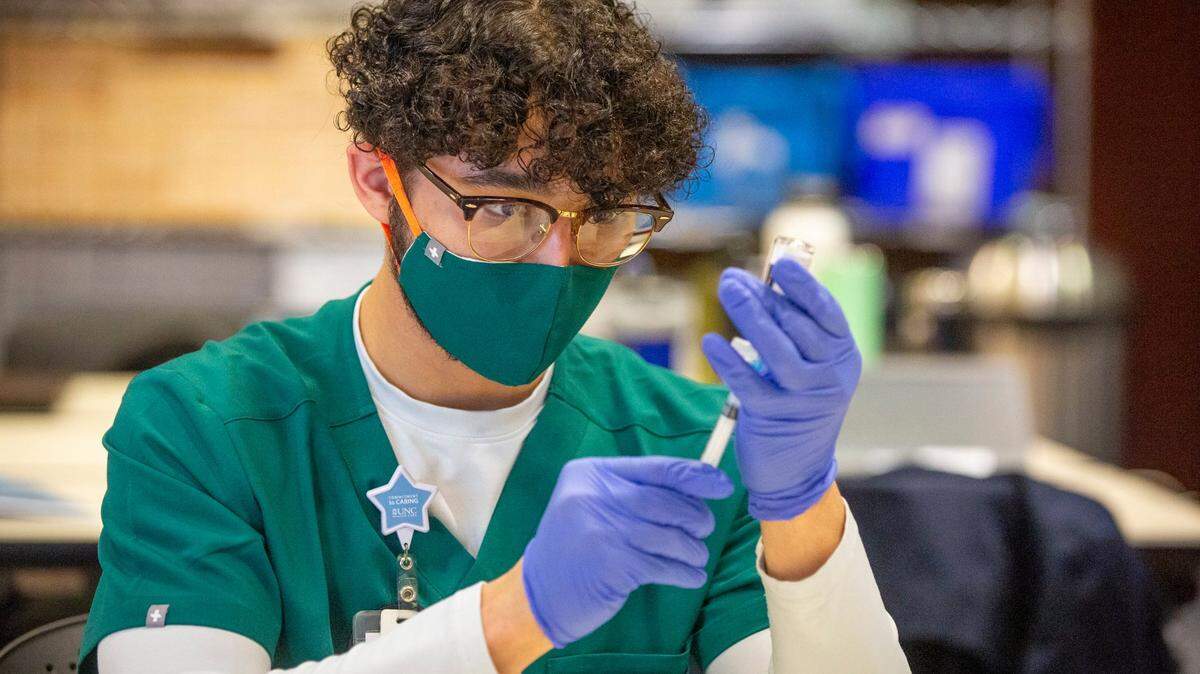
COVID-19 continues to recede in North Carolina, but scientists say the coronavirus isn’t likely to disappear.
That’s the thinking behind a vaccine study at Duke University Medical School and other sites around the country. It will look at what kind of immune response people get from a second booster shot of different variations of the Moderna vaccine.
COVID-19 vaccine manufacturers can adjust their vaccines to target specific variants of the virus, including the delta and omicron strains that caused cases to spike twice since last summer. The booster study will look at different versions of the vaccines alone and in combination with each other, says Dr. Emmanuel “Chip” Walter Jr., a pediatrician and chief medical officer at the Duke Human Vaccine Institute.
“So we’re really trying to pick out when you combine different variants if you can get a broader level of protection that might protect against future variants,” Walter said in an interview.
The study is sponsored by the National Institutes of Health and is looking to enroll 600 adults age 18 or older at 24 sites across the country. Duke hopes to have 50 people take part locally, Walter said.
The study is for people who have had two regular shots of vaccine and a booster. Everyone enrolled will get some form of the Moderna vaccine as a second booster; there will be no placebos.
Doctors will monitor people for any adverse reactions or side effects. They’ll also take blood samples in the coming year to determine what kind of antibodies each person has developed to the coronavirus
The booster study comes just as the U.S. Food and Drug Administration has authorized a second booster shot of the Moderna and Pfizer vaccines for people age 50 and older and for younger people with weakened immune systems.
Since peaking in January, the number of new cases of COVID-19 reported each day in North Carolina has dropped dramatically, as have hospitalizations and deaths. On Thursday, the state Department of Health and Human services reported 456 people hospitalized with the disease statewide, the lowest number since last July before the delta variant arrived.
But coronavirus cases are rising again in Europe, and Walter said it’s likely the disease will be around in some form not unlike the flu.
“Flu always seems to come back, and it comes back in a different form every year,” he said. “We change the vaccine on a pretty frequent basis because of the changes in the flu. And it’s likely that over time, COVID will be with us, and then we’ll have to modify the vaccination strategies.”
People interested in learning more about the study at Duke can email the Duke Human Vaccine Institute at DVTUstudies@duke.edu.