
A dying seahorse was rescued from a net just in time for an unexpected surprise
Ten tiny seahorses were trapped, stranded on the shore in Virginia Beach, gasping for breath.
The seahorses — each small enough to fit in the palm of your hand — were tangled in a fishing net on Chic’s Beach, according to the Chesapeake Bay Foundation.
The Brandis family and Scharver sisters, plus baby sitter Megan Flynn found the net washed up on the beach covered in seaweed, barnacles and oysters.
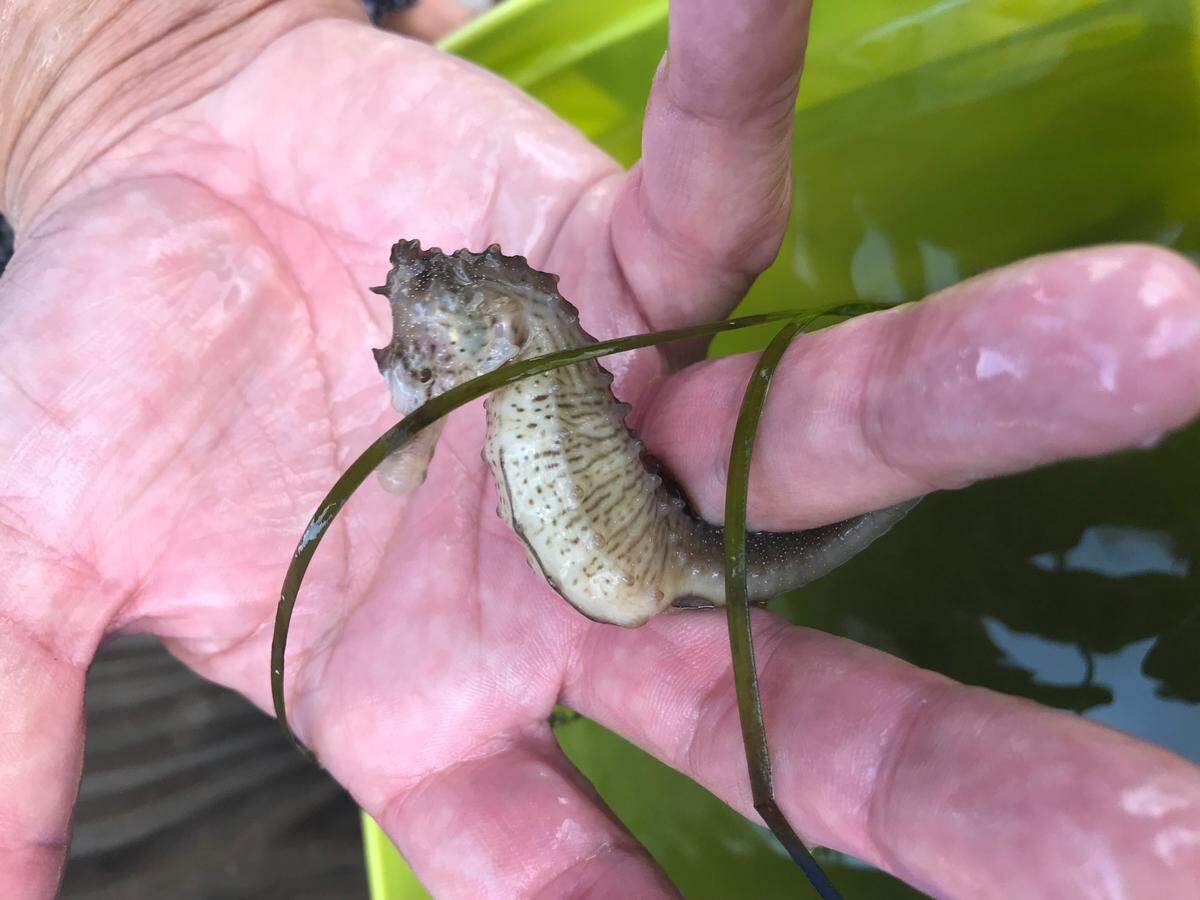
When they looked closer, they saw the tiny adult seahorses and knew they had to act quickly, according to Tanner Council, grassroots manager for Chesapeake Bay Foundation Hampton Roads.
“They quickly transferred the seahorses to buckets of water with small pieces of the seaweed,” Council said.
But that wasn’t the end of the rescue. One of the sea horses had a surprise for his rescuers — he was about to become a dad.
The pregnant male sea horse gave birth to 40 or more baby seahorses in one of the rescuer’s buckets.
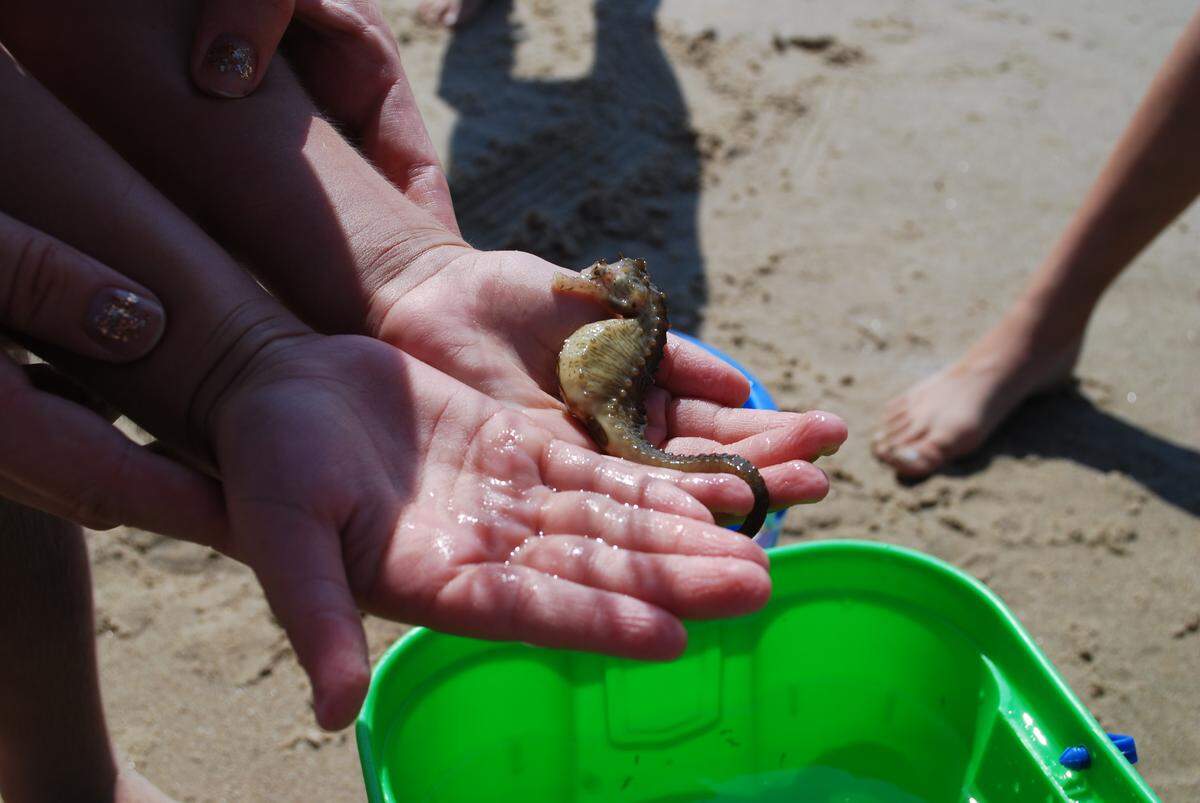
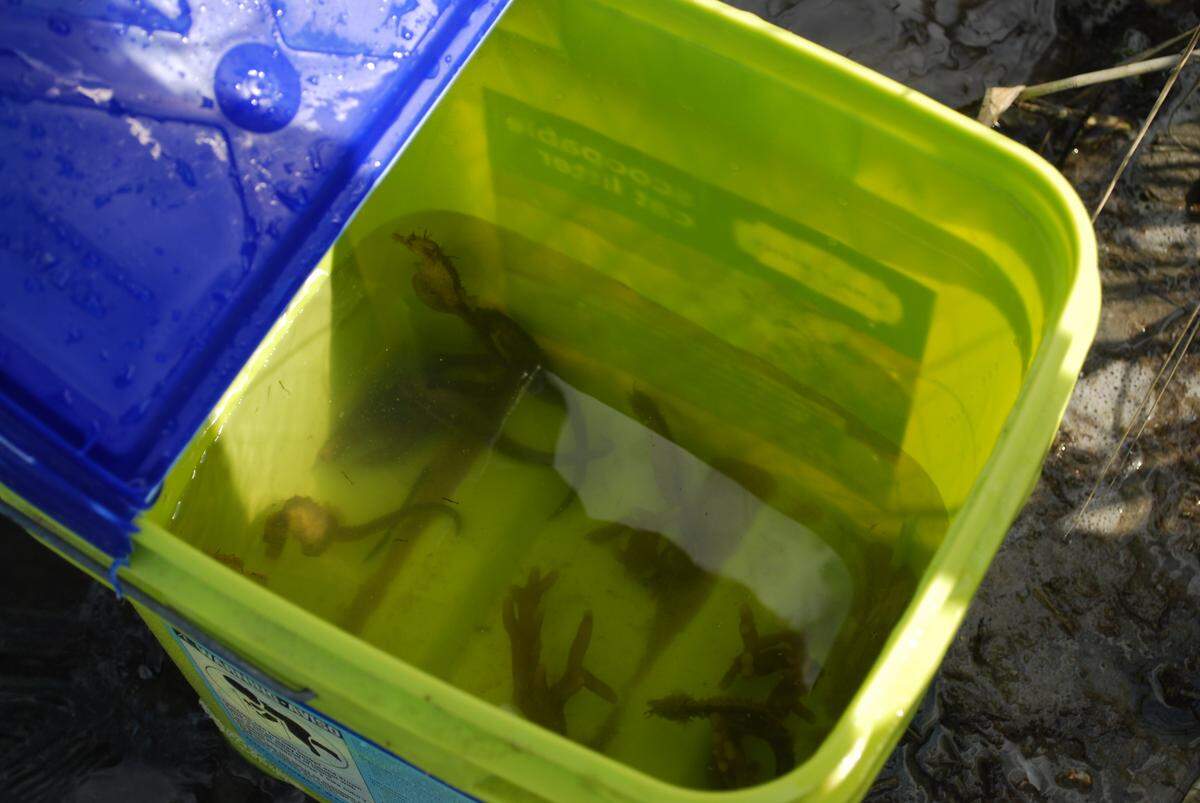
The rescue group called CBF staff, who helped transfer the seahorses to a safe location in their natural habitat — the grasses of the nearby Lynnhaven River.
“In order to thrive, seahorses need healthy habitat such as underwater grasses and oyster reefs,” Tanner said. “We know that both grasses and oyster reefs are expanding in the Bay. The numerous seahorse sightings in Hampton Roads recently are a great sign that there is healthy habitat nearby.”
Seahorses range in size from “as small as a pine nut to as large as a banana,” according to the Smithsonian.
Most wild seahorses are monogamous and some mate for life.
“Searching for mates can be difficult and risky since seahorses are poor swimmers, found in low densities and rely on camouflage to hide from predators,” according to the Smithsonian. “By remaining faithful to one partner, the pairs have more time to undergo more pregnancies during a single mating season and, ultimately, have greater reproductive success.”
Couples greet each other every day by dancing.
Instead of females, the male seahorses carry developing seahorse babies “in a kangaroo-like pouch,” according to the Smithsonian. Females deposit eggs into their mate’s pouch and the male fertilizes them. About two weeks later, the seahorse “fry” pop out and swim off.
Seahorses are found all over the world — in tropical waters but also in colder waters off New Zealand, Eastern Canada and the United Kingdom.
This story was originally published July 19, 2018 at 5:46 PM.