
Storm-battered UNCW will tentatively resume classes Oct. 1. UNCP classes start Tuesday.
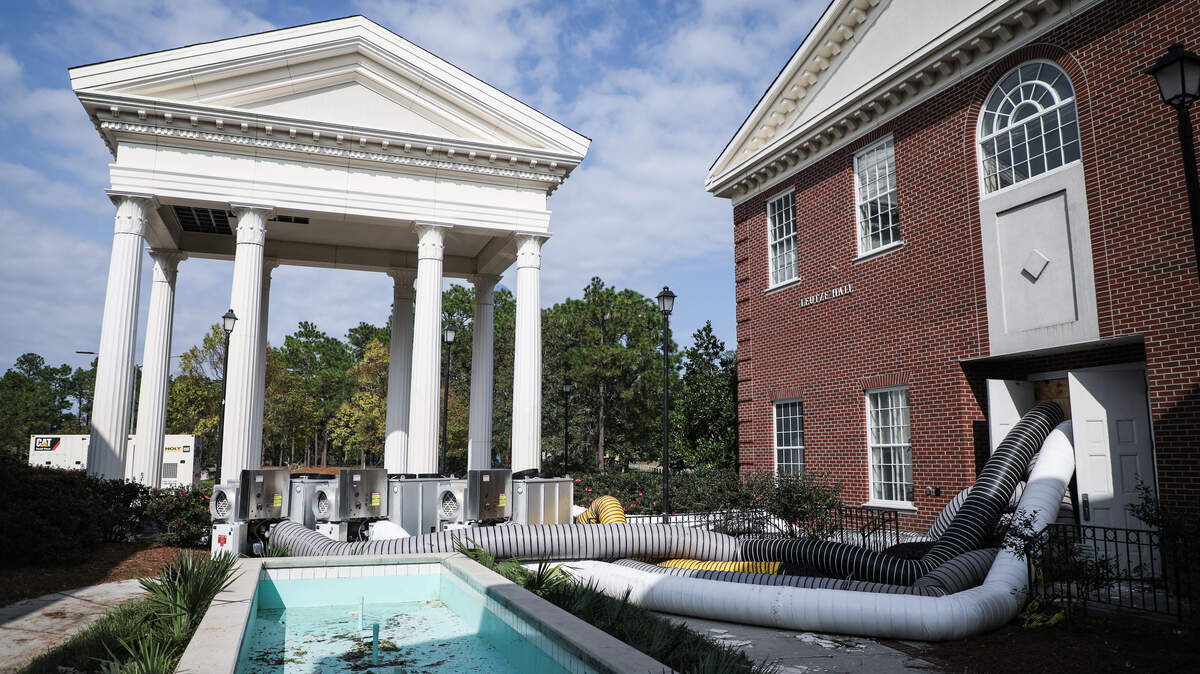
The battered UNC Wilmington campus will be closed to students for another week.
Chancellor Zito Sartarelli said classes will tentatively resume on Oct. 1, and faculty and staff may voluntarily return as soon as Wednesday, depending on road conditions.
A week after Hurricane Florence flooded much of southeastern North Carolina, UNCW was among three public university campuses still closed Friday. Fayetteville State University is scheduled to reopen Monday. UNC Pembroke is scheduled to start classes Tuesday, with the campus reopening on Sunday at noon.
UNCW was hard hit, and for a while, rumors circulated that the campus would remain closed for the entire fall semester. University officials shot down that theory.
After days of uncertainty, the university shared photographs of campus damage on its Facebook page Thursday, and described the campus as a “massive ‘construction zone’ of sorts.” On Friday, the media were allowed in for a tour, where 400 contractors are working on repairs, cleanup and inspection of 100 buildings.
Hurricane Florence had left the grounds disheveled, with limbs and shingles littering sidewalks and lawns, and many buildings damaged. Chancellor’s Walk, the main thoroughfare through campus, was blocked by two tall pine tress that had fallen. Several wet facilities were being dried by large-scale equipment.
The science building, Dobo Hall, took on extensive water because it lost part of its roof early in the storm. At least two dorms, Galloway and Cornerstone, had water intrusion, but are habitable, officials said. The cost of the damage is not known.
If surrounding roads are clear, dorms could reopen as soon as Sept. 29, with classes starting the following Monday. Sartarelli said the university would rely on information from the state Department of Transportation before making the final call.
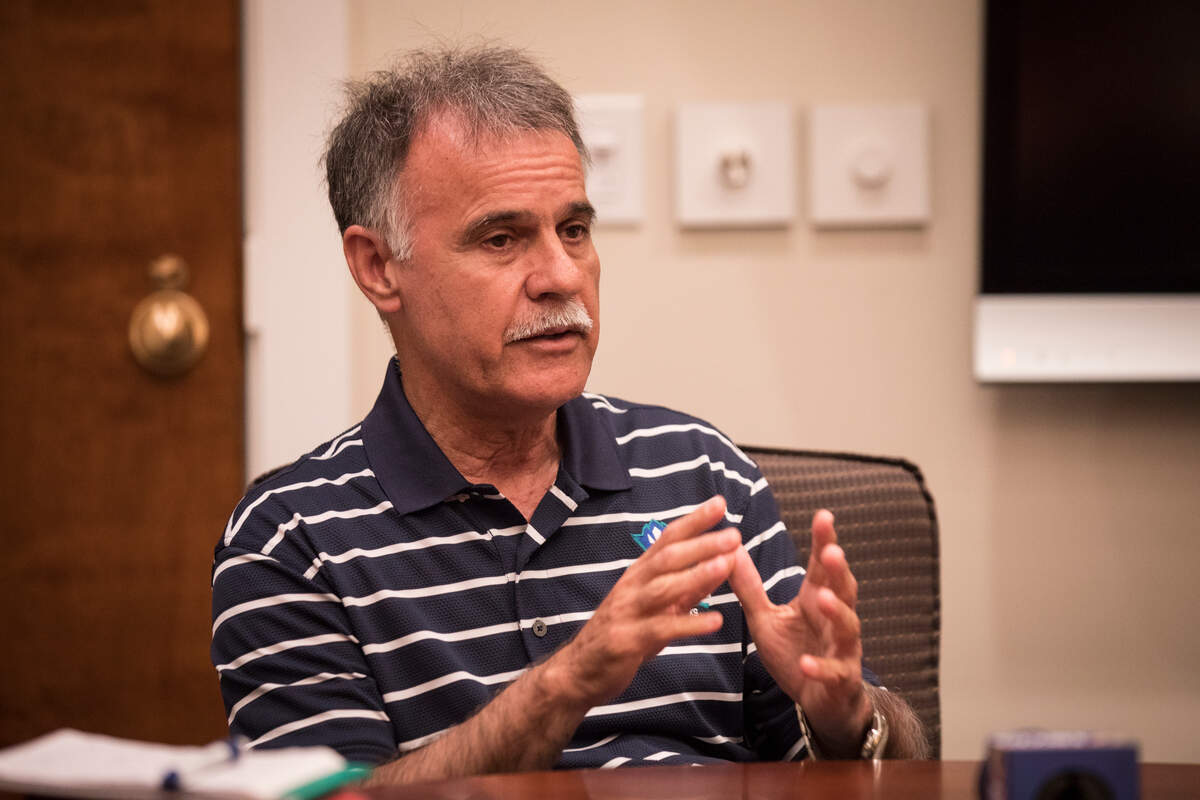
“We wish we could provide confirmed dates, but with road conditions changing day by day, it is simply too soon to say,” Sartarelli wrote in a letter to the campus community Friday afternoon. He stressed that the campus must remain closed for all until Wednesday.
Sartarelli didn’t have specifics on how the school would deal with the missed instructional time.
“We are working very hard to determine our closure’s impact on the academic calendar,” he wrote. “We understand your anxiety about this, and we are doing our best to develop a plan to share with you as soon as possible.”
Fall break and the exam reading day will be canceled, and he pledged that those scheduled to graduate in December will be able to do so.
“We’ve never been closed longer than five days,” he said, adding, “now we are looking at three weeks.”
The university’s website, which had been shut down prior to the storm to ensure security, is expected to be restored next week. Some students had posted messages saying they wanted to be able to work online so they wouldn’t be so far behind in their studies.
On Friday, UNCP Chancellor Robin Cummings wrote that the Lumber River nearby is due to crest again by Sunday and officials are monitoring the situation. But, he said, many more roads are open and progress has been swift in the past couple of days.
“Today, I am pleased to report to you the campus recovery efforts have moved along rapidly thanks to the hard work of our dedicated teams,” Cummings wrote in a message on the university’s website. “With the extraordinary help from around the UNC System, the transformation has been truly amazing.“
Grounds crews from other campuses, including UNC-Chapel Hill, N.C. State and Winston-Salem State, pitched in to help the two campuses.
The universities have dealt with a number of challenges. Power went out and buildings were flooded. Trees were down and roofs leaked. Because of floodwaters, it’s been difficult to get employees to campus to be able to restore buildings and services.
Lessons from Tulane
It’s difficult to fathom how many thousands of decisions have to be made to reopen a campus after a major storm, said Richard Whiteside, who was vice president for enrollment management at Tulane University in New Orleans when it was devastated by Hurricane Katrina in 2005.
Tulane sent home freshmen students the day after they arrived, as the storm had taken a turn toward New Orleans. Within days after the hurricane struck, the university had made the decision to close for the semester, Whiteside said in a telephone interview.
All but two campus buildings were water compromised, he said, and because of a lack of power, there was no way to dry them out. Mold set in. The city was a disaster zone, so most faculty and staff had to flee.
Then, he said, “the magic of higher education jumped into place.”
Tulane students were taken in by 600 universities around the country, for free and without much paperwork. An agreement was put into place whereby the universities accepted the students, but said they would have to leave once their home campus reopened.
“The main problem institutions face is making sure they could get their student body back,” said Whiteside, who now works in Richmond, Va., with education consulting firm EAB.
In Tulane’s case, 90 percent of the students returned, Whiteside said, adding, “Students came back just because they wanted to be able to claim they were part of this incredibly catastrophic event.”
By the time they returned, Tulane had repaired the campus, brought in cruise ships to house faculty and staff and even started its own charter school because the city schools were still closed.
‘Seahawk strong’
While UNCW and UNCP didn’t have challenges that big, Whiteside said his advice to the schools is this: Keep communicating with students and assure them that they can get back on track with their studies, without incurring added cost or an extra semester in school. That could be achieved with online classes, Saturday classes, summer school or added time tacked onto winter break.
“The students need to know how to move forward with their lives,” Whiteside said.
Sartarelli said a more detailed plan should be firmed up soon. A donation fund has been set up and the university will ask the Legislature for help with claims for students who live off campus and may have damage to their apartments.
“All of you remain in our thoughts here on campus, as we continue to repair, rebuild and restore our home to full functionality,” he wrote. “Thank you again for your support and understanding as we continue to navigate this challenge together.”
Students and families expressed their support for UNCW on social media.
Some were concerned about Wilmington’s water supply, the condition of off-campus apartments and whether meal plan and tuition costs would be prorated. Overall, though, the message from many was a hearty “Seahawk strong.”
The UNCW Facebook page had a flurry of offers by parents to come help with the cleanup.
One of them, Sharon Swain Currin, posted, “Of course, my son is anxious to return to school, but I really appreciate you and the entire campus putting the safety of the UNCW community FIRST!”
Jane Stancill: 919-829-4559; @janestancill
This story was originally published September 21, 2018 at 1:51 PM.