
Chapel Hill gets 1st ‘true mixed use’ project in Blue Hill redevelopment district
Editor’s Note: This story has been updated to reflect a correction.
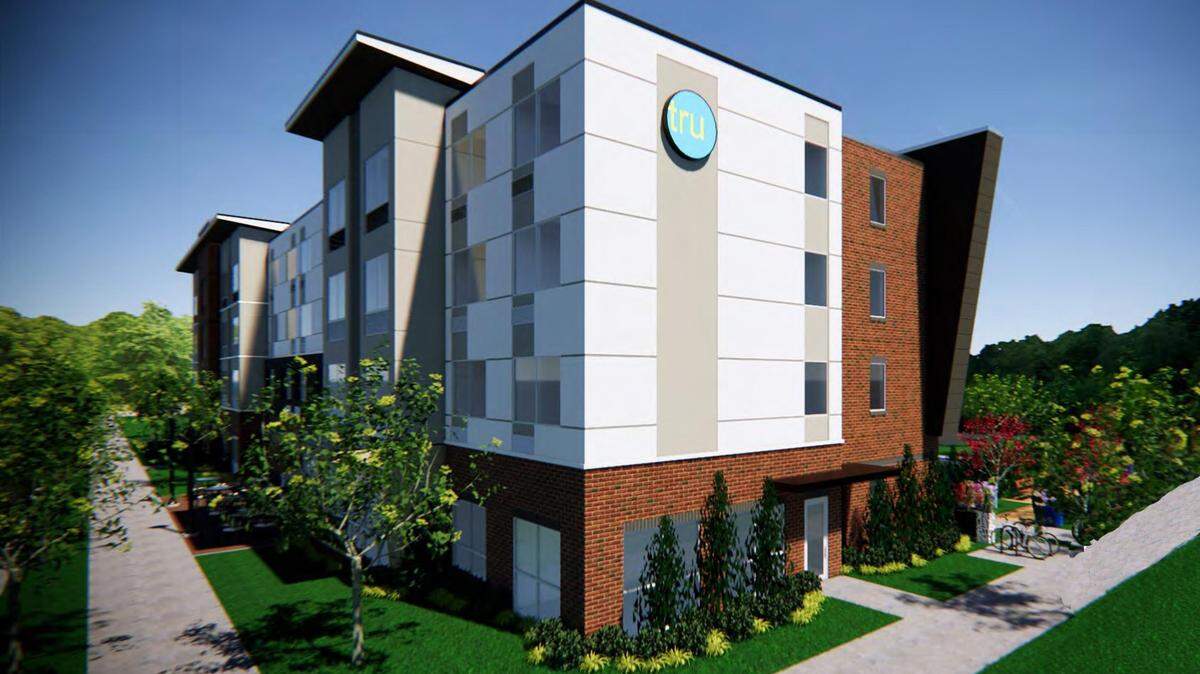
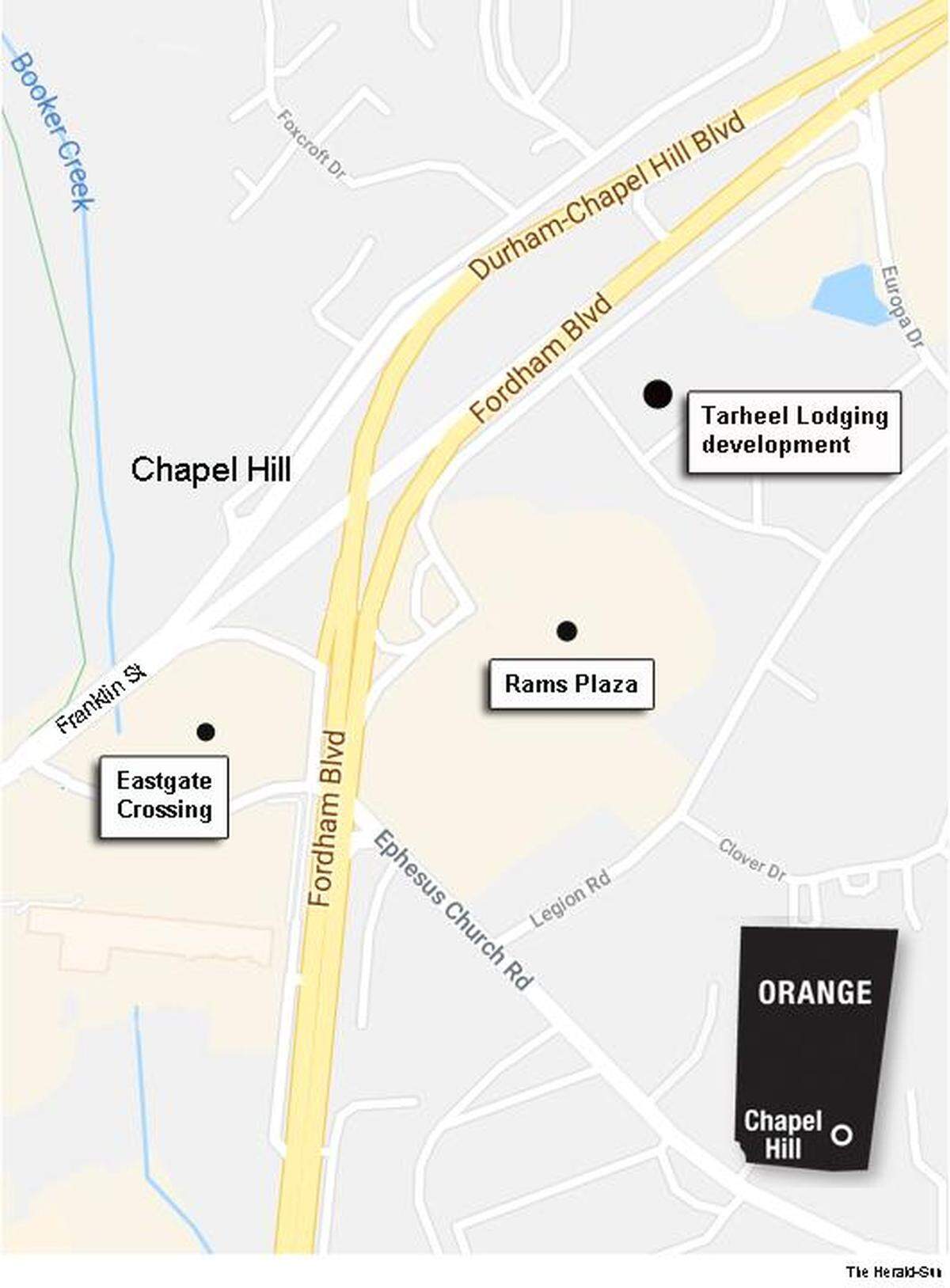
Apartments, offices and a new Tru by Hilton hotel were approved this week to replace an older hotel and Chinese restaurant in the Blue Hill District off Fordham Boulevard.
The Community Design Commission voted 6-1 to approve the Tarheel Lodging project, but delayed approving the smaller of two parking decks until the developer brings back more information. That could happen in the near future, town planner Corey Liles said.
The project “is one of the better, if not the best, applications I have seen for the Blue Hill District,” Commission Chairman Volker Mueller said.
“Even though it seems like a very painful birth we are going through here, it’s the first one that has true mixed use in it, and I understand the challenges,” he continued. “Could it be better? Well, everything could be better.”
CDC members, who are charged with approving development projects in the Blue Hill District, also want to see more drawings of the hotel’s exterior. They can only consider if a project meets the district’s form-based code — a set of rules for how buildings, parking lots and other amenities should be built — and how its exterior facades relate to public streets.
The form-based code — and related design guidelines — do not apply to other areas of town.
The project now will go to the town manager for final approval. The Town Council does not review or approve projects in the district, which covers roughly East Franklin Street to Fordham Boulevard, and South Elliott Road to Legion Road.
The Atma Hotel Group project will be built in phases, representative Scott Murray said.
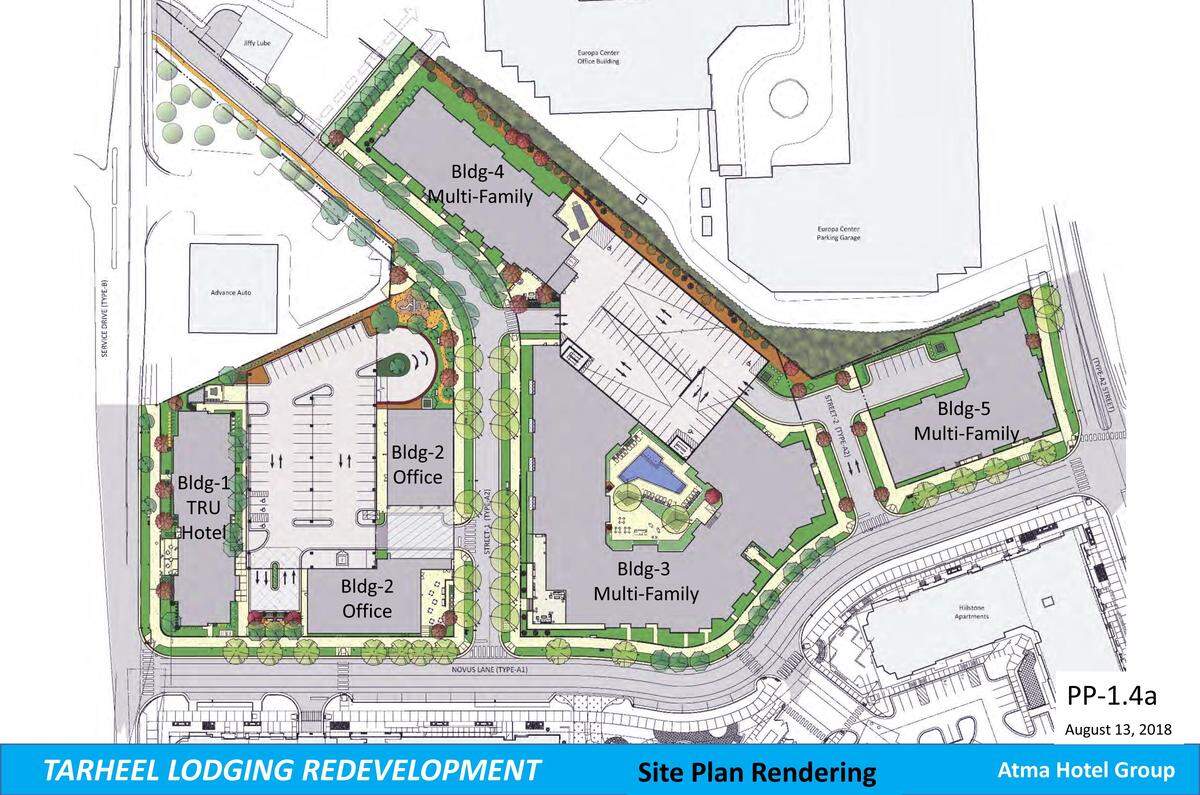
▪ The first phase will remove the Hong Kong Buffet restaurant, which faces the Fordham Boulevard service road, and replace it with a roughly 97-room, four-story Tru Hotel.
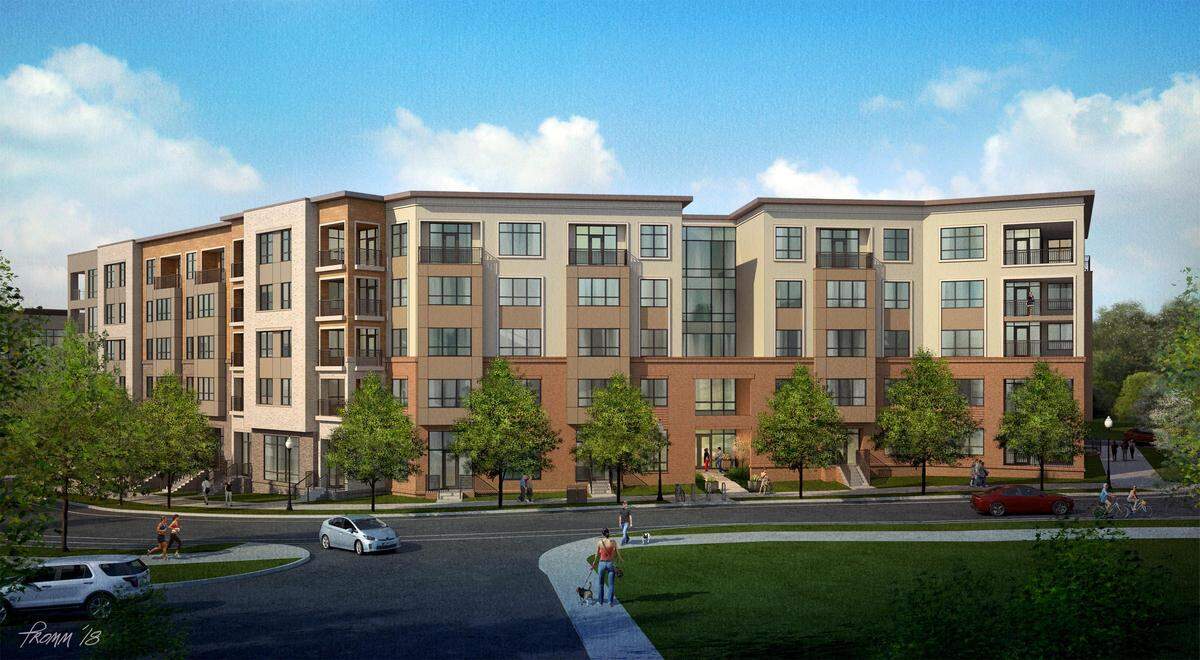
▪ The second phase will remove a Quality Inn hotel built in 1986. It will be replaced with 238 apartments in two five-story buildings, separated by a five-story parking deck, and a third, three-story building with parking underneath.
▪ A three-story office building wrapped around a two-story parking deck behind the hotel will be timed to meet market demand for office space, Murray said. It could be several years, he said.
The hotel will not be the typical Tru by Hilton product, Murray said, because of changes to meet Chapel Hill’s district guidelines. It also was designed to blend with the Hillstone apartments project under construction next door, project officials said.
The CDC, which was reviewing the project for the fourth time Tuesday, spent some time wrapping up a discussion about several exceptions the developer wanted to the form-based code rules.
Members also discussed lingering concerns about pedestrian connections, the project’s green spaces, and how buildings would appear to people on the property and on the street.
Commissioner Christine Berndt said she voted against the project, because she also voted against three critical modifications:
▪ Exceeding the limit on synthetic stucco — or EIFS — allowed on the buildings’ exterior. The district code let developers cover up to 25 percent of the building in synthetic material; the Tarheel Lodging project was approved for up to 63 percent.
Synthetic exterior siding allows the developer to keep hotel room rates more affordable, RBA Group architect Chris Allred said.
“The benefits of it are a healthier building as long as it’s installed correctly,” he explained. “Previously, a lot of the bad publicity around EIFS was in its early days when it would promote the growth of molds. The EIFS that we use and we would obviously propose on this is a much more healthier product than the older traditional.”
▪ Exceeding the district’s 450-foot limit on how long blocks of buildings can be; Berndt unsuccessfully argued the developer should separate the apartment building and garage with a pass-through.
▪ Exceeding the requirement to add a pedestrian walkway for every 330 feet of building wall.
The developer argued that a pedestrian path between one apartment building and Jiffy Lube, and a separate, striped walkway through the parking garage leading to stairs and a bridge, would provide future connections to the Europa Center to the north.
Berndt and others asked the development team for a creative design — instead of stripes — so pedestrians could have something to look at as they walk through the garage. They agreed, but not without some pushback.
“Certainly, what we were trying to do is make this connection, which we strongly feel is not necessary, but you all feel is necessary, so we’re providing it,” said Neil Kapadia, with property owner Tarheel Lodging LLC.
“I can’t believe ... how many people will use this, but we have no objection to painting this area a little bit differently, making it a little more unique,” he said. “I just want you to recognize there’s cars going through this area, too, and safety is my priority.”
The CDC also has a concern, Mueller noted, with making sure that what’s built on the Tarheel Lodging property doesn’t influence surrounding redevelopment in a way that negatively affect the town’s goals.
In 20 years, “there might be something happening to the Europa Center ... and then they’ll have the excuse to say we want to exceed our block length, because there’s no connection to Tarheel Lodging,” he said. “So then, we perpetuate this situation of having excessive block lengths, and essentially preventing increased walkability in that whole district, at that corner.”
Correction: Scott Murray was incorrectly identified in a previous version of this story.
This story was originally published November 30, 2018 at 3:04 PM.